Modern housing is no longer just about buildings and infrastructure. Today, people look for homes that offer a sense of belonging, safety, and meaningful social interaction. As cities grow denser and lifestyles become more digital, physical community spaces have become even more important. In this context, gated communities are evolving beyond their traditional role of providing security and privacy. Increasingly, they are being designed to encourage connection among residents through thoughtful layouts and shared spaces.
In fact, the layout of a gated community can significantly influence how people interact with each other. From the placement of parks and pathways to the design of common facilities, every element can either encourage or discourage social engagement. Therefore, developers and architects are now focusing on community-oriented designs that promote interaction while still maintaining privacy.
The Role of Community Design in Modern Living
To begin with, community design plays a crucial role in shaping how residents experience their neighborhood. When homes are arranged in ways that encourage people to see and meet each other naturally, social bonds are more likely to develop.
For example, clusters of houses facing shared courtyards or gardens create informal gathering spots. Residents passing through these areas may stop to chat, children can play together, and neighbors gradually become familiar faces rather than strangers. Consequently, such layouts help foster a friendly and welcoming environment.
Moreover, communities designed around shared spaces tend to feel more vibrant and active. Instead of isolated homes separated by wide roads, thoughtful layouts bring people closer together in comfortable and engaging ways.
Central Community Spaces
One of the most effective design strategies is the inclusion of central community spaces. These areas often serve as the heart of the neighborhood.
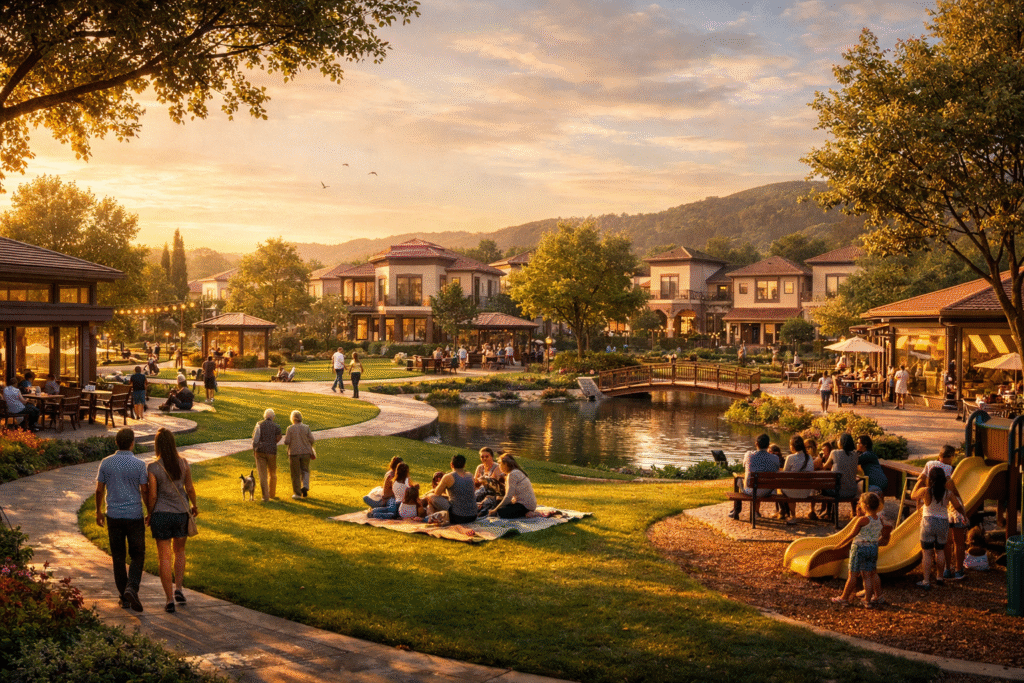
For instance, parks, clubhouses, swimming pools, and open lawns naturally attract residents of all ages. Families may gather in the evening, children can play together, and elderly residents often enjoy spending time outdoors. As a result, these spaces become hubs of daily interaction.
Additionally, central spaces encourage spontaneous meetings. A simple walk to the park or a visit to the clubhouse can lead to casual conversations and new friendships. Over time, these small interactions help strengthen the overall sense of community.
Walkable Pathways and Pedestrian-Friendly Design
Another important factor is walkability. When a community is designed to encourage walking rather than driving, residents are more likely to encounter each other regularly.
Wide pedestrian pathways, shaded walkways, and landscaped walking trails make it pleasant for residents to move around the community on foot. Consequently, morning walks, evening strolls, and casual jogging routines often turn into opportunities for social interaction.
Furthermore, pedestrian-friendly layouts also make the community safer and more inclusive. Children can play outside comfortably, and elderly residents can enjoy outdoor activities without worrying about heavy traffic.
Shared Recreational Facilities
Recreational facilities also play a significant role in encouraging connection. Sports courts, fitness centers, yoga decks, and playgrounds create opportunities for residents with shared interests to interact.
For example, a tennis court or badminton court may bring together neighbors who enjoy sports. Similarly, group fitness classes or yoga sessions can introduce residents to people they might not otherwise meet.
As a result, these facilities help build communities around shared hobbies and lifestyles. Instead of living in isolation, residents participate in activities that naturally encourage teamwork and conversation.
Mixed-Use Community Zones
In addition to recreational spaces, some modern gated communities are incorporating small commercial or mixed-use zones within their layouts. These may include convenience stores, cafés, co-working spaces, or small retail outlets.
Such spaces become everyday meeting points where residents casually interact. For instance, a coffee shop inside the community may become a popular gathering place for remote workers, parents waiting for school buses, or friends catching up.
Consequently, mixed-use zones add vibrancy to the community while making daily life more convenient for residents.
Children’s Play Areas as Social Connectors
Children’s play areas are another powerful element in community design. Playgrounds naturally bring families together and often become social hubs for parents as well.
When children play together regularly, parents begin to interact, share experiences, and build friendships. Over time, these connections extend beyond the playground and into broader community relationships.
Moreover, well-designed play areas promote healthy outdoor activity for children while strengthening family interactions within the neighborhood.
Green Spaces and Relaxation Zones
Green spaces are essential not only for environmental benefits but also for social connection. Gardens, landscaped parks, and seating areas provide peaceful places where residents can relax and interact.
For example, benches along garden pathways allow neighbors to pause, rest, and chat. Similarly, open lawns can host community events such as outdoor movie nights, cultural celebrations, or seasonal gatherings.
Therefore, green spaces act as both recreational and social environments within the community.
Event Spaces and Community Activities
While physical design plays a major role, designated event spaces also support community interaction. Multipurpose halls, amphitheaters, and open event lawns allow residents to organize celebrations, workshops, and social gatherings.
For instance, festivals, sports tournaments, and weekend markets often take place in these spaces. As residents participate in these events, they build stronger relationships and a deeper sense of belonging.
Furthermore, these events help new residents integrate into the community more easily.
Balancing Privacy and Interaction
Although encouraging interaction is important, successful gated community design must also respect residents’ need for privacy. Not everyone wants constant social engagement, and personal space remains a key aspect of comfortable living.
Therefore, good design balances open community spaces with quiet residential zones. Private balconies, personal gardens, and well-planned building layouts ensure that residents can choose when they want to socialize and when they prefer solitude.
This balance ultimately creates a healthier and more satisfying living environment.
The Psychological Benefits of Connected Communities
Beyond convenience and aesthetics, interactive community layouts also offer significant psychological benefits. People who feel connected to their neighbors often experience a stronger sense of security and emotional well-being.
For example, familiar faces around the neighborhood can create a comforting sense of trust and belonging. In addition, social support networks naturally develop within connected communities.
During times of need, neighbors often help each other, whether by sharing resources, offering assistance, or simply providing companionship.
The Future of Community-Oriented Design
Looking ahead, gated communities are likely to become even more focused on interaction-driven design. Urban planners and developers are increasingly recognizing that strong communities contribute to happier and healthier lifestyles.
As a result, future residential projects may include more shared spaces, interactive landscapes, and technology-enabled community platforms that help residents connect both physically and digitally.
In this way, gated communities will continue evolving from simple residential complexes into vibrant social ecosystems.
Conclusion
In conclusion, the layout of a gated community plays a crucial role in shaping how residents interact with each other. Through thoughtful planning of shared spaces, pedestrian pathways, recreational facilities, and green areas, developers can create environments that naturally encourage connection.
At the same time, maintaining a balance between social interaction and personal privacy ensures that residents feel both comfortable and engaged. Ultimately, well-designed gated communities do more than provide homes—they create neighborhoods where relationships grow, friendships develop, and people truly feel part of a community.