
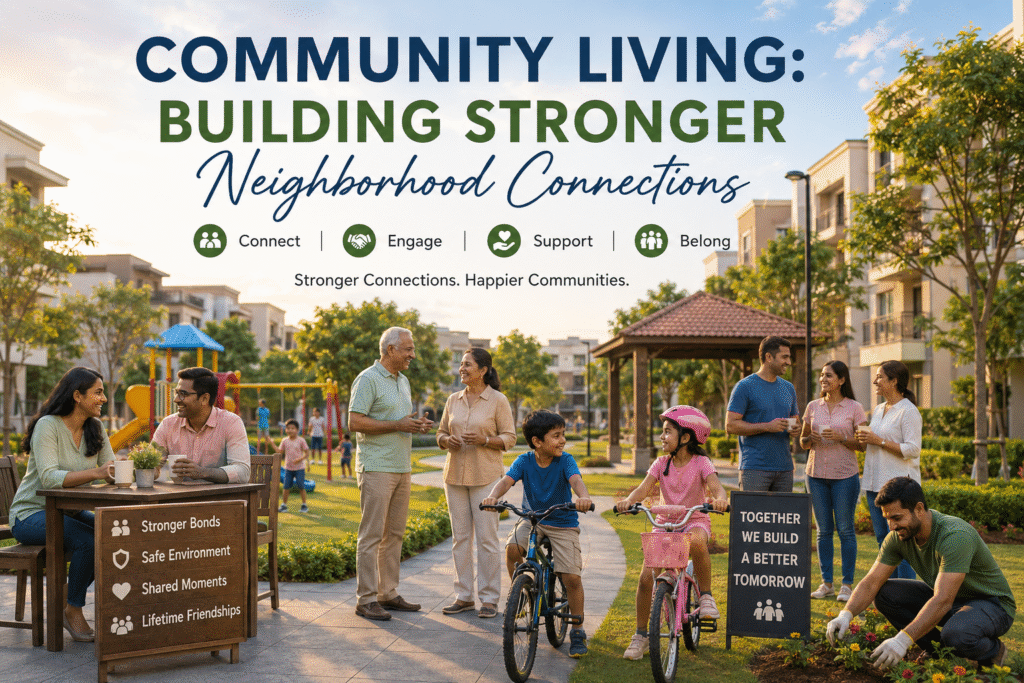
In today’s fast-paced world, many people seek more than just a house—they seek a sense of belonging. While modern lifestyles often lead to isolation, community living offers an opportunity to create meaningful relationships and foster a supportive environment. Particularly in gated communities and planned residential developments, residents can enjoy a lifestyle that encourages interaction, cooperation, and mutual respect.
Community living is not simply about sharing a location; rather, it is about building connections that enhance everyday life. Through shared spaces, organized activities, and a collective sense of responsibility, neighborhoods can become vibrant places where people truly feel at home.
Understanding Community Living
Community living refers to a lifestyle where residents actively engage with one another and contribute to the well-being of their neighborhood. Unlike traditional residential areas where neighbors may rarely interact, community-focused developments encourage communication and participation.
Moreover, community living promotes inclusiveness and creates opportunities for residents to connect regardless of age, profession, or background. As a result, stronger social bonds are formed, making neighborhoods more welcoming and supportive.
The Importance of Neighborhood Connections
Strong neighborhood connections play a vital role in enhancing quality of life. When residents know and trust one another, they are more likely to help each other during emergencies, celebrate milestones together, and create a positive living environment.
Furthermore, connected communities often experience greater levels of safety and security. Since neighbors are familiar with one another, unusual activities are more likely to be noticed and reported. Consequently, residents feel safer and more confident in their surroundings.
In addition, social connections contribute significantly to emotional well-being. Having friendly neighbors can reduce feelings of loneliness and create a sense of comfort and belonging.
Shared Spaces Encourage Interaction
One of the key factors that support community living is the availability of shared spaces. Parks, clubhouses, walking trails, playgrounds, and recreational facilities naturally bring people together.
For example, parents often meet while watching their children play in community parks. Similarly, fitness enthusiasts can connect during morning walks or exercise sessions. Over time, these casual encounters evolve into meaningful relationships.
Additionally, community centers serve as gathering places where residents can participate in events, meetings, and celebrations. Therefore, shared amenities become more than just facilities—they become spaces where friendships are formed.
Community Events Strengthen Relationships
Organized events play a significant role in fostering neighborhood connections. Whether it is a cultural festival, holiday celebration, sports tournament, or charity event, these activities provide opportunities for residents to interact in a relaxed setting.
Moreover, community events help break social barriers. New residents, for instance, can quickly become familiar with their neighbors through participation in local activities. As a result, they feel more integrated into the community.
Furthermore, regular events create traditions that residents look forward to each year. These traditions contribute to a shared identity and strengthen the emotional connection people have with their neighborhood.
Communication Builds Trust
Effective communication is essential for building strong communities. Open communication channels allow residents to stay informed about community developments, upcoming events, and important announcements.
Today, many residential communities utilize digital platforms such as messaging groups, mobile applications, and online forums. These tools make it easier for residents to communicate and collaborate.
In addition, transparent communication helps prevent misunderstandings and encourages trust among neighbors. When people feel heard and informed, they are more likely to participate actively in community initiatives.
Encouraging Inclusivity and Diversity
A successful community embraces diversity and welcomes people from different backgrounds. Inclusivity ensures that every resident feels valued and respected regardless of age, culture, or lifestyle.
For example, community activities can be designed to accommodate families, senior citizens, young professionals, and children alike. By offering a variety of programs, neighborhoods can encourage participation from all residents.
Moreover, diverse communities benefit from a wider range of perspectives and experiences. This diversity often leads to greater creativity, understanding, and cooperation among residents.
Volunteering and Community Service
Another effective way to strengthen neighborhood connections is through volunteer initiatives. Activities such as tree planting, cleanliness drives, blood donation camps, and charity programs bring residents together for a common cause.
Not only do these initiatives improve the community environment, but they also foster teamwork and collaboration. Furthermore, volunteering allows residents to develop a sense of ownership and pride in their neighborhood.
As neighbors work together toward shared goals, relationships naturally become stronger and more meaningful.
Supporting Families and Children
Community living offers numerous benefits for families and children. Safe environments, recreational facilities, and opportunities for social interaction contribute to healthy development.
Children who grow up in connected neighborhoods often develop stronger social skills and a greater sense of responsibility. Additionally, they have opportunities to form friendships within a safe and familiar environment.
For parents, community living provides valuable support networks. Neighbors can share advice, organize activities, and assist one another when needed. Consequently, family life becomes more enjoyable and less stressful.
The Role of Technology in Modern Communities
Technology has transformed the way communities interact and manage daily activities. Mobile applications and digital communication platforms enable residents to stay connected effortlessly.
For instance, residents can receive notifications about events, report maintenance issues, reserve amenities, and participate in community discussions through a single platform.
Moreover, technology supports greater engagement by making information easily accessible. As a result, residents remain informed and involved in community affairs.
Long-Term Benefits of Strong Neighborhood Connections
The benefits of community living extend far beyond daily interactions. Strong neighborhood connections contribute to increased resident satisfaction, improved mental well-being, and a greater sense of security.
Furthermore, connected communities often maintain their facilities more effectively because residents take pride in their surroundings. This, in turn, can enhance property values and attract future homeowners.
Additionally, neighborhoods with strong social bonds tend to be more resilient during challenging times. Whether facing natural disasters, economic difficulties, or personal hardships, residents can rely on one another for support.
Conclusion
Community living is about more than sharing physical space—it is about creating meaningful relationships that enrich everyday life. Through shared amenities, organized events, open communication, volunteer initiatives, and inclusive practices, neighborhoods can become vibrant and supportive environments.
As society becomes increasingly connected through technology yet often disconnected socially, the value of strong neighborhood relationships continues to grow. Therefore, investing in community living is not only beneficial for individual residents but also essential for building healthier, happier, and more resilient neighborhoods.
Ultimately, stronger neighborhood connections create a sense of belonging that transforms a residential area into a true community—one where people support, trust, and grow alongside one another.