A gated community is more than a residential development surrounded by walls and controlled entrances. Instead, it is a carefully planned environment designed to provide residents with security, comfort, convenience, privacy, and a strong sense of community. As modern homebuyers increasingly look beyond the house itself, the quality of the surrounding neighborhood has become equally important.
Therefore, developers must focus on creating communities that offer much more than attractive homes. From thoughtful master planning to green spaces and modern infrastructure, several features can transform an ordinary residential development into an exceptional gated community.
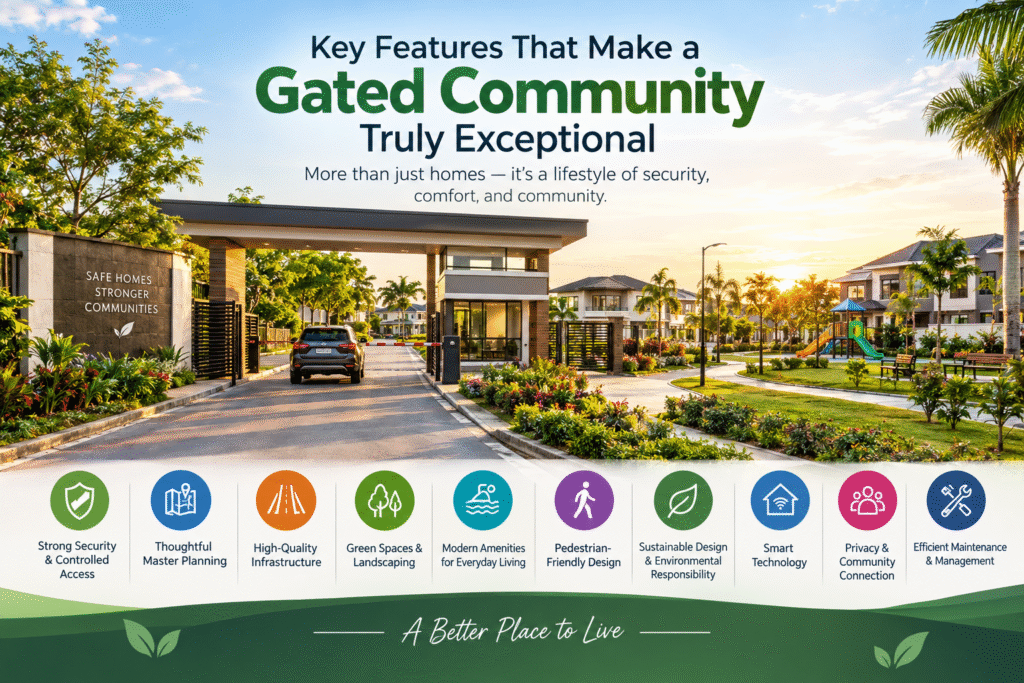
1. Strong Security and Controlled Access
First and foremost, security is one of the primary reasons people choose gated communities. A well-designed development should provide controlled entry and exit points, perimeter security, visitor management, and appropriate surveillance systems.
Moreover, modern security solutions can include CCTV cameras, access cards, smart gates, intercom systems, and automated visitor registration. Security personnel can also monitor important areas and respond quickly when necessary.
However, effective security should not make residents feel restricted. Instead, the entrance and security systems should be designed to provide protection while maintaining a welcoming and convenient environment.
2. Thoughtful Master Planning
Equally important, exceptional gated communities begin with effective master planning. Every element—from roads and homes to parks, drainage systems, parking areas, and community facilities—should work together as part of a unified plan.
For example, residential buildings should be positioned to provide privacy while still allowing easy access to shared amenities. Roads should support smooth traffic movement, while pedestrian pathways should create safe connections between different parts of the community.
As a result, good master planning improves functionality, aesthetics, safety, and long-term property value.
3. High-Quality Infrastructure
In addition, reliable infrastructure is essential for comfortable community living. Well-constructed internal roads, sidewalks, drainage networks, water supply systems, electricity, waste management, and communication infrastructure all contribute to a better residential experience.
Furthermore, infrastructure should be designed with future needs in mind. As the population grows and technology develops, the community should be capable of adapting without requiring major disruption.
Consequently, investing in quality infrastructure from the beginning can reduce maintenance challenges and improve the long-term sustainability of the development.
4. Attractive Green Spaces and Landscaping
Another key feature of a truly exceptional gated community is the presence of well-designed green spaces. Parks, gardens, landscaped streets, trees, and recreational areas can significantly improve the appearance and atmosphere of a neighborhood.
Besides adding visual appeal, greenery can create spaces where residents can relax, exercise, socialize, and spend time outdoors. Children can enjoy dedicated play areas, while adults can benefit from walking and recreational spaces.
Most importantly, landscaping should be planned as part of the overall development rather than added as an afterthought. Native and climate-appropriate plants can also help reduce maintenance requirements and support environmental sustainability.
5. Modern Amenities for Everyday Living
Furthermore, amenities play an important role in making a gated community attractive. Depending on the project’s scale and target residents, facilities may include swimming pools, fitness centers, clubhouses, children’s play areas, sports courts, walking tracks, multipurpose halls, and community gardens.
However, amenities should be selected based on residents’ actual needs rather than simply adding facilities for appearance. In other words, a thoughtfully designed community with useful amenities can offer greater value than a development filled with underused facilities.
6. Pedestrian-Friendly Design
At the same time, a modern gated community should encourage residents to walk and spend time outdoors. Safe sidewalks, pedestrian pathways, shaded walking areas, cycling routes, and traffic-calming measures can make the neighborhood more comfortable.
For instance, connecting homes with parks, recreational areas, and community facilities through pedestrian-friendly routes can encourage healthier lifestyles and greater social interaction.
Thus, designing for pedestrians can make a community feel more connected, active, and welcoming.
7. Sustainable Design and Environmental Responsibility
Today, sustainability is becoming increasingly important. Exceptional gated communities should consider environmental impact during both planning and construction.
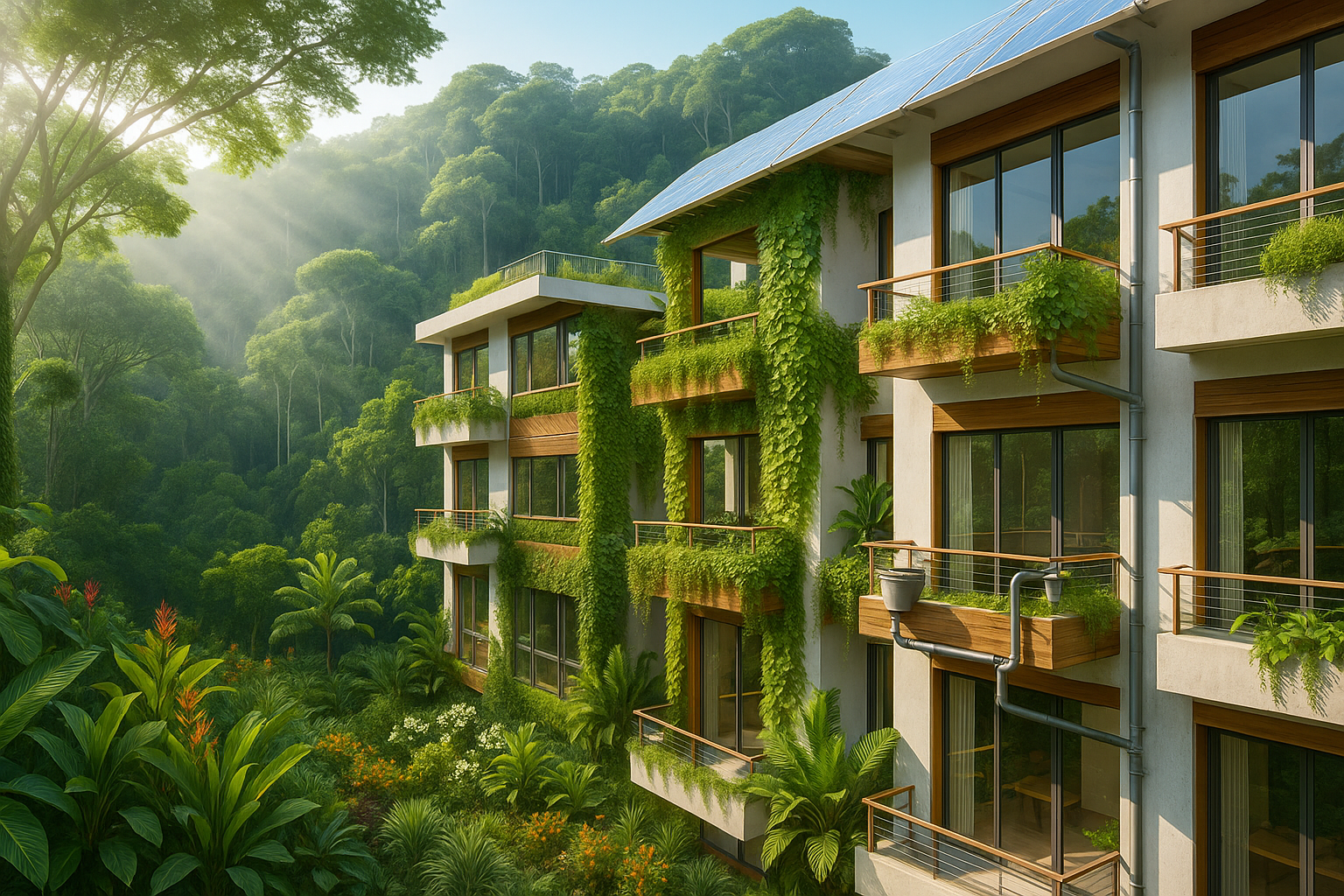
For example, energy-efficient homes, solar energy systems, rainwater harvesting, efficient lighting, responsible waste management, permeable surfaces, and water-efficient landscaping can help reduce resource consumption.
Additionally, buildings can be designed to make better use of natural light and ventilation. As a result, residents may enjoy greater comfort while the community reduces its environmental footprint.
8. Smart Technology
Similarly, technology is transforming residential communities. Smart gates, digital access systems, security cameras, community management applications, smart lighting, and automated infrastructure can make everyday life more convenient.
Moreover, technology can improve communication between residents and management teams. Residents may be able to receive community announcements, report maintenance issues, manage visitors, or access shared facilities through digital platforms.
Therefore, integrating technology thoughtfully can make a gated community safer, more efficient, and easier to manage.
9. Privacy and Community Connection
Interestingly, a successful gated community must balance two seemingly different needs: privacy and social interaction.
Residents want peaceful homes where they can enjoy personal space. At the same time, they appreciate opportunities to meet neighbors and participate in community activities.
Consequently, the best developments provide private residential zones alongside shared spaces such as parks, clubhouses, gardens, and recreational areas. This balance creates an environment where residents can enjoy both independence and a sense of belonging.
10. Efficient Maintenance and Management
Finally, even the best-designed gated community needs effective long-term management. Roads, landscaping, lighting, security systems, drainage, recreational facilities, and common areas require regular maintenance.
Therefore, developers should consider maintenance requirements during the planning stage. Durable materials, efficient infrastructure, clear management systems, and professional maintenance services can help keep the community attractive over time.
Conclusion
A truly exceptional gated community is created through careful planning, quality infrastructure, security, sustainability, modern amenities, and thoughtful design. More importantly, these features should not operate independently. They must work together to create a safe, comfortable, attractive, and connected environment.
Ultimately, the success of a gated community is measured not only by the quality of its homes but also by the quality of life it provides. By combining smart planning with sustainable design and resident-focused amenities, developers can create communities that remain desirable and valuable for generations.
In short, an exceptional gated community is not simply a collection of houses behind a gate—it is a complete lifestyle environment designed around the needs of the people who live there.