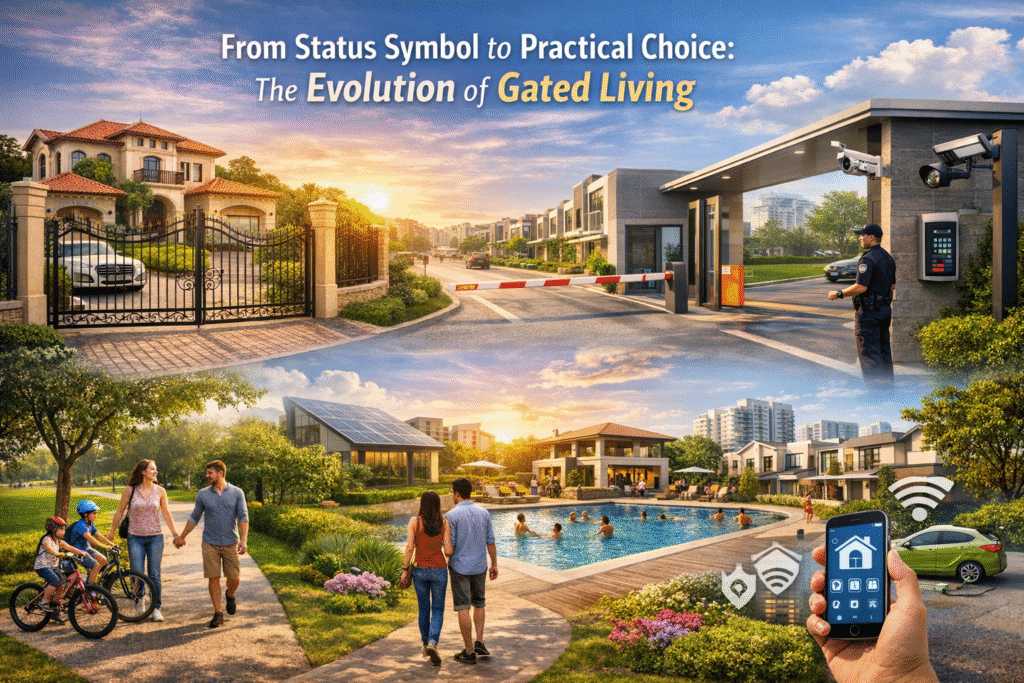
Over the past few decades, gated communities have transformed dramatically. Once considered exclusive enclaves designed primarily for the wealthy, these residential developments have gradually evolved into practical housing solutions for a broader population. Today, gated living is no longer just about prestige or social status. Instead, it represents a combination of security, convenience, community, and quality of life.
This shift did not happen overnight. Rather, it reflects changing urban dynamics, technological advancements, and evolving lifestyle preferences. As cities grow denser and more complex, gated communities have adapted to meet the needs of modern residents.
The Early Days: Gated Living as a Symbol of Prestige
Initially, gated communities emerged as symbols of wealth and exclusivity. Historically, large estates and private compounds used gates and walls to separate affluent families from the rest of society. These barriers served not only as physical protection but also as markers of social distinction.
In the late 20th century, developers began formalizing this concept by creating residential communities surrounded by walls, gates, and security personnel. As a result, living in such areas became a visible indicator of economic success.
Furthermore, these early developments often featured luxurious amenities such as private golf courses, expansive gardens, and elite clubhouses. Consequently, gated communities were perceived as lifestyle statements rather than practical housing solutions.
However, as urban populations expanded and safety concerns grew, the perception of gated living gradually began to shift.
Rising Urbanization and the Need for Security
As cities expanded rapidly, issues such as traffic congestion, noise, and crime became more common. In response, many families began seeking safer and more controlled residential environments.
Therefore, gated communities started gaining popularity beyond elite social circles. The presence of security guards, surveillance systems, and restricted access points offered residents a sense of safety that traditional open neighborhoods sometimes lacked.
Moreover, parents increasingly valued environments where children could play outdoors with reduced risks. Streets inside gated communities typically experience less traffic, which creates safer spaces for walking, cycling, and social activities.
Consequently, gated communities started attracting middle-income families who prioritized safety and peace of mind over luxury status.
Changing Lifestyle Preferences
At the same time, modern lifestyles were evolving. Urban residents were becoming busier, and many sought living spaces that could simplify daily life.
Gated communities began incorporating practical amenities such as grocery stores, fitness centers, parks, and walking paths within the residential area. As a result, residents could access essential services without traveling long distances.
Additionally, community planning started emphasizing convenience and accessibility. For example, well-designed layouts included pedestrian-friendly streets, green spaces, and shared recreational facilities.
Therefore, gated communities gradually transitioned from being purely exclusive zones into carefully planned residential ecosystems that supported everyday living.
Technological Advancements Transforming Gated Communities
Another key factor influencing the evolution of gated living is technology. Modern security systems have significantly enhanced the efficiency and convenience of residential access control.
For instance, many communities now use smart surveillance cameras, biometric entry systems, and mobile-based visitor management platforms. Consequently, security operations have become more reliable and less intrusive.
In addition, smart home integration allows residents to control lighting, climate systems, and security features remotely. As technology continues to advance, gated communities are increasingly becoming part of the broader smart city movement.
Thus, what once relied solely on physical barriers now incorporates digital innovation to create safer and more efficient environments.
Community Building and Social Interaction
Interestingly, gated communities have also evolved into spaces that encourage social interaction. While early critics argued that gated living isolated residents from the wider city, many modern developments actively promote community engagement.
For example, shared amenities such as parks, swimming pools, community halls, and sports courts create opportunities for residents to connect with neighbors. Seasonal events, fitness classes, and cultural gatherings further strengthen social bonds.
As a result, residents often experience a stronger sense of belonging compared to traditional urban housing complexes.
Furthermore, this sense of community can improve mental well-being and enhance overall quality of life. In an increasingly fast-paced world, having a supportive neighborhood network has become more valuable than ever.
Environmental and Design Considerations
Another important shift in gated living involves sustainable design and environmental responsibility. Developers are now paying greater attention to eco-friendly infrastructure.
For instance, many gated communities include rainwater harvesting systems, solar lighting, and landscaped green areas that support biodiversity. In addition, proper waste management and water conservation practices are becoming standard features.
These environmentally conscious efforts not only reduce the ecological footprint of residential developments but also create healthier living environments.
Therefore, gated communities are gradually aligning with global sustainability goals while maintaining comfort and convenience for residents.
Expanding Accessibility and Market Demand
Perhaps the most significant change in gated living is its expanding accessibility. Today, gated communities are no longer limited to luxury housing markets.
Developers now offer a wide range of housing options within gated environments, including apartments, townhouses, and compact villas. Consequently, people from various income groups can find homes within these communities.
Additionally, emerging cities and suburban areas have witnessed significant growth in gated developments. As urban residents seek quieter living spaces away from crowded city centers, gated communities in these regions have become highly attractive.
This trend indicates that gated living has shifted from a niche luxury concept to a widely accepted residential model.
Criticisms and Ongoing Debates
Despite their popularity, gated communities are not without criticism. Some urban planners argue that such developments can contribute to social segregation by physically separating residents from surrounding neighborhoods.
Moreover, critics suggest that excessive reliance on gated housing may reduce public investment in shared urban infrastructure.
However, supporters counter that gated communities can coexist with broader urban planning strategies if designed responsibly. By integrating public access points, mixed-use spaces, and sustainable transportation options, developers can create balanced environments.
Thus, the debate surrounding gated living continues, reflecting the complexity of modern urban development.
The Future of Gated Living
Looking ahead, the future of gated communities will likely be shaped by innovation and adaptability. As cities continue to evolve, residential developments must respond to changing environmental, technological, and social demands.
Future gated communities may incorporate advanced smart city technologies, autonomous transportation systems, and even more sustainable infrastructure.
At the same time, developers will likely focus on creating inclusive environments that balance privacy with connectivity.
Ultimately, gated living will continue to evolve beyond its original purpose. What once symbolized exclusivity is now becoming a practical solution for urban challenges.
Conclusion
In conclusion, the evolution of gated living reflects broader shifts in society and urban development. Initially designed as symbols of status and wealth, gated communities have gradually transformed into practical residential environments that emphasize security, convenience, and community.
Through technological advancements, thoughtful planning, and growing accessibility, these developments now serve a diverse population seeking quality living spaces.
Therefore, gated communities are no longer merely signs of prestige. Instead, they represent a modern approach to residential design that balances safety, sustainability, and social connection in an increasingly complex urban world.