
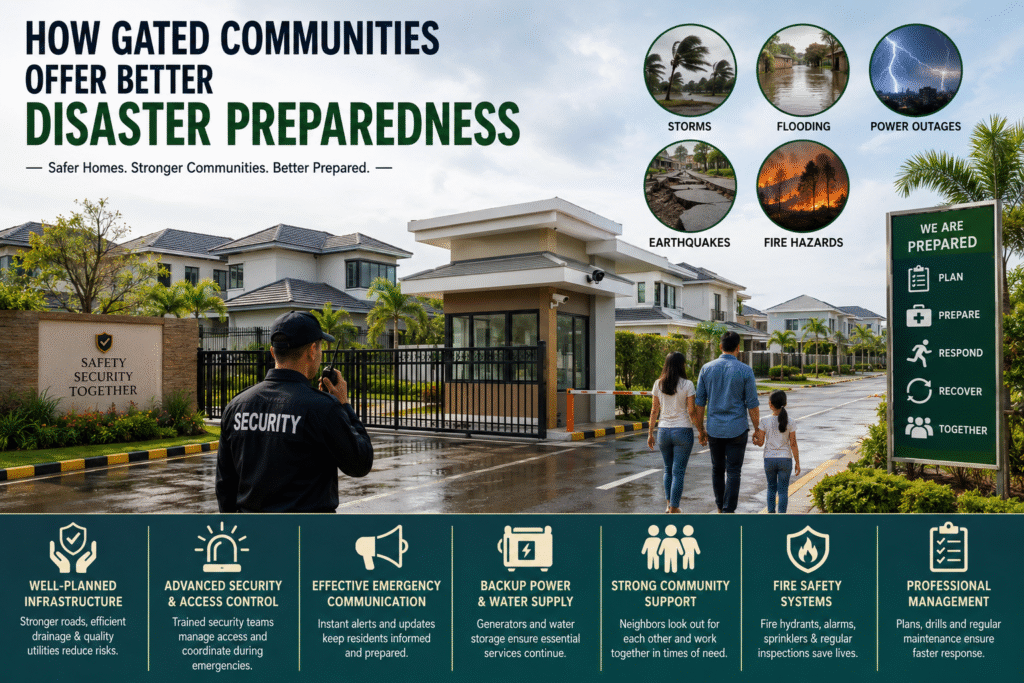
Natural disasters and emergencies can occur without warning. From heavy rainfall and flooding to storms, earthquakes, and power outages, every community faces potential risks. While no neighborhood can completely eliminate these threats, proper planning can significantly reduce their impact. This is where gated communities stand out. They are often designed with safety, organization, and resilience in mind, making them better prepared to respond to emergencies.
Moreover, modern gated communities go beyond providing secure living spaces. They incorporate advanced infrastructure, emergency response systems, and well-planned community management that help residents stay safe during unexpected situations. As a result, homeowners enjoy greater peace of mind knowing that their neighborhood is equipped to handle disasters more effectively.
Well-Planned Infrastructure Reduces Risks
One of the biggest advantages of gated communities is their carefully planned infrastructure. Unlike many older residential areas that have developed over time, gated communities are often designed using modern engineering standards.
For example, roads are generally wider, drainage systems are more efficient, and utility networks are strategically placed. Consequently, these features help reduce the impact of heavy rains, waterlogging, and traffic congestion during emergencies.
Furthermore, many developers conduct environmental assessments before construction begins. Therefore, they can identify potential hazards and design the community to minimize risks from floods, erosion, or other natural disasters.
Advanced Drainage Systems Help Prevent Flooding
Flooding is one of the most common natural disasters affecting residential neighborhoods. Fortunately, many gated communities invest in advanced stormwater management systems.
These systems typically include:
- Underground drainage networks
- Rainwater harvesting facilities
- Water retention ponds
- Properly sloped roads
- Efficient surface water channels
As a result, rainwater flows away more quickly, reducing the likelihood of flooded streets and damaged homes. Additionally, regular maintenance ensures that drainage systems continue functioning effectively throughout the year.
Reliable Security During Emergencies
Security personnel play an essential role not only in preventing crime but also in managing emergency situations.
For instance, trained security staff can:
- Coordinate emergency evacuations
- Control vehicle movement
- Guide emergency responders
- Assist elderly residents
- Monitor entry and exit points
Moreover, because gated communities have controlled access, emergency teams can reach affected areas more efficiently without dealing with unnecessary traffic or confusion.
Therefore, residents receive faster assistance when every minute matters.
Organized Emergency Communication
Clear communication is critical during any disaster. Fortunately, gated communities often have multiple communication channels that keep residents informed.
These may include:
- Mobile applications
- SMS alerts
- Community WhatsApp groups
- Public announcement systems
- Resident email notifications
Consequently, residents receive timely updates about weather warnings, evacuation procedures, road closures, or power interruptions.
In addition, management teams can quickly share verified information, reducing panic and preventing the spread of rumors.
Backup Power Improves Community Resilience
Power outages frequently occur during severe weather events. However, many gated communities are equipped with backup power systems.
These generators often support:
- Street lighting
- Security gates
- Surveillance cameras
- Water pumps
- Elevators in apartment buildings
- Clubhouses used as emergency shelters
As a result, essential services continue operating even when the main electrical supply is interrupted.
Furthermore, backup electricity improves safety during nighttime emergencies and helps residents maintain access to basic necessities.
Better Water Management
Disasters often disrupt water supplies. Fortunately, many gated communities prepare for such situations by installing water storage systems and backup pumping facilities.
Additionally, some communities use rainwater harvesting and water recycling technologies to conserve resources.
Therefore, residents are less likely to experience severe water shortages during emergencies or municipal supply disruptions.
Professional Community Management Makes a Difference
Another major strength of gated communities is professional management.
Unlike neighborhoods that depend entirely on local authorities, gated communities usually have dedicated management teams responsible for emergency planning.
These teams often:
- Develop disaster response plans
- Conduct regular inspections
- Coordinate maintenance
- Organize emergency drills
- Communicate with local emergency agencies
As a result, communities respond more quickly and efficiently when unexpected events occur.
Moreover, routine planning helps identify potential weaknesses before they become serious problems.
Faster Emergency Response
Emergency vehicles need clear access to affected areas. Fortunately, gated communities are generally designed with organized road layouts and clearly marked addresses.
Consequently:
- Ambulances locate homes faster.
- Firefighters access buildings more efficiently.
- Police officers experience fewer navigation delays.
- Rescue teams can coordinate operations more effectively.
Additionally, security personnel often direct emergency vehicles immediately to the correct location, saving valuable time.
Strong Community Support During Crises
Disaster preparedness is not only about infrastructure—it also depends on people working together.
Fortunately, gated communities often encourage stronger neighborhood relationships through community events, resident groups, and social activities.
As a result, neighbors become familiar with one another and are more willing to help during emergencies.
For example, residents may:
- Check on elderly neighbors.
- Share emergency supplies.
- Assist families with children.
- Provide temporary shelter.
- Offer transportation when needed.
This sense of community creates an additional layer of resilience that cannot be measured by physical infrastructure alone.
Enhanced Fire Safety Measures
Fire emergencies require immediate action. Therefore, many gated communities invest in comprehensive fire protection systems.
Common safety features include:
- Fire hydrants
- Smoke detection systems
- Fire alarms
- Sprinkler systems
- Clearly marked evacuation routes
- Fire extinguishers in common areas
Additionally, regular maintenance and inspections help ensure that these systems remain operational.
As a result, fire risks are reduced, and emergency response becomes much more effective.
Smart Technology Supports Disaster Preparedness
Technology continues to improve residential safety.
Many modern gated communities now integrate smart systems such as:
- CCTV surveillance
- Smart access control
- Weather monitoring systems
- Smart lighting
- Automated emergency alerts
- Remote monitoring platforms
Consequently, community managers can detect problems earlier and respond more quickly.
Furthermore, residents can receive instant notifications directly on their smartphones, allowing them to act without delay.
Safe Open Spaces for Emergency Assembly
During earthquakes or other emergencies, designated gathering areas are extremely important.
Fortunately, gated communities often include:
- Parks
- Open green spaces
- Community playgrounds
- Clubhouse grounds
These locations can serve as temporary assembly points while emergency personnel assess the situation.
Therefore, residents have safer places to gather instead of remaining near potentially damaged structures.
Regular Maintenance Improves Preparedness
Preparedness is not achieved through planning alone. Ongoing maintenance is equally important.
Professional maintenance teams regularly inspect:
- Drainage systems
- Electrical equipment
- Water pumps
- Roads
- Security systems
- Fire protection equipment
Consequently, small maintenance issues are addressed before they become major hazards during a disaster.
This proactive approach significantly improves community resilience.
Peace of Mind for Residents
Perhaps the greatest benefit of disaster preparedness is the confidence it provides homeowners.
Knowing that their neighborhood has:
- Emergency procedures
- Professional management
- Reliable infrastructure
- Backup utilities
- Organized communication systems
- Strong community support
allows residents to feel more secure throughout the year.
Although disasters cannot always be prevented, proper preparation greatly reduces their impact.
Conclusion
Gated communities offer far more than privacy and security. They provide a comprehensive approach to disaster preparedness through thoughtful planning, modern infrastructure, professional management, advanced technology, and strong community cooperation.
Moreover, features such as efficient drainage systems, backup utilities, emergency communication networks, fire safety measures, and organized evacuation procedures help residents respond more effectively when emergencies arise.
As climate-related events and natural disasters become increasingly common, disaster preparedness has become an essential consideration for homebuyers. Therefore, choosing a well-managed gated community is not only an investment in comfort and convenience but also in long-term safety and resilience.
Ultimately, a community that is prepared for emergencies creates a safer, more confident, and more sustainable environment where residents can enjoy peace of mind every day.