
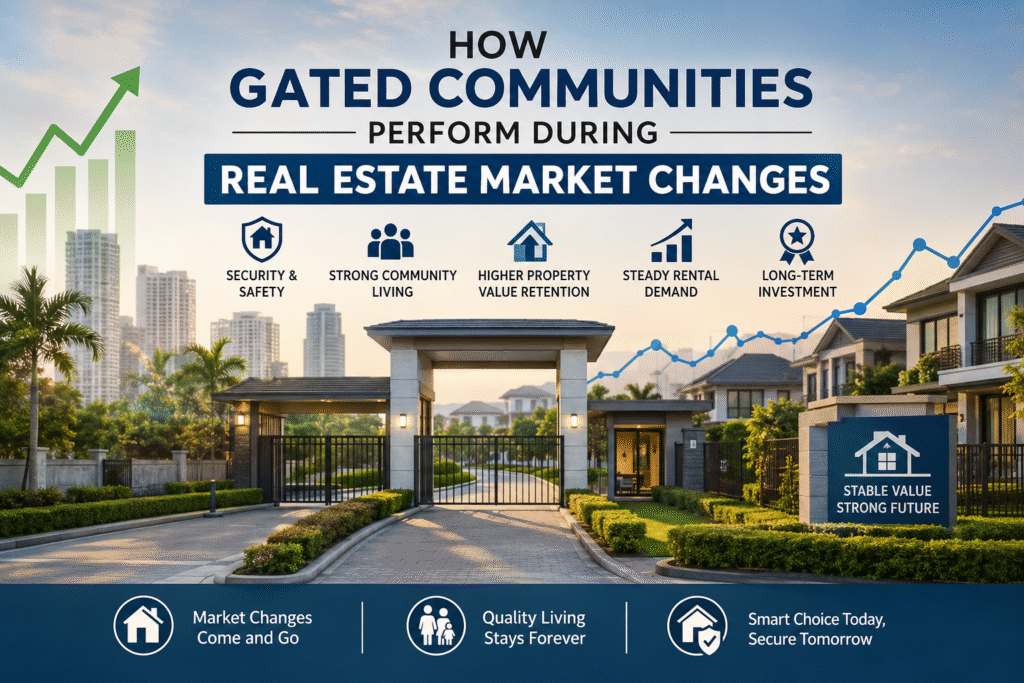
The real estate market is constantly evolving. Economic conditions, interest rates, buyer preferences, and government policies all influence property values and demand. While these market changes can create uncertainty, some types of properties tend to remain more resilient than others. Among them, gated communities have consistently demonstrated their ability to perform well during both market booms and downturns.
Homebuyers today are looking beyond just the size of a property. They want security, convenience, quality amenities, and a strong sense of community. As a result, gated communities continue to attract buyers even when the broader housing market slows. Furthermore, investors recognize these developments as stable assets that often retain their value over time.
In this article, we’ll explore how gated communities perform during real estate market changes and why they continue to be a preferred choice for homeowners and investors alike.
Understanding Real Estate Market Changes
Before discussing gated communities specifically, it is important to understand what causes fluctuations in the real estate market.
Several factors contribute to changing market conditions, including:
- Interest rate increases or decreases
- Economic growth or recession
- Employment trends
- Inflation
- Government housing policies
- Consumer confidence
- Supply and demand
Consequently, these factors influence buyer behavior, property prices, and investment decisions. While every property segment experiences some impact, premium residential communities often respond differently than standard housing developments.
Consistent Buyer Demand
One of the strongest advantages of gated communities is their ability to maintain steady buyer interest.
Even during slower markets, buyers continue searching for homes that provide long-term value. Since gated communities combine security, lifestyle amenities, and well-maintained surroundings, they remain attractive despite changing economic conditions.
Moreover, many families prioritize safety and quality of life over short-term market fluctuations. Therefore, gated communities continue attracting serious buyers when demand for other properties declines.
Stronger Property Value Retention
Property values naturally fluctuate throughout different market cycles. However, homes within gated communities often experience less dramatic price swings.
Several factors contribute to this stability:
- Controlled development standards
- Attractive landscaping
- Professional maintenance
- Community rules that preserve property appearance
- High-quality infrastructure
As a result, these features help protect neighborhood appeal, which supports property values even during slower market periods.
Additionally, buyers often perceive gated communities as premium investments, creating sustained demand that helps stabilize prices.
Lifestyle Becomes a Major Selling Point
During uncertain economic periods, buyers become more selective.
Instead of purchasing solely based on square footage, they evaluate overall lifestyle benefits. Fortunately, gated communities offer numerous advantages that extend beyond the home itself.
These include:
- Parks
- Walking trails
- Clubhouses
- Swimming pools
- Fitness centers
- Children’s play areas
- Community gathering spaces
Because these amenities improve daily living, buyers often view gated communities as offering greater overall value.
Consequently, lifestyle-focused developments continue attracting attention regardless of temporary market shifts.
Better Community Maintenance Enhances Market Appeal
Another reason gated communities perform well during changing markets is their commitment to consistent maintenance.
Professional management teams ensure that:
- Roads remain clean
- Landscapes stay attractive
- Common facilities operate efficiently
- Security systems function properly
- Public spaces remain inviting
Therefore, potential buyers immediately notice the well-maintained environment.
In contrast, neighborhoods with inconsistent upkeep may struggle to attract buyers during competitive markets.
Security Continues to Drive Buyer Decisions
Security has become one of the most influential factors in residential real estate.
Regardless of market conditions, families consistently value features such as:
- Controlled entry points
- Security personnel
- CCTV monitoring
- Visitor management systems
- Well-lit streets
These features provide peace of mind, making gated communities desirable even when buyers become cautious with spending.
Furthermore, security remains a long-term priority rather than a temporary trend, supporting ongoing demand.
Rental Demand Often Remains Stable
Real estate market changes do not only affect buyers—they also influence renters.
When higher interest rates make homeownership more expensive, many individuals choose to rent instead of buy.
As a result, homes within gated communities often experience strong rental demand because tenants appreciate:
- Safe neighborhoods
- Premium amenities
- Professional maintenance
- Convenient locations
- Better living standards
Therefore, investors owning homes in gated communities may continue generating rental income even when property sales slow.
Attractive to Long-Term Investors
Experienced investors rarely focus only on short-term market movements.
Instead, they evaluate:
- Future appreciation potential
- Rental income
- Community development
- Infrastructure growth
- Buyer demand
Since gated communities frequently meet these investment criteria, they continue attracting long-term investors during changing market conditions.
Additionally, investors understand that premium residential developments often recover more quickly after market downturns.
Well-Planned Infrastructure Adds Lasting Value
Infrastructure plays a major role in real estate performance.
Many gated communities feature carefully planned layouts with:
- Wide internal roads
- Underground utilities
- Green open spaces
- Efficient drainage systems
- Modern street lighting
- Recreational facilities
These planned environments enhance both convenience and property appeal.
Consequently, buyers often choose gated communities over less organized developments when comparing similar price ranges.
Sense of Community Strengthens Buyer Confidence
Today’s buyers value more than just a physical property—they also seek meaningful neighborhoods.
Gated communities often organize:
- Cultural celebrations
- Sports events
- Children’s activities
- Fitness programs
- Community meetings
These activities help residents build lasting relationships.
As a result, buyers perceive these communities as welcoming places to live rather than simply collections of houses.
This emotional connection often influences purchasing decisions during uncertain markets.
Adaptability to Changing Buyer Preferences
Buyer expectations evolve over time.
Fortunately, modern gated communities continue adapting by introducing features such as:
- Smart home integration
- EV charging stations
- Co-working spaces
- High-speed internet
- Sustainable landscaping
- Rainwater harvesting
- Solar-powered lighting
Because developers continue updating community features, gated communities remain competitive even as market trends change.
This adaptability contributes significantly to their long-term performance.
Limited Supply Supports Demand
Many premium gated communities are developed in carefully selected locations with limited available land.
Since supply remains relatively controlled, excessive competition is often reduced.
Meanwhile, buyer demand continues due to the lifestyle advantages these communities provide.
As a result, limited inventory can help support property values during slower real estate markets.
Why Homebuyers Continue Choosing Gated Communities
Even when market conditions become uncertain, buyers continue prioritizing factors that improve everyday living.
These include:
- Safety
- Comfort
- Community living
- Reliable infrastructure
- Green surroundings
- Modern amenities
- Better maintenance
- Long-term investment potential
Because gated communities deliver these benefits consistently, they remain highly attractive across different market cycles.
Rather than focusing solely on short-term pricing, many buyers recognize the lasting value these developments offer.
Conclusion
Real estate markets will always experience periods of growth, adjustment, and recovery. However, gated communities have repeatedly shown their ability to perform well through these changing conditions. Their combination of security, professional maintenance, premium amenities, thoughtful planning, and strong community appeal helps maintain buyer interest even when the broader market slows.
Moreover, stable rental demand, better property value retention, and continuous adaptation to modern lifestyles make gated communities an attractive choice for both homeowners and investors. While no investment is completely immune to market fluctuations, properties within well-managed gated communities are often better positioned to withstand change and recover more quickly.
Ultimately, choosing a home in a gated community is not just about purchasing real estate—it’s about investing in a secure, comfortable, and future-ready lifestyle that continues to deliver value regardless of market conditions.