
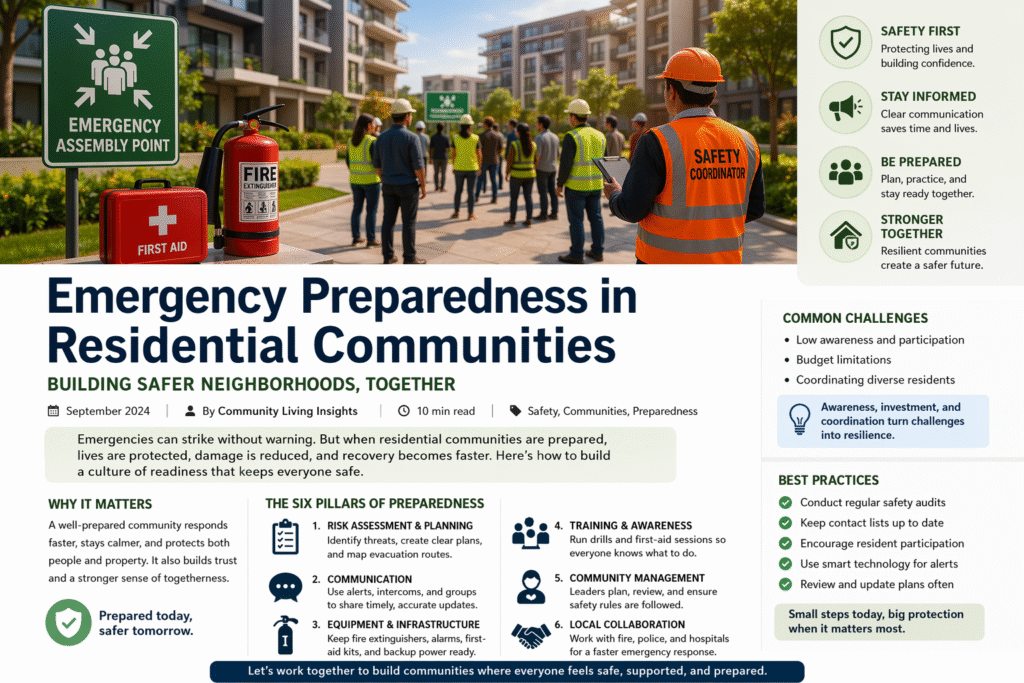
In today’s fast-changing world, emergencies can arise without warning. Whether it is a natural disaster, fire, medical crisis, or security threat, being prepared is no longer optional—it is essential. Therefore, emergency preparedness in residential communities plays a vital role in ensuring the safety and well-being of residents.
Moreover, gated communities and residential societies have a unique advantage: they can plan, organize, and respond collectively. As a result, they are better positioned to minimize risks and handle crises effectively. This blog explores why emergency preparedness matters and how communities can build strong, resilient systems.
Understanding Emergency Preparedness
To begin with, emergency preparedness refers to the steps taken to anticipate, respond to, and recover from unexpected situations. These emergencies may include fires, earthquakes, floods, power outages, or even health-related crises.
In addition, preparedness is not just about reacting quickly; it is also about planning ahead. By creating structured systems and educating residents, communities can significantly reduce damage and confusion during emergencies.
Why Emergency Preparedness is Crucial
First and foremost, the safety of residents is the top priority. In times of crisis, a well-prepared community can act swiftly, thereby reducing injuries and saving lives.
Furthermore, preparedness helps prevent panic. When residents know what to do, where to go, and whom to contact, they remain calmer and more organized. Consequently, the overall response becomes more effective.
Another important aspect is property protection. With proper systems in place, such as fire safety equipment and emergency protocols, damage to buildings and assets can be minimized.
Lastly, being prepared builds trust among residents. It creates a sense of security and fosters confidence in the community’s management.
Key Elements of Emergency Preparedness
1. Risk Assessment and Planning
To start with, communities must identify potential risks specific to their location. For instance, areas prone to flooding should prioritize water management systems, while earthquake-prone regions should focus on structural safety.
After identifying risks, a detailed emergency plan should be developed. This plan must include evacuation routes, assembly points, and emergency contacts. In addition, it should be easily accessible to all residents.
2. Effective Communication Systems
Equally important is communication. During emergencies, clear and timely communication can save lives.
Therefore, residential communities should establish multiple communication channels such as mobile alerts, intercom systems, WhatsApp groups, or public announcement systems.
Moreover, assigning communication coordinators ensures that accurate information is shared quickly, thereby avoiding confusion and misinformation.
3. Emergency Equipment and Infrastructure
In addition to planning, having the right equipment is essential. Fire extinguishers, smoke detectors, first-aid kits, and backup power systems should be readily available.
Furthermore, regular maintenance of this equipment is crucial. Without proper upkeep, even the best tools may fail during critical moments.
Communities should also invest in infrastructure such as emergency exits, clearly marked evacuation routes, and safe assembly areas.
4. Training and Awareness Programs
Notably, preparedness is only effective if residents know how to respond. Hence, regular training sessions and awareness programs are necessary.
For example, fire drills, evacuation exercises, and first-aid training can equip residents with practical skills.
In addition, children and elderly residents should receive special attention, as they may require additional support during emergencies.
5. Role of Community Management
Equally significant is the role of community management. They are responsible for implementing safety measures, coordinating with emergency services, and ensuring compliance with regulations.
Moreover, management teams should regularly review and update emergency plans. As circumstances change, plans must evolve accordingly
6. Collaboration with Local Authorities
Another critical factor is collaboration with local emergency services such as fire departments, hospitals, and police.
By establishing strong relationships with these authorities, communities can ensure faster response times during emergencies. Additionally, authorities can provide guidance, training, and support in developing effective preparedness strategies.
Challenges in Emergency Preparedness
Despite its importance, implementing emergency preparedness is not without challenges.
Firstly, lack of awareness among residents can hinder participation. Many people underestimate risks and, therefore, do not take preparedness seriously.
Secondly, budget constraints can limit the availability of equipment and training programs. However, investing in safety should always be considered a priority rather than an expense.
Another challenge is coordination. Managing a large group of residents with diverse needs can be complex. Nevertheless, with proper planning and communication, these challenges can be overcome.
Best Practices for Building Resilient Communities
To enhance preparedness, communities should adopt certain best practices.
For instance, conducting regular audits helps identify gaps in safety systems. Similarly, updating emergency contact lists ensures that help can be reached quickly.
Moreover, encouraging resident participation creates a sense of responsibility and cooperation. When everyone contributes, the community becomes stronger and more resilient.
Additionally, leveraging technology can improve efficiency. Smart systems, such as automated alarms and surveillance, can provide real-time alerts and enhance response times.
The Future of Emergency Preparedness
Looking ahead, emergency preparedness is expected to become more advanced and technology-driven.
For example, smart gated communities are increasingly using artificial intelligence and IoT devices to monitor risks and respond automatically.
Furthermore, data-driven insights can help predict potential emergencies and enable proactive measures. As a result, communities will be better equipped to handle unforeseen situations.
At the same time, the focus on sustainability and climate resilience will play a key role in shaping preparedness strategies.
Conclusion
In conclusion, emergency preparedness in residential communities is not just a precaution—it is a necessity. By planning ahead, investing in infrastructure, and educating residents, communities can create a safe and secure living environment.
Moreover, preparedness fosters unity and cooperation, transforming a group of residents into a strong, supportive community.
Ultimately, the goal is simple: to protect lives, reduce risks, and ensure peace of mind. Therefore, every residential community should prioritize emergency preparedness and take proactive steps toward a safer future.