
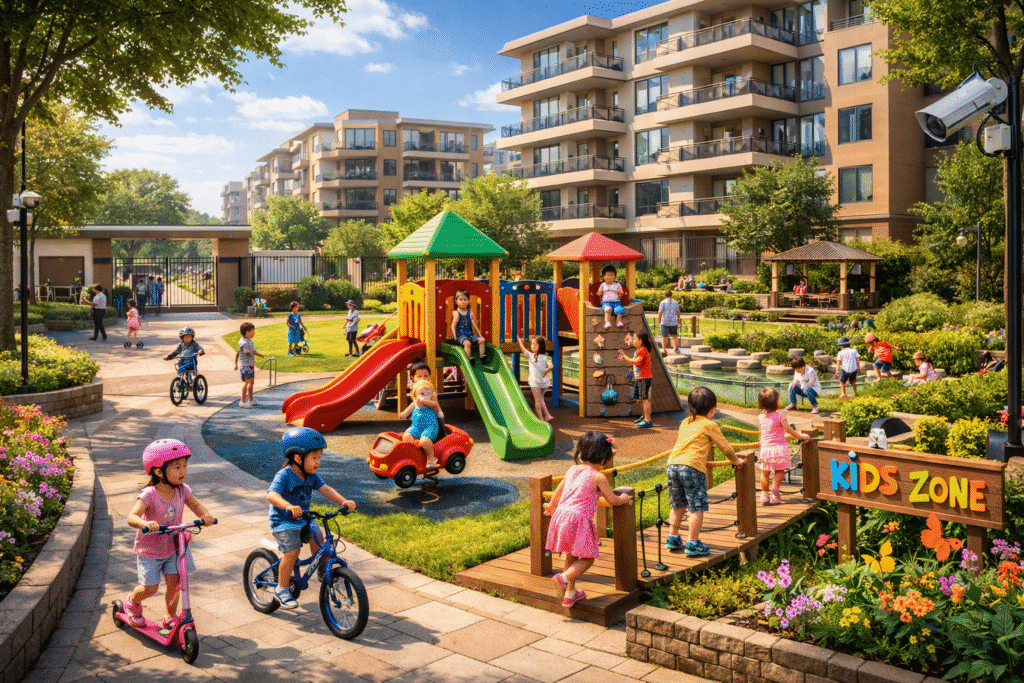
In today’s fast-paced urban world, families are increasingly prioritizing environments that support their children’s safety, development, and happiness. As a result, gated societies have evolved beyond just secure residential spaces—they now aim to create nurturing ecosystems where children can thrive. Child-friendly infrastructure in gated societies has become a defining factor for modern homebuyers. Not only does it ensure safety, but it also fosters creativity, social interaction, and overall well-being.
The Importance of Child-Friendly Infrastructure
To begin with, childhood is a crucial phase of growth, learning, and exploration. Therefore, the environment in which children live plays a significant role in shaping their physical, emotional, and social development. Unlike traditional neighborhoods, gated societies offer a controlled and planned setting. Consequently, developers can design spaces specifically tailored to children’s needs.
Moreover, with increasing concerns about traffic, pollution, and safety in urban areas, parents seek communities where children can play freely without constant supervision. In this context, child-friendly infrastructure is not a luxury—it is a necessity.
Safe Play Areas: The Heart of the Community
First and foremost, safe and well-designed play areas are the cornerstone of any child-friendly gated society. These spaces are typically equipped with modern playground equipment such as swings, slides, climbing frames, and interactive installations. Importantly, they are built using non-toxic materials and feature soft flooring to minimize injuries.
In addition, these play zones are often strategically located within the community, ensuring visibility from multiple apartments. As a result, parents can keep an eye on their children while allowing them a sense of independence. Furthermore, separate play areas for different age groups ensure that toddlers and older children can play safely without interference.
Traffic-Free Zones and Pedestrian Safety
Equally important is the management of vehicular movement within the society. Many gated communities now incorporate traffic-free zones or designate specific areas where vehicles are restricted. This approach significantly reduces the risk of accidents.
Additionally, clearly marked pedestrian pathways, speed limits, and speed breakers further enhance safety. For instance, children can ride bicycles, skate, or simply walk around without the constant threat of traffic. Consequently, this encourages outdoor activity, which is essential for physical health.
Green Spaces and Nature Integration
Beyond safety, exposure to nature is vital for a child’s holistic development. Therefore, modern gated societies emphasize the inclusion of green spaces such as parks, gardens, and tree-lined walkways. These areas provide children with opportunities to connect with nature, which has been shown to reduce stress and improve concentration.
Moreover, features like butterfly gardens, small ponds, and community farming plots can spark curiosity and teach children about the environment. In addition, open spaces allow for unstructured play, which is essential for creativity and imagination.
Educational and Recreational Facilities
In addition to play areas, many gated societies now include educational and recreational facilities. For example, libraries, activity rooms, and hobby centers provide children with spaces to learn and explore new interests. Similarly, indoor game rooms and sports facilities such as basketball courts, swimming pools, and badminton courts promote physical fitness.
Furthermore, organized workshops, storytelling sessions, and art classes often take place within the community. As a result, children can develop new skills without having to travel far. This convenience is especially beneficial for working parents.
Inclusive Design for All Children
Importantly, child-friendly infrastructure must be inclusive. This means designing spaces that cater to children of all abilities, including those with disabilities. Features such as wheelchair-accessible ramps, sensory play equipment, and inclusive playgrounds ensure that every child can participate.
In this way, gated societies promote empathy and social inclusion among residents. Children learn to interact with peers from diverse backgrounds and abilities, which is essential for building a compassionate community.
Advanced Security Measures
While play and learning are important, safety remains the top priority. Gated societies are known for their advanced security systems, which provide peace of mind to parents. These typically include CCTV surveillance, security personnel, and controlled entry and exit points.
Moreover, many communities now use smart technologies such as mobile apps for visitor management and emergency alerts. Consequently, parents can feel confident allowing their children to explore the community independently.
Social Interaction and Community Building
Another key benefit of child-friendly infrastructure is the opportunity for social interaction. Children living in gated societies often form strong friendships with their neighbors. Shared spaces such as playgrounds and community halls act as gathering points where children can interact and bond.
Additionally, festivals, sports events, and cultural programs organized within the community further strengthen these connections. As a result, children develop social skills, teamwork, and a sense of belonging.
Health and Well-Being
Equally noteworthy is the impact of such infrastructure on children’s health. Access to safe outdoor spaces encourages physical activity, which helps combat issues such as obesity and screen addiction. At the same time, clean and well-maintained environments reduce exposure to pollutants and allergens.
Furthermore, the presence of medical facilities or tie-ups with nearby clinics ensures quick access to healthcare when needed. Thus, gated societies provide a comprehensive approach to well-being.
The Role of Developers and Resident Associations
Creating and maintaining child-friendly infrastructure requires collaboration between developers and resident associations. Developers must prioritize thoughtful design and high-quality materials during construction. Meanwhile, resident associations play a crucial role in maintaining facilities and organizing activities.
For instance, regular safety audits, equipment maintenance, and feedback from residents help ensure that the infrastructure remains effective and relevant. Consequently, the community continues to meet the evolving needs of its youngest residents.
Future Trends in Child-Friendly Gated Living
Looking ahead, the concept of child-friendly infrastructure is expected to evolve further. Emerging trends include the integration of smart technologies, such as app-based play area bookings and virtual learning spaces. Additionally, eco-friendly designs and sustainable materials will become increasingly important.
Moreover, there is a growing emphasis on mental well-being. Quiet zones, mindfulness gardens, and creative spaces are being incorporated to support emotional health. Therefore, the future of gated societies lies in creating balanced environments that nurture every aspect of a child’s development.
Conclusion
In conclusion, child-friendly infrastructure in gated societies is transforming the way families experience urban living. By combining safety, recreation, education, and community engagement, these spaces create an ideal environment for children to grow and thrive.
Ultimately, investing in such infrastructure is not just about enhancing property value—it is about building a better future. As cities continue to expand, gated societies that prioritize children’s needs will stand out as models of thoughtful and sustainable living.