
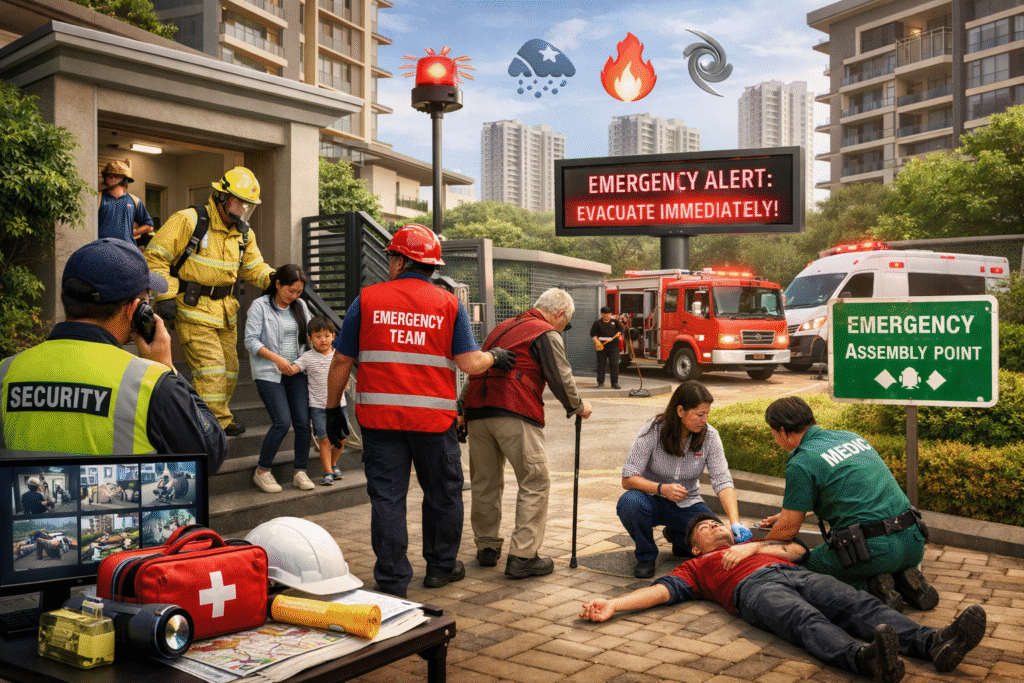
In today’s rapidly changing world, emergencies can arise without warning. Whether it is a natural disaster, fire outbreak, medical emergency, or security threat, being prepared is no longer optional—it is essential. Therefore, residential communities, especially gated ones, must prioritize emergency preparedness to ensure the safety and well-being of all residents.
Understanding the Importance of Emergency Preparedness
To begin with, emergency preparedness refers to the proactive steps taken to prevent, respond to, and recover from unexpected situations. While many people assume that emergencies are rare, the reality is quite the opposite. Consequently, communities that plan ahead are far more resilient and capable of minimizing damage and saving lives.
Moreover, a well-prepared residential community creates a sense of confidence among residents. Not only do people feel safer, but they also trust the management and systems in place. As a result, preparedness becomes a key factor in enhancing overall quality of life.
Identifying Potential Risks
Before implementing any plan, it is crucial to identify the types of emergencies that could affect the community. For instance, coastal areas may face flooding, whereas urban regions might deal with fire hazards or infrastructure failures. Similarly, health emergencies such as pandemics can impact communities regardless of location.
In addition, man-made risks like theft, gas leaks, or electrical faults should not be overlooked. By conducting a thorough risk assessment, communities can prioritize their response strategies effectively. Hence, understanding risks forms the foundation of any emergency preparedness plan.
Creating a Comprehensive Emergency Plan
Once risks are identified, the next step is to develop a clear and structured emergency plan. This plan should outline procedures for various scenarios, including evacuation routes, emergency contacts, and roles of residents and staff.
Furthermore, it is important to ensure that the plan is simple and easy to understand. Complicated instructions can lead to confusion during critical moments. Therefore, visual aids such as maps and signboards should be displayed across the community.
Equally important, the plan must be regularly updated to reflect new risks or changes in infrastructure. In this way, the community remains prepared for evolving challenges.
Role of Technology in Emergency Preparedness
In recent years, technology has significantly improved how residential communities handle emergencies. For example, smart surveillance systems can detect unusual activities and alert security personnel immediately. Likewise, mobile apps can notify residents about emergencies in real time.
Additionally, automated alarm systems and fire detection sensors provide early warnings, allowing quick action. As a result, response time is reduced, which can make a critical difference in saving lives.
On the other hand, backup power systems ensure that essential services continue during power outages. Therefore, integrating technology into emergency preparedness is both practical and necessary.
Training and Awareness Programs
Even the best plans can fail if residents are not aware of them. Hence, regular training sessions and awareness programs are essential. These programs should educate residents about evacuation procedures, first aid, and emergency contacts.
For instance, conducting fire drills helps residents practice how to respond during an actual emergency. Similarly, workshops on basic first aid can empower individuals to assist others in need.
Moreover, involving children and elderly residents in these programs ensures inclusivity. As a result, the entire community becomes more confident and prepared.
Establishing Emergency Response Teams
Another effective strategy is to create dedicated emergency response teams within the community. These teams can consist of trained residents, security staff, and maintenance personnel.
During emergencies, these individuals can take charge of guiding residents, coordinating evacuations, and communicating with external agencies. Consequently, response efforts become more organized and efficient.
In addition, assigning specific roles—such as first aid responders or communication coordinators—helps avoid confusion. Therefore, teamwork plays a crucial role in managing emergencies successfully.
Infrastructure and Safety Measures
A well-prepared community must also invest in proper infrastructure. For example, fire extinguishers, emergency exits, and clearly marked escape routes are basic yet vital components.
Furthermore, installing smoke detectors, sprinkler systems, and emergency lighting enhances safety. Regular maintenance of these systems is equally important to ensure they function properly when needed.
Likewise, accessibility should be considered for all residents, including those with disabilities. Ramps, handrails, and clear pathways can make evacuation safer and faster.
Communication Systems During Emergencies
Effective communication is the backbone of emergency management. Without clear communication, even well-planned strategies can fail. Therefore, communities should establish multiple communication channels.
For example, public announcement systems, messaging apps, and emergency sirens can be used to alert residents. Additionally, having a centralized communication point ensures that accurate information is shared promptly.
In contrast, misinformation can create panic and confusion. Hence, it is important to rely on verified sources and designated communication leaders.
Collaboration with Local Authorities
Residential communities should not operate in isolation during emergencies. Instead, they must collaborate with local authorities such as fire departments, hospitals, and police services.
By establishing these connections in advance, communities can receive timely assistance when needed. Moreover, joint training sessions and mock drills can improve coordination between residents and emergency services.
As a result, response efforts become faster and more effective, ultimately reducing risks and damage.
Encouraging Community Participation
Emergency preparedness is a shared responsibility. While management plays a key role, residents must also actively participate. For instance, staying informed, attending training sessions, and following guidelines are essential contributions.
Furthermore, fostering a culture of cooperation and support strengthens community resilience. In times of crisis, neighbors helping neighbors can make a significant difference.
Therefore, building a sense of community is just as important as having a solid emergency plan.
Conclusion
In conclusion, emergency preparedness in residential communities is not just about planning—it is about creating a safe, responsive, and resilient environment. By identifying risks, implementing structured plans, leveraging technology, and promoting awareness, communities can effectively handle emergencies.
Moreover, continuous improvement and active participation ensure that preparedness remains strong over time. Ultimately, a well-prepared community not only protects lives and property but also fosters peace of mind among its residents.
Thus, investing in emergency preparedness today is a step toward a safer and more secure tomorrow.