Introduction
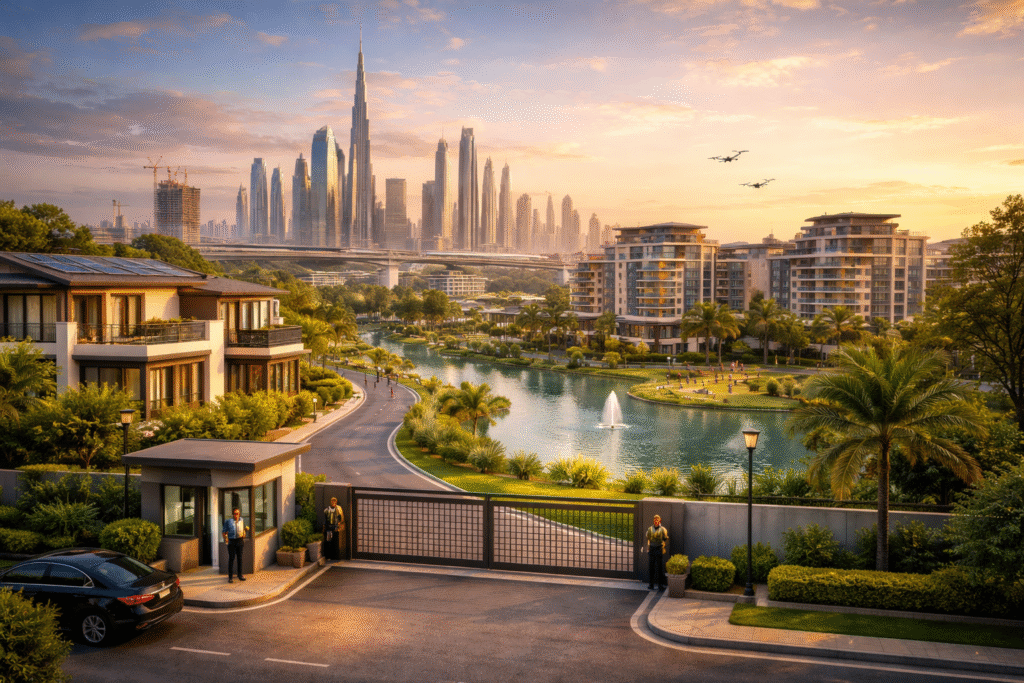
To begin with, gated communities have shifted from symbols of luxury to practical housing solutions in many developing cities. As urban populations grow rapidly, people actively seek safety, comfort, and a strong sense of belonging. Therefore, developers no longer target only elite buyers; instead, they design gated communities for middle-income families as well.
In this context, the future of gated communities in developing cities looks promising yet complex. While they offer numerous benefits, they also raise important questions about inclusivity, urban planning, and sustainability
Urbanization and Rising Demand
Firstly, rapid urbanization drives the growth of gated communities. Cities expand quickly, and this expansion often creates overcrowding and pressure on infrastructure. As a result, many families choose planned residential spaces that offer structure and better living conditions.
Moreover, migration from rural areas continues to increase housing demand. Consequently, developers focus on projects that combine housing with lifestyle amenities like parks, gyms, and schools.
In addition, rising incomes encourage people to invest in long-term assets. Thus, buyers increasingly prefer gated communities that promise security and convenience along with value.
Technological Advancements and Smart Li
Furthermore, technology is set to play a crucial role in shaping the future of gated communities. Modern residential complexes are already incorporating smart features such as automated security systems, app-based services, and energy-efficient designs.
For instance, residents use mobile apps to control lighting, manage visitor entry, and monitor security cameras. Similarly, smart sensors and automated systems reduce energy use and improve efficiency.
As technology advances, communities will become more connected and responsive. Ultimately, smart living will not remain a luxury feature—it will become a standard expectation.
Focus on Sustainability
At the same time, developers now prioritize sustainability in gated communities. They actively adopt eco-friendly practices to reduce environmental impact.
For example, many communities install rainwater harvesting systems, solar panels, and efficient waste management solutions. In addition, they design open green spaces that improve air quality and provide relaxation areas.
Consequently, future developments will focus more on environmental responsibility. In the long run, sustainable gated communities will benefit both residents and the planet.
Changing Social Dynamics
Meanwhile, gated communities influence how people interact and build relationships. On one hand, shared amenities encourage residents to connect and participate in community activities. On the other hand, physical boundaries can limit interaction with surrounding neighborhoods.
Nevertheless, developers now try to create more inclusive environments. For instance, they design community halls, parks, and event spaces that promote social engagement.
In contrast to earlier designs, future gated communities may integrate more openly with the surrounding city. Thus, they can support both privacy and connection.
Economic Growth and Investment Opportunities
From an economic perspective, gated communities offer strong investment potential. Buyers often see steady appreciation in property value within these developments.
Additionally, these communities attract businesses such as supermarkets, schools, and healthcare centers. As a result, they stimulate local economic growth and create job opportunities.
Moreover, investors prefer gated communities because they offer stability and long-term returns. Therefore, developers will continue to expand such projects in growing cities.
Challenges and Concerns
However, gated communities also present challenges that cities must address. One major concern involves social inequality. In particular, clear boundaries between gated and non-gated areas can highlight economic differences.
Furthermore, developers sometimes limit access to spaces that could otherwise serve the public. Consequently, this approach can reduce shared urban resources.
In addition, large developments can strain infrastructure if planners do not manage them properly. Therefore, cities must enforce regulations and encourage responsible development.
Government Policies and Urban Planning
Importantly, governments play a key role in shaping the future of gated communities. They must guide development to align with broader urban goals.
For example, authorities can connect gated communities with public transport systems to improve accessibility. Similarly, they can promote mixed-income housing to reduce social gaps.
As policymakers take active steps, they can ensure balanced urban growth. Ultimately, thoughtful planning will help cities integrate gated communities more effectively.
The Road Ahead
Looking ahead, gated communities will continue to evolve with changing urban needs. Developers will focus on innovation, sustainability, and inclusivity to stay relevant.
In conclusion, gated communities no longer represent just exclusivity. They now serve as modern living solutions that combine technology, comfort, and community life. Therefore, they will remain a key part of urban development in growing cities.
All things considered, their success will depend on how well developers, governments, and residents work together to create balanced and inclusive environments.