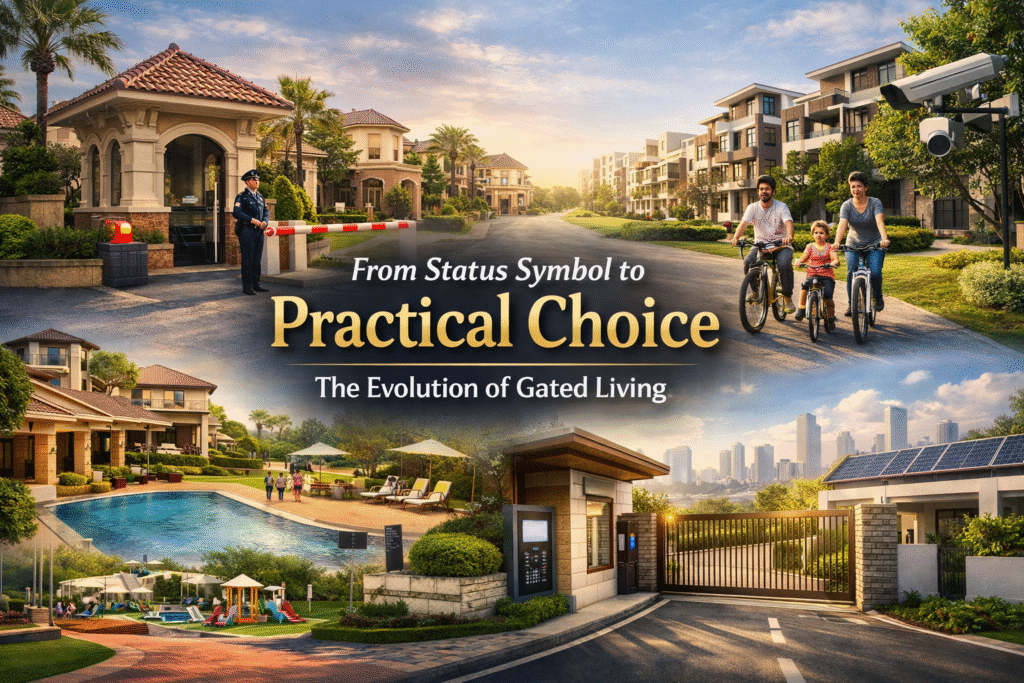
Over the past few decades, residential preferences around the world have undergone a significant transformation. Among the most noticeable trends is the rise of gated communities. Once considered a luxury reserved for the wealthy, gated living has gradually evolved into a practical and desirable choice for a wider range of homeowners. Today, these communities are no longer just symbols of status and exclusivity; instead, they represent safety, convenience, and a better quality of life.
This shift did not happen overnight. Rather, it emerged through changing lifestyles, urban challenges, and evolving expectations from modern housing. Therefore, understanding the evolution of gated living reveals much about how communities adapt to meet the needs of contemporary society.
The Early Days: Gated Living as a Status Symbol
Initially, gated communities were primarily associated with affluence and exclusivity. Wealthy individuals sought residences that offered privacy, prestige, and a sense of distinction. As a result, gated developments often featured grand entrances, private security personnel, and luxurious amenities.
Moreover, these communities were typically located in prime areas and included large villas, landscaped gardens, and private recreational facilities. Consequently, living in a gated community became a symbol of financial success and social status.
At that time, accessibility was limited. Only high-income families could afford the high property prices and maintenance costs associated with such developments. Therefore, gated living remained a niche segment of the housing market.
Urban Growth and Changing Priorities
However, as cities began expanding rapidly, the dynamics of urban living started to change. Increasing population density, traffic congestion, and rising safety concerns gradually influenced residential preferences. In response, developers began rethinking housing models.
Gated communities soon emerged as a solution to several urban challenges. For instance, controlled entry points provided enhanced security, while organized layouts reduced traffic and noise within residential areas.
Additionally, families began valuing peaceful living environments away from the chaos of busy city streets. As a result, gated communities started appealing not only to the wealthy but also to middle-class homebuyers seeking a safer and more structured neighborhood.
The Role of Security in Popularity
One of the most significant factors behind the growth of gated living is security. In many urban regions, safety has become a primary concern for homeowners. Consequently, gated communities offer features such as surveillance cameras, guarded entrances, and restricted access.
Furthermore, these measures provide residents with a sense of comfort and reassurance. Parents, for example, often feel more relaxed allowing their children to play outdoors within a secure environment.
In addition, community monitoring systems and modern technology have further strengthened safety measures. Because of these advantages, many families now view gated communities as a practical housing solution rather than merely a luxury.
Lifestyle Amenities and Community Living
Another important reason for the widespread adoption of gated communities is the availability of lifestyle amenities. Modern gated developments often include facilities such as parks, fitness centers, swimming pools, walking tracks, and community halls.
Consequently, residents can enjoy recreational activities without leaving their neighborhood. This convenience has become particularly valuable in fast-paced urban environments where time is limited.
Moreover, gated communities often encourage social interaction among residents. Shared spaces allow neighbors to connect through events, gatherings, and daily interactions. Therefore, these communities promote a sense of belonging and collective living.
As a result, gated developments have gradually shifted from isolated luxury spaces to vibrant residential ecosystems.
Better Infrastructure and Maintenance
In addition to security and amenities, infrastructure quality has played a crucial role in the evolution of gated living. Many urban neighborhoods struggle with issues such as poor road maintenance, inconsistent waste management, and limited green spaces.
In contrast, gated communities typically maintain higher infrastructure standards. Roads, lighting systems, drainage, and landscaping are regularly managed by dedicated maintenance teams.
Furthermore, resident associations often oversee the upkeep of common facilities. Consequently, these communities provide a cleaner, more organized living environment.
Because of this reliability, homeowners increasingly view gated communities as long-term investments in comfort and convenience.
Appeal to Different Age Groups
Interestingly, the appeal of gated living now spans across multiple generations. Young professionals appreciate the modern amenities and connectivity, while families value safety and open spaces for children.
At the same time, retirees and seniors often prefer gated communities because they offer peaceful surroundings and access to essential services.
For instance, many modern developments include walking paths, healthcare facilities nearby, and recreational activities tailored for older residents. Therefore, gated living supports diverse lifestyle needs within a single community.
The Influence of Modern Urban Planning
Urban planning has also contributed significantly to the popularity of gated communities. Developers today focus on creating integrated living environments rather than just housing units.
For example, modern gated communities may include retail areas, schools, offices, and healthcare facilities within or near the residential complex. As a result, residents can access daily necessities without long commutes.
Additionally, thoughtful layouts promote green spaces, pedestrian pathways, and eco-friendly infrastructure. Because of these features, gated communities often align with sustainable urban development goals.
Thus, the concept has evolved beyond exclusivity to become part of modern city planning.
Affordability and Diverse Housing Options
Another major factor in the transformation of gated living is the introduction of diverse housing options. Developers now offer a variety of property types within gated communities, including apartments, townhouses, and compact villas.
Consequently, buyers from different income groups can find suitable homes within such developments. This diversification has significantly expanded the market for gated communities.
Furthermore, flexible payment plans and financing options have made these homes more accessible to middle-income families.
Therefore, what was once a luxury reserved for a few has gradually become an attainable aspiration for many.
The Future of Gated Living
Looking ahead, the concept of gated communities is expected to continue evolving. Technology, sustainability, and smart infrastructure will likely shape the next generation of residential developments.
For instance, smart home systems, automated security, energy-efficient buildings, and green landscapes are becoming increasingly common.
Moreover, developers are focusing on creating communities that balance privacy with social engagement. As a result, future gated communities may emphasize wellness, environmental responsibility, and digital connectivity.
Consequently, gated living will likely remain a preferred housing model in many growing cities.
Conclusion
In conclusion, the journey of gated communities from exclusive status symbols to practical residential choices reflects broader societal changes. Initially designed for prestige and privacy, these communities have gradually adapted to address modern urban challenges.
Today, they offer a combination of security, amenities, infrastructure, and community living that appeals to a diverse range of homeowners. Furthermore, improved affordability and thoughtful urban planning have expanded their accessibility.
Therefore, gated living is no longer defined solely by luxury. Instead, it represents a modern approach to comfortable, secure, and well-organized residential life.
As cities continue to grow and lifestyles evolve, gated communities will likely play an increasingly important role in shaping the future of urban housing.