
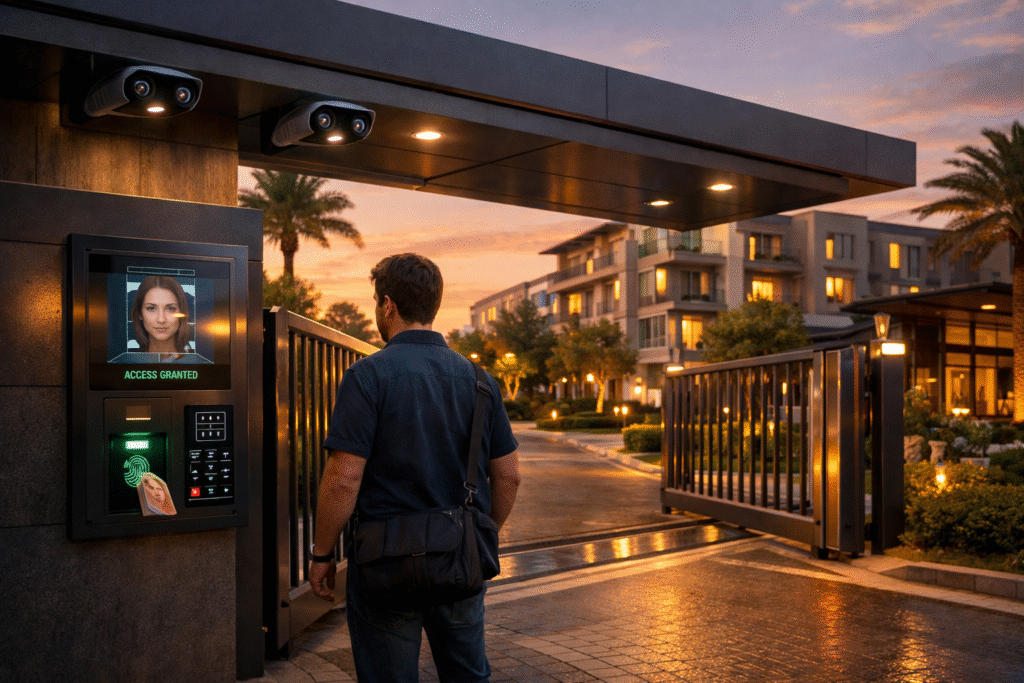
Introduction: The Rise of Smart Security in Housing
Over the past decade, residential living has evolved significantly. Modern homeowners are no longer satisfied with just comfortable homes and attractive surroundings. Instead, they are increasingly looking for security, convenience, and advanced technology. As a result, gated communities are rapidly adopting smart technologies to meet these expectations.
One of the most innovative developments in residential security is the biometric entry system. Unlike traditional security methods that rely on keys, cards, or passwords, biometric systems use unique human characteristics such as fingerprints or facial recognition to verify identity. Consequently, these systems offer a higher level of safety and convenience.
Today, many newly developed gated communities are integrating biometric access at entry points, clubhouses, and even residential buildings. This shift clearly shows that the future of residential security is becoming smarter, faster, and more reliable.
What Are Biometric Entry Systems?
Biometric entry systems are security technologies that use biological traits to identify individuals. Since these traits are unique to every person, they provide a highly secure method of access control.
Common biometric identifiers include:
- Fingerprint recognition
- Facial recognition
- Iris scanning
- Palm recognition
When a resident registers their biometric data in the system, it becomes part of the community’s secure database. Afterward, every time the resident approaches the entry gate or building entrance, the system verifies their identity instantly.
Because biometric data cannot easily be copied or stolen like keys or access cards, it significantly reduces unauthorized entry.
Why Gated Communities Are Adopting Biometric Access
Gated communities are designed to offer residents privacy, safety, and exclusivity. However, traditional security systems such as manual gatekeeping or access cards often have limitations.
For instance, keys can be lost, cards can be shared, and passwords can be forgotten. In contrast, biometric systems eliminate these problems entirely.
There are several reasons developers are increasingly choosing biometric systems:
- Improved security
- Quick and seamless entry
- Better visitor monitoring
- Reduced security risks
Moreover, as smart city concepts continue to grow, biometric security has become an essential component of modern residential planning.
Types of Biometric Systems Used in Residential Communities
Different communities adopt different types of biometric technologies depending on their security needs and budget.
Fingerprint Recognition
Fingerprint scanners are among the most widely used biometric systems. Residents simply place their finger on a scanner to gain entry. This technology is reliable, fast, and cost-effective.
Facial Recognition Gates
Facial recognition technology uses cameras and artificial intelligence to identify residents. When a registered resident approaches the gate, the system automatically recognizes their face and grants access.
Iris Scanning Systems
Iris scanners analyze the unique patterns in a person’s eye. Although this technology is extremely accurate, it is usually used in high-security communities.
Palm Recognition Technology
Palm scanning identifies unique patterns in the veins of a person’s hand. While less common, it offers excellent security and hygiene benefits since it can work without direct contact.
Advantages of Biometric Entry Systems
Biometric technology offers several advantages compared to traditional security methods.
Higher Security
Since biometric features cannot easily be duplicated, the system significantly reduces the risk of unauthorized access.
Faster Entry
Residents can enter quickly without searching for keys, cards, or passwords.
No Lost Keys or Cards
One of the most common inconveniences in traditional security systems is losing access cards or keys. With biometric access, this issue disappears entirely.
Accurate Tracking
Every entry and exit is recorded automatically, which helps security teams maintain accurate records.
Enhancing Resident Convenience
In addition to improving safety, biometric entry systems make daily life easier for residents.
For example, imagine arriving home after a long day of work. Instead of stopping to search for keys or waiting for a security guard to verify your identity, the system recognizes you instantly and opens the gate automatically.
Similarly, residents can use biometric access for:
- Clubhouse facilities
- Fitness centers
- Swimming pools
- Parking areas
This seamless access enhances the overall living experience within the community.
Managing Visitors with Biometric Technology
Visitor management is another area where biometric systems are highly effective.
Modern residential communities often integrate biometric systems with digital visitor management platforms. Residents can pre-register visitors using a mobile app, after which the system generates temporary access credentials.
When visitors arrive, their identity can be verified quickly through security checks. Consequently, this process improves both safety and efficiency.
Furthermore, digital logs allow security teams to track visitor movements and maintain proper records.
Integration with Smart Community Apps
Biometric entry systems are becoming even more powerful when integrated with smart residential apps.
Through these apps, residents can:
- Manage visitor access
- Receive security alerts
- Monitor entry logs
- Communicate with security personnel
As a result, residents gain greater control over their community’s security from the convenience of their smartphones.
In many modern developments, biometric systems are also linked to smart home technology, creating a fully connected living environment.
Privacy and Data Protection Concerns
Despite the benefits, some residents express concerns about privacy and data security. After all, biometric information is highly sensitive.
However, reputable residential developers implement strong encryption and secure data storage systems to protect biometric data. Additionally, many systems store only encrypted biometric templates rather than raw data.
Communities also establish strict policies that regulate how biometric information is used and who can access it. These measures ensure that residents’ privacy remains protected.
Challenges in Implementing Biometric Systems
While biometric systems offer numerous benefits, implementing them can present certain challenges.
Installation Costs
Advanced biometric systems can require significant initial investment.
Maintenance and Technical Support
Like any technology, biometric systems require regular updates and maintenance.
System Reliability
Environmental conditions such as poor lighting or dirt on scanners can occasionally affect performance.
However, ongoing technological improvements are steadily reducing these limitations.
The Future of Biometric Security in Residential Living
Looking ahead, biometric technology will likely become standard in residential communities. As artificial intelligence and automation continue to advance, biometric systems will become even more sophisticated.
Future developments may include:
- AI-powered behavior analysis
- Contactless biometric recognition
- Integration with smart city infrastructure
- Voice recognition access systems
These innovations will further enhance both security and convenience in residential living.
Conclusion: Safer and Smarter Communities
Biometric entry systems represent a major step forward in residential security. By replacing traditional access methods with advanced identification technology, gated communities can offer greater safety, efficiency, and convenience.
Moreover, as smart technologies continue to evolve, biometric systems will play an increasingly important role in shaping the communities of the future.
Ultimately, modern residents are not just seeking homes—they are seeking secure, intelligent living environments. Biometric entry systems are helping turn that vision into reality.