
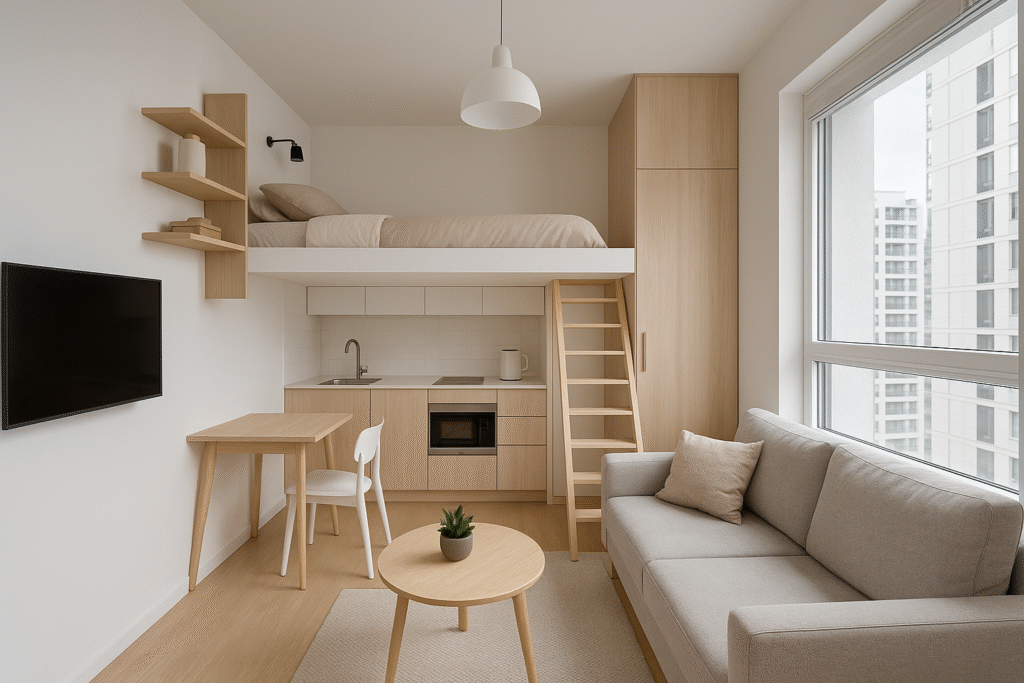
As cities grow taller, busier, and more expensive, the way we think about “home” is changing. One of the most fascinating shifts in modern housing is the rise of micro-apartments—compact, highly functional living spaces designed for the new-age urban dweller. Far from being cramped boxes, today’s micro-apartments are architectural masterpieces that blend efficiency, sustainability, and style. In this 800-word deep dive, we explore how these tiny homes are reshaping city living and why they represent the future of smart urban design.
The Rise of the Compact Revolution
Urbanization is at an all-time high, with millions migrating toward cities for better opportunities. But with population density comes skyrocketing rents, limited land availability, and shrinking living spaces. The traditional large apartment model no longer fits the lifestyle or budget of many young professionals, students, and digital nomads.
Enter micro-apartments—typically 150 to 350 square feet—crafted to maximize every square inch.
Cities like Tokyo, New York, Hong Kong, Bangalore, and Singapore have already embraced this trend. Developers are realizing that people want affordability and location more than large empty rooms, and micro-living makes prime areas more accessible.
Minimalism Meets Functionality
Micro-apartments are not about sacrifice; they’re about smart design. Every element is intentional, from foldable furniture to vertical storage systems. Here’s what makes them a design marvel:
- Convertible Spaces: A bed that becomes a sofa, a dining table that folds into the wall, or a kitchen counter doubling as a work desk.
- Vertical Thinking: Shelves, wall-mounted cabinets, and loft-style beds utilize the most ignored space—upper walls.
- Lighting & Mirrors: Natural light and reflective surfaces create a sense of openness.
- Built-In Storage: Hidden drawers under beds, behind mirrors, and beneath kitchen counters eliminate clutter.
This combination creates homes that feel cozy, not cramped—efficient, not empty.
The New Lifestyle: More Freedom, Less Burden
Micro-apartments have become a symbol of minimalist living, where people are encouraged to keep only what truly matters. This shift is particularly appealing to:
1. Young Professionals
Working long hours or living a fast-paced city life means you don’t need a large home to maintain. A small, efficient space saves time on cleaning, organizing, and managing.
2. Students & Digital Nomads
Affordability is key, and micro-apartments provide safe, functional, and strategically located accommodation—often close to universities, metro stations, or tech hubs.
3. Eco-Conscious Individuals
Living small means consuming less power, water, and material goods. Micro-apartments naturally encourage sustainable living.
Smart Tech: The Heart of Micro-Living
Modern micro-apartments are powered by smart home technology, making living more comfortable despite the small footprint:
- Automated lighting & climate control
- Voice-activated appliances
- Modular furniture with built-in tech
- Energy-efficient systems
Some developers even include shared smart facilities like app-controlled laundry rooms, automated parcel lockers, or community workspaces.
Community Living: Private Space, Shared Amenities
Micro-apartments often exist within buildings designed around shared amenities, creating a blend of privacy and community. These may include:
- Rooftop lounges
- Gyms
- Co-working spaces
- Community kitchens
- Laundry zones
- Entertainment rooms
The idea is simple: you may live small, but you live well. Instead of owning everything, you share resources—reducing cost and creating a sense of connection.
Affordability Without Compromise
One of the biggest advantages of micro-apartments is affordability. With rent prices rising globally, these compact homes allow people to live in prime urban neighborhoods without draining their finances. Lower rent also means more freedom to spend on travel, hobbies, or personal growth.
For developers, these units maximize occupancy. For residents, they provide a lifestyle upgrade—less money for more value.
A Sustainable Step Forward
Micro-apartments reduce:
- Construction materials
- Energy consumption
- Carbon footprint
- Land usage
As cities push toward sustainability goals, compact living. becomes more than a trend—it becomes a necessity.
By embracing micro-living, we also promote conscious consumption, waste reduction, and mindful lifestyle choices.
Challenges and Considerations
Of course, micro-apartments aren’t for everyone. Families or people with large belongings may find it too limiting. Good design is essential; a poorly planned small space can feel suffocating. Soundproofing, ventilation, and access to natural light also play a crucial role.
For long-term living, residents must adapt to a minimalist mindset and be comfortable with shared facilities.
Why Micro-Apartments Represent the Future
With rising urban density, housing shortages, and evolving lifestyle preferences, micro-apartments are more than a passing trend. They represent:
- Smarter architecture
- Sustainable living
- Efficient use of city spaces
- Freedom from financial burden
- A shift toward intentional living
The future is not just about living big—it’s about living smart.