
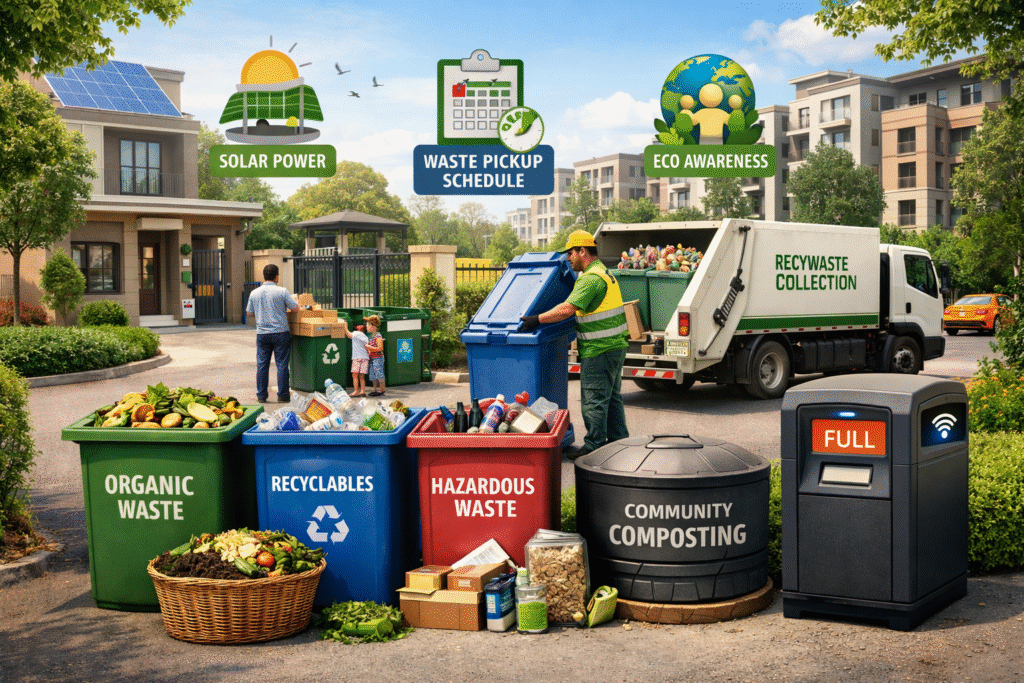
In recent years, gated communities have become a symbol of organized, secure, and modern living. However, with growing populations inside these residential spaces, waste generation has increased significantly. Therefore, implementing effective waste management systems is no longer optional—it is essential. Not only does proper waste management maintain cleanliness, but it also contributes to environmental sustainability and healthier living conditions.
Understanding Waste Generation in Gated Communities
To begin with, gated communities generate different types of waste, including organic waste, recyclable materials, and non-recyclable waste. For instance, kitchen waste, garden waste, plastic packaging, paper, and electronic waste are commonly produced daily. Consequently, without a proper system in place, this waste can quickly accumulate and lead to hygiene issues.
Moreover, the density of residents in gated apartments amplifies the challenge. As a result, even a small lapse in waste handling can create unpleasant surroundings and health risks. Hence, understanding the nature and volume of waste is the first step toward effective management.
Importance of Segregation at Source
One of the most crucial aspects of waste management is segregation at the source. In other words, residents must separate waste into categories such as wet waste, dry waste, and hazardous waste. This simple practice, however, makes the entire recycling and disposal process much more efficient.
Furthermore, when segregation is done correctly, organic waste can be composted, while recyclable materials can be processed and reused. On the contrary, mixed waste often ends up in landfills, thereby increasing environmental pollution. Therefore, encouraging residents to adopt segregation habits is fundamental to any waste management system.
Composting: Turning Waste into Resource
In addition to segregation, composting plays a vital role in managing organic waste. Typically, food scraps and garden waste can be converted into nutrient-rich compost through simple techniques. As a result, gated communities can reduce their dependence on external waste disposal systems.
For example, many residential complexes now use composting pits or machines to handle biodegradable waste. Consequently, the compost produced can be used for landscaping and gardening within the community. Not only does this reduce waste, but it also promotes a circular economy.
Recycling Systems and Partnerships
Equally important is the establishment of efficient recycling systems. Once waste is segregated, recyclable materials such as plastic, paper, glass, and metal should be collected separately. Subsequently, these materials can be handed over to recycling agencies.
In many cases, gated communities collaborate with local recyclers or waste management companies. This partnership, in turn, ensures that waste is processed responsibly. Additionally, such collaborations often create economic opportunities for waste collectors and recyclers.
Role of Technology in Waste Management
With advancements in technology, waste management systems have become more efficient and transparent. For instance, smart bins equipped with sensors can monitor waste levels and notify maintenance staff when they are full. As a result, overflow and littering can be avoided.
Moreover, mobile applications allow residents to track waste collection schedules and report issues. In addition, data analytics can help management understand waste patterns and improve efficiency. Therefore, integrating technology into waste management systems enhances overall effectiveness.
Community Participation and Awareness
While systems and technology are important, community participation remains the backbone of successful waste management. Without active involvement from residents, even the best systems can fail. Hence, awareness campaigns and educational programs are essential.
For example, workshops, posters, and regular communication can encourage residents to adopt eco-friendly practices. Furthermore, involving children in such initiatives can create long-term behavioral change. As a result, waste management becomes a shared responsibility rather than a burden.
Challenges in Implementation
Despite the benefits, implementing waste management systems in gated communities comes with challenges. Initially, residents may resist changes such as segregation or composting due to inconvenience. However, consistent efforts and clear communication can gradually overcome this resistance.
Additionally, space constraints can limit the installation of composting units or recycling facilities. In such cases, innovative solutions like compact composting machines can be used. Furthermore, financial constraints may arise, but long-term savings often outweigh the initial investment.
Government Policies and Support
In many regions, government regulations now mandate proper waste management practices. For instance, rules regarding waste segregation and disposal are becoming stricter. Consequently, gated communities must comply with these guidelines to avoid penalties.
Moreover, local authorities often provide support in the form of training, subsidies, or partnerships. Therefore, collaborating with government bodies can strengthen waste management efforts and ensure compliance.
Benefits of Effective Waste Management
Implementing a robust waste management system offers numerous benefits. Firstly, it ensures a clean and hygienic environment, thereby improving the quality of life for residents. Secondly, it reduces the environmental impact by minimizing landfill waste and promoting recycling.
Furthermore, composting and recycling can lead to cost savings in the long run. In addition, sustainable practices enhance the reputation and value of the property. As a result, gated communities with efficient waste management systems are often more attractive to buyers and tenants.
Moving Toward a Sustainable Future
Ultimately, waste management in gated communities is not just about disposal—it is about sustainability. By adopting practices such as segregation, composting, recycling, and technological integration, communities can significantly reduce their environmental footprint.
In conclusion, waste management systems play a critical role in maintaining the cleanliness and sustainability of gated communities. Although challenges exist, they can be addressed through awareness, participation, and innovation. Therefore, by working together, residents and management can create cleaner, greener, and more responsible living spaces for the future.