Modern homebuyers are no longer looking for just four walls, a roof, and a convenient location. Instead, they are increasingly searching for homes that fit their lifestyles, preferences, routines, and aspirations. As a result, gated communities are creating personalized living experiences that go far beyond traditional residential development.
Today, gated communities combine thoughtfully designed homes, customized amenities, technology, wellness facilities, recreational spaces, and community experiences. Consequently, residents can enjoy a lifestyle that feels more personal, convenient, and comfortable.
Understanding Personalized Living in Gated Communities
Personalized living means creating a residential environment that responds to the individual needs and preferences of its residents. Rather than offering the same experience to everyone, modern gated communities provide a variety of facilities and services that allow people to shape their daily routines according to their interests.
For example, a fitness enthusiast may prefer a community with a modern gym, walking trails, swimming pool, or yoga area. Similarly, families with children may value playgrounds, sports facilities, and safe outdoor spaces. Meanwhile, older residents may appreciate peaceful gardens, wellness areas, and community gathering spaces.
Therefore, personalization allows different types of residents to find something meaningful within the same community.
Homes Designed Around Modern Lifestyles
One of the most important aspects of personalized living is the design of the home itself. Modern gated communities increasingly offer homes with layouts that accommodate different lifestyles.
For instance, some residents may need a dedicated home office because they work remotely. Others may prefer larger kitchens, additional bedrooms, private balconies, entertainment areas, or flexible spaces that can change over time.
Furthermore, smart-home technology can add another layer of personalization. Residents can control lighting, temperature, security features, and other home functions according to their preferences.
As lifestyles continue to evolve, flexible home designs can help residents create spaces that truly feel like their own.
Amenities That Match Different Interests
Another major reason gated communities are becoming more personalized is the growing variety of amenities.
In the past, residential communities often focused on basic facilities such as parking areas, security gates, and small recreational spaces. However, today’s developments can offer a much wider selection.
For example, communities may include:
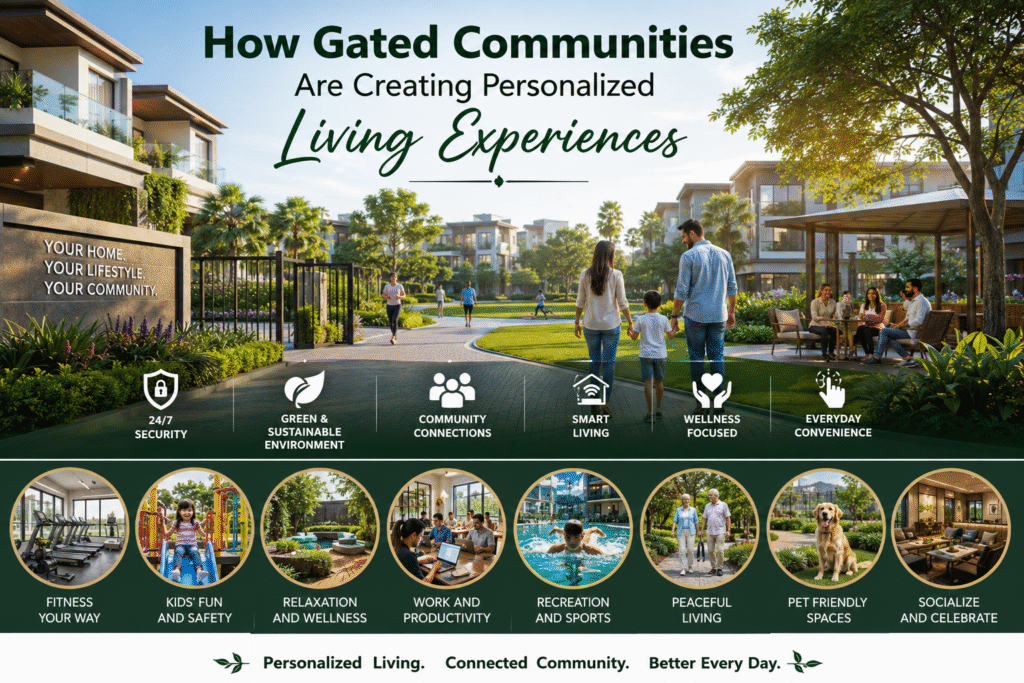
- Fitness centers and yoga studios
- Swimming pools
- Children’s play areas
- Walking and cycling trails
- Clubhouses
- Sports courts
- Meditation gardens
- Co-working spaces
- Outdoor entertainment areas
- Pet-friendly spaces
- Community gardens
As a result, residents can choose activities that suit their interests without traveling far from home.
Moreover, having several amenities within the community makes it easier for residents to develop routines that support their individual lifestyles.
Technology Makes Personalization Easier
Technology is also playing an increasingly important role in creating personalized residential experiences. Smart technology can make everyday activities faster, easier, and more convenient.
For example, residents may use digital platforms to communicate with property management, receive community announcements, book amenities, report maintenance issues, or reserve shared facilities.
In addition, smart security systems can provide convenient access while maintaining privacy and safety. Digital visitor management, smart entry systems, and connected security features can help residents feel more comfortable in their surroundings.
Consequently, technology does not simply add convenience. It can also give residents greater control over how they interact with their community.
Wellness-Centered Experiences
Wellness has become another important part of personalized living. People increasingly want their homes and surroundings to support healthier and more balanced lifestyles.
Therefore, modern gated communities are incorporating features that encourage physical activity, relaxation, and mental well-being.
Walking paths, landscaped gardens, fitness centers, meditation areas, swimming pools, and open green spaces can encourage residents to spend more time outdoors. Similarly, quiet seating areas can provide opportunities to relax after a busy day.
Furthermore, communities can create spaces for different wellness preferences. While one resident may enjoy an early-morning walk, another may prefer yoga or meditation. By offering multiple options, communities can accommodate different routines rather than promoting a single lifestyle.
Personalized Experiences for Families
Families also benefit significantly from personalized community living. Different family members often have different interests and schedules. Consequently, a well-planned gated community can provide spaces that serve everyone.
Children can enjoy playgrounds and sports areas, while adults can use fitness centers, swimming pools, or social spaces. At the same time, older family members can enjoy gardens, walking paths, and peaceful seating areas.
Moreover, shared community facilities can make family time more enjoyable. Instead of planning every activity outside the neighborhood, families can find opportunities for recreation close to home.
As a result, gated communities can make everyday family life more convenient while still giving each individual room to pursue personal interests.
Creating Stronger Community Connections
Interestingly, personalization does not mean isolation. In fact, well-designed gated communities can encourage stronger social connections.
Community events, hobby clubs, fitness sessions, cultural celebrations, workshops, and neighborhood gatherings can bring residents together. At the same time, residents can choose how much they want to participate.
For example, someone who enjoys social activities may attend community events regularly, while another resident may prefer quieter interactions. This flexibility allows people to maintain their individuality while still becoming part of a larger neighborhood.
Additionally, shared spaces can create opportunities for spontaneous conversations and friendships. Over time, these interactions can help transform a collection of houses into a genuine community.
Spaces That Adapt to Changing Needs
Another important advantage of personalized living is adaptability. People’s needs can change over time. A young couple may eventually have children, while a growing family may later need additional space. Similarly, older residents may eventually prioritize accessibility and wellness.
Therefore, communities that offer flexible homes and diverse amenities can remain relevant throughout different stages of life.
For example, a multi-purpose room could serve as a home office today and become a study area tomorrow. Likewise, flexible recreational spaces can accommodate different activities depending on residents’ changing interests.
This adaptability makes the community more valuable over the long term.
Privacy Without Sacrificing Convenience
Personalized living also involves finding the right balance between privacy and community. Many residents want a peaceful home environment while still enjoying access to shared facilities.
Gated communities can provide this balance through controlled access, private residential spaces, landscaped surroundings, and carefully planned common areas.
Furthermore, residents can decide when they want social interaction and when they prefer personal time. This flexibility is particularly attractive to people who value both privacy and convenience.
The Future of Personalized Gated Communities
Looking ahead, personalization is likely to become an even bigger part of residential development. Technology, flexible architecture, wellness-focused design, and resident preferences will continue to influence how communities are planned.
For instance, future communities may use digital platforms to understand which amenities residents use most frequently. Developers could then adapt facilities and services based on changing preferences.
Similarly, smart-home systems may become more sophisticated, allowing residents to customize their living environments even further.
Ultimately, the goal will not simply be to build attractive homes. Instead, the focus will be on creating environments where residents can live according to their individual needs.
Conclusion
Gated communities are evolving from simple residential developments into carefully designed lifestyle environments. By combining flexible homes, diverse amenities, smart technology, wellness facilities, recreational spaces, and opportunities for social interaction, they are creating personalized living experiences for modern residents.
Moreover, personalization allows people with different lifestyles to enjoy the same community in their own way. Whether someone values fitness, family time, privacy, social connections, technology, or relaxation, modern gated communities can provide opportunities to support those preferences.
Therefore, the future of gated community living is not simply about where people live. It is increasingly about how they want to live. As residential design continues to evolve, communities that prioritize personalization, flexibility, and resident well-being are likely to become increasingly appealing to today’s homebuyers.