
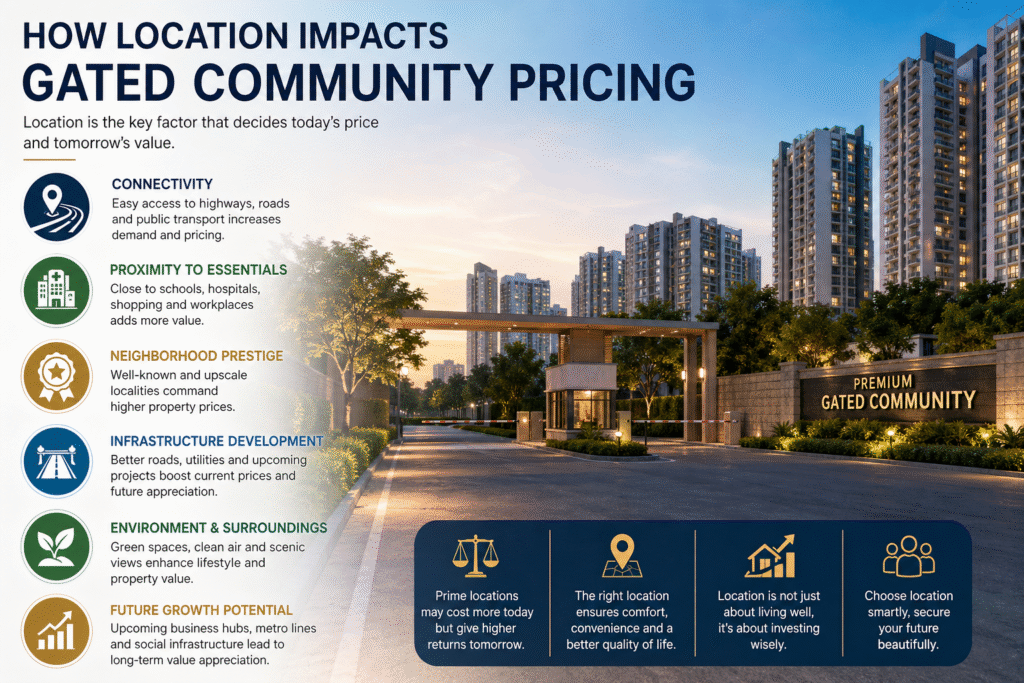
When it comes to buying a home in a gated community, one factor stands above all others—location. While amenities, design, and security certainly influence the value of a property, location ultimately plays the most decisive role in determining pricing. In fact, two gated communities with similar features can have vastly different price points simply because of where they are situated. Therefore, understanding how location impacts gated community pricing is essential for both homebuyers and investors.
The Power of Connectivity
To begin with, connectivity is one of the strongest drivers of property value. Gated communities located near major roads, highways, or public transport hubs tend to command higher prices. This is because easy access to workplaces, schools, and commercial centers reduces travel time and enhances daily convenience. For instance, properties near IT corridors or business districts often see higher demand. As a result, developers price these homes at a premium.
On the other hand, communities located in remote or poorly connected areas may offer lower prices. However, buyers must weigh the trade-off between affordability and accessibility. While the initial cost may be lower, long-term convenience could be compromised.
Proximity to Essential Services
In addition to connectivity, proximity to essential services significantly influences pricing. Gated communities near reputed schools, hospitals, shopping centers, and entertainment zones are naturally more desirable. Families, in particular, prioritize these conveniences, as they contribute to a better quality of life.
Moreover, being close to such facilities not only increases demand but also ensures long-term value appreciation. Consequently, properties in these prime locations often come with a higher price tag. Conversely, communities located far from essential services may struggle to attract buyers unless they compensate with lower pricing or exceptional amenities.
Neighborhood Reputation and Prestige
Another crucial factor is the reputation of the neighborhood. Areas known for their safety, cleanliness, and upscale living standards tend to attract affluent buyers. As a result, gated communities in such neighborhoods are priced higher due to their perceived prestige.
Furthermore, the presence of high-end developments, luxury villas, and premium infrastructure in the surrounding area enhances the overall appeal. Buyers are often willing to pay extra for the status associated with a well-regarded location. In contrast, areas with poor infrastructure or negative perceptions may see lower property values, even if the gated community itself offers excellent facilities.
Infrastructure Development
Equally important is the level of infrastructure development in the area. Regions with well-planned roads, reliable water supply, efficient drainage systems, and consistent electricity tend to support higher property prices. Additionally, upcoming infrastructure projects such as metro lines, flyovers, and commercial hubs can significantly boost future property values.
For example, a gated community located in an area slated for rapid development may initially be priced moderately. However, as infrastructure projects progress, property values often rise. Therefore, investors frequently look for such emerging locations to maximize returns.
Urban vs Suburban Dynamics
Interestingly, the pricing dynamics between urban and suburban locations vary considerably. Gated communities in urban centers are typically more expensive due to limited land availability and high demand. These communities offer the advantage of being close to workplaces and city amenities.
In contrast, suburban gated communities are often more spacious and affordable. They attract buyers seeking a शांत (peaceful) environment away from the hustle and bustle of the city. However, as suburban areas develop and connectivity improves, property prices in these regions tend to increase. Thus, early investment in suburban locations can be highly beneficial.
Environmental Factors and Surroundings
Beyond infrastructure and convenience, environmental factors also play a role in pricing. Gated communities located near parks, lakes, or green spaces are generally more attractive. Such surroundings not only enhance the aesthetic appeal but also promote a healthier lifestyle.
Consequently, properties with scenic views or pollution-free environments often command higher prices. In contrast, communities located near industrial zones or areas with high pollution levels may see reduced demand and lower pricing.
Demand and Supply Balance
Another key aspect to consider is the balance between demand and supply in a particular location. In high-demand areas where land is scarce, property prices tend to rise rapidly. Gated communities in such locations often sell out quickly, further driving up their value.
Conversely, in areas with an oversupply of residential projects, developers may offer competitive pricing, discounts, or additional benefits to attract buyers. Therefore, understanding market dynamics is essential before making a purchase decision.
Future Growth Potential
Looking ahead, future growth potential is a major factor influencing pricing. Locations with planned developments, such as new business hubs, educational institutions, or transport facilities, are likely to experience increased demand. As a result, gated communities in these areas often see steady price appreciation over time.
Buyers who invest early in such locations can benefit significantly from rising property values. However, it is important to verify the credibility of proposed developments before making a decision.
Lifestyle and Community Appeal
Lastly, the overall lifestyle offered by the location contributes to pricing. Areas known for their vibrant social life, cultural activities, and recreational options tend to attract more buyers. Gated communities in such locations often emphasize a holistic living experience, which justifies their higher pricing.
In contrast, locations with limited social infrastructure may appeal to a smaller segment of buyers, thereby affecting demand and pricing.
Conclusion
In conclusion, location is the cornerstone of gated community pricing. From connectivity and infrastructure to neighborhood reputation and future growth potential, multiple factors come into play. While amenities and design enhance the appeal of a property, it is the location that ultimately determines its value.
Therefore, prospective buyers and investors should carefully evaluate the location before making a decision. By considering both current advantages and future prospects, they can ensure a wise investment that offers not only comfort but also long-term financial returns.