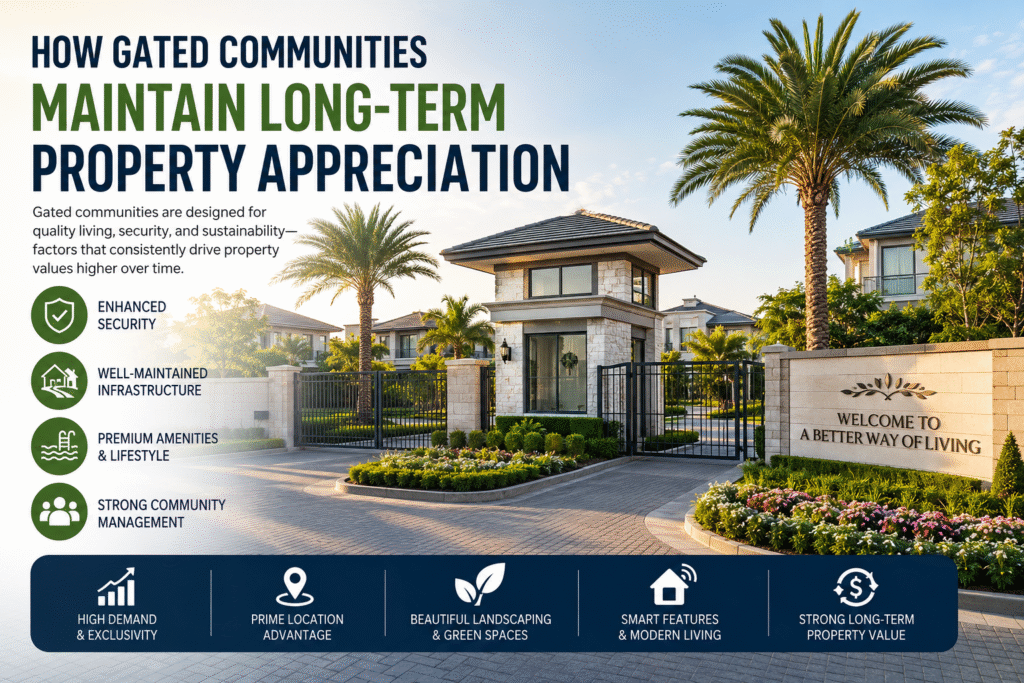
In the ever-evolving real estate market, property appreciation remains one of the most important considerations for homebuyers and investors. While many factors influence a property’s value over time, gated communities consistently demonstrate a strong ability to maintain and increase property values. As a result, they have become a preferred choice for families, professionals, and investors seeking long-term returns.
But what exactly enables gated communities to sustain property appreciation year after year? The answer lies in a combination of security, quality infrastructure, community management, modern amenities, and strategic planning. Together, these elements create a desirable living environment that attracts buyers and preserves value over time.
Enhanced Security Increases Demand
First and foremost, security is one of the defining features of gated communities. Most developments offer controlled access points, surveillance systems, security personnel, and visitor management systems. Consequently, residents enjoy greater peace of mind compared to those living in traditional neighborhoods.
Because safety is a top priority for homebuyers, properties in secure communities often remain in high demand. Furthermore, as urban populations grow and security concerns increase, gated communities become even more attractive. This consistent demand helps support property values and encourages long-term appreciation.
Well-Maintained Infrastructure Preserves Value
Another key factor contributing to property appreciation is the quality of infrastructure. Unlike many conventional residential areas, gated communities typically maintain roads, parks, lighting, drainage systems, and recreational facilities at high standards.
Moreover, homeowners’ associations or community management teams regularly oversee maintenance and repairs. As a result, the community retains its visual appeal and functionality over time.
When potential buyers visit a neighborhood, first impressions matter significantly. Therefore, clean streets, landscaped gardens, and well-maintained common areas create a positive perception, which ultimately supports higher property values.
Attractive Amenities Boost Market Appeal
Modern buyers seek more than just a house; they desire a complete lifestyle. For this reason, gated communities often provide a wide range of amenities such as clubhouses, swimming pools, fitness centers, sports courts, walking trails, children’s play areas, and community halls.
Additionally, these amenities enhance residents’ quality of life while making the community more competitive in the real estate market. Buyers are often willing to pay a premium for homes that offer convenient access to recreational and wellness facilities.
Consequently, properties within communities featuring desirable amenities tend to appreciate faster than those in neighborhoods with limited facilities.
Strong Community Management Creates Stability
Effective community management plays a crucial role in maintaining long-term property appreciation. In many gated communities, management teams enforce rules and guidelines designed to protect the neighborhood’s appearance and standards.
For example, regulations may govern exterior modifications, landscaping maintenance, parking arrangements, and property upkeep. While some homeowners may view these rules as restrictive, they actually help preserve the overall aesthetic appeal of the community.
Furthermore, consistent standards prevent neglect and ensure that individual properties do not negatively impact neighboring homes. As a result, the entire community benefits from a stable and attractive environment that supports property value growth.
Controlled Development Protects Exclusivity
One of the unique advantages of gated communities is controlled development. Unlike open neighborhoods that may experience unplanned construction or commercial encroachment, gated developments are usually built according to a carefully designed master plan.
Because future development is regulated, residents can have greater confidence in the long-term character of their community. Moreover, controlled growth helps prevent overcrowding and preserves the quality of living.
Exclusivity also contributes to property appreciation. Since gated communities often have limited inventory and high demand, property values tend to remain resilient even during market fluctuations.
Attractive Landscaping Enhances Visual Appeal
Landscaping is often overlooked when discussing property appreciation; however, it plays a significant role in shaping buyer perceptions. Beautiful green spaces, tree-lined streets, flower gardens, and well-maintained parks create a welcoming atmosphere.
In addition, professionally maintained landscapes improve the overall appearance of the community and contribute to environmental sustainability. Studies have shown that attractive surroundings can positively influence property values.
Therefore, communities that invest in landscaping and green spaces often enjoy stronger long-term appreciation compared to those with neglected outdoor areas.
Access to Quality Education and Services
Location remains one of the most influential factors in real estate value. Many gated communities are strategically developed near reputable schools, healthcare facilities, shopping centers, business districts, and transportation networks.
As a result, residents benefit from greater convenience and accessibility. Families, in particular, place significant value on proximity to quality educational institutions.
Consequently, homes located within well-connected gated communities continue to attract buyers, helping sustain demand and property appreciation over the years.
Smart Technology and Modern Features
As technology continues to transform residential living, gated communities are increasingly incorporating smart features that enhance convenience and efficiency.
For instance, many developments now offer smart access systems, app-based visitor management, energy-efficient lighting, smart home integration, and automated security monitoring. These innovations not only improve the resident experience but also increase the attractiveness of properties to modern buyers.
Furthermore, communities that embrace technological advancements are better positioned to remain relevant in a competitive housing market. Therefore, smart infrastructure contributes to long-term property value growth.
Sense of Community Encourages Resident Satisfaction
Beyond physical features, gated communities often foster a strong sense of belonging among residents. Community events, social gatherings, fitness programs, and cultural celebrations encourage interaction and relationship-building.
As neighbors develop meaningful connections, resident satisfaction tends to increase. Consequently, homeowners are more likely to remain in the community for longer periods.
Lower turnover rates contribute to neighborhood stability and help maintain consistent demand. In turn, this stability supports property appreciation and market confidence.
Resilience During Market Fluctuations
Real estate markets naturally experience cycles of growth and decline. However, gated communities often demonstrate greater resilience during economic downturns.
This resilience stems from several factors, including strong security, premium amenities, superior maintenance, and desirable living conditions. Even when market conditions become challenging, buyers continue to seek high-quality residential environments.
Therefore, while property values may fluctuate temporarily, homes within well-managed gated communities often recover more quickly and maintain stronger long-term growth trends.
Conclusion
Long-term property appreciation is not achieved by chance. Instead, it results from a combination of strategic planning, effective management, desirable amenities, quality infrastructure, and ongoing investment in community development.
Gated communities excel in these areas by providing secure environments, maintaining high standards, fostering resident satisfaction, and adapting to changing market demands. Additionally, their emphasis on exclusivity, convenience, and lifestyle enhancement creates sustained buyer interest.
As a result, homeowners and investors who choose gated communities often benefit from stronger property value growth and greater financial security over time. While no investment is entirely risk-free, gated communities continue to prove themselves as one of the most reliable options for long-term real estate appreciation.