As cities continue to grow, gated communities are becoming an increasingly popular form of residential development. They offer residents security, privacy, comfort, and a wide range of amenities. However, as the number of gated communities increases, their impact on the environment also deserves attention. Large residential developments can consume significant amounts of water and energy while generating waste and increasing pressure on natural resources. Therefore, sustainable architecture has an important role to play in creating gated communities that are comfortable for residents while also protecting the environment.
Sustainable architecture refers to designing and constructing buildings in ways that reduce environmental damage, conserve resources, and improve the quality of life of occupants. In a gated community, this approach can be applied not only to individual houses or apartments but also to roads, gardens, recreational areas, water systems, and common facilities. Consequently, sustainability should be considered at the planning stage rather than added as an afterthought.
Designing with Nature
One of the most important principles of sustainable architecture is to work with the natural environment rather than against it. Before developing a gated community, architects and planners should study the site’s climate, soil, vegetation, wind patterns, and availability of sunlight. This information can then be used to create a layout that responds to local environmental conditions.
For example, buildings can be positioned to receive adequate natural light and ventilation. As a result, residents may rely less on artificial lighting and air conditioning during the day. Similarly, trees and existing vegetation can be preserved wherever possible. In addition to providing shade, trees can reduce surrounding temperatures, improve air quality, and create attractive outdoor spaces.
Moreover, the orientation of buildings can make a significant difference in energy consumption. In hot climates, appropriately designed windows, shading devices, balconies, and overhangs can reduce direct heat gain. Therefore, thoughtful planning can improve indoor comfort while reducing the need for mechanical cooling.
Energy-Efficient Buildings
Energy consumption is another major concern in residential communities. Traditional buildings often depend heavily on electricity for lighting, cooling, heating, and household appliances. Sustainable architecture, however, focuses on reducing this demand.
To begin with, homes can be designed with energy-efficient windows, insulation, LED lighting, and energy-efficient appliances. Furthermore, common facilities such as clubhouses, gyms, swimming pools, and security offices can use smart energy-management systems to monitor and control electricity consumption.
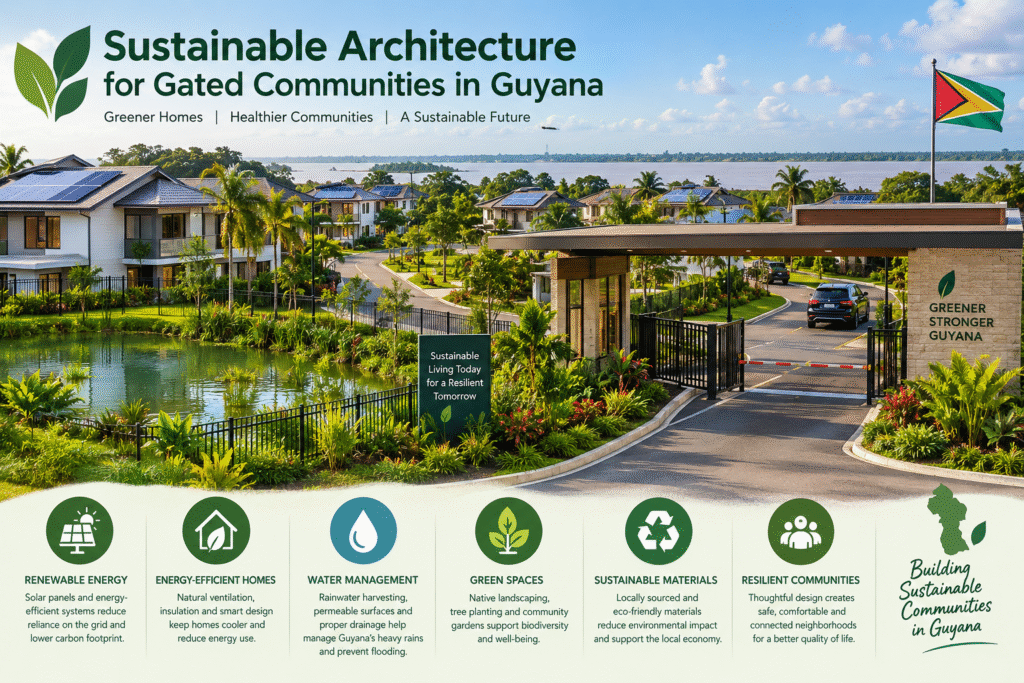
Renewable energy can also contribute significantly to sustainability. For instance, solar panels can be installed on rooftops, parking structures, or other suitable areas to generate clean electricity. In addition, solar-powered lighting can be used along pathways and landscaped areas. Consequently, a gated community can reduce its dependence on conventional energy sources and potentially lower long-term operating costs.
Water Conservation
Water is one of the most valuable natural resources, and residential communities can consume large quantities of it every day. Therefore, effective water management should be a fundamental part of sustainable community design.
Rainwater harvesting is one practical solution. Rainwater collected from rooftops and paved surfaces can be stored and reused for landscaping, cleaning, or other suitable non-potable purposes. Similarly, greywater systems can treat and reuse water from showers and washbasins for applications such as landscape irrigation, where permitted and properly designed.
In addition, communities can install low-flow taps, water-efficient toilets, and efficient irrigation systems. Native and drought-resistant plants can also be selected for gardens because they generally require less water. As a result, landscaping can remain attractive without placing unnecessary pressure on local water supplies.
Sustainable Landscaping and Green Spaces
Green spaces are essential to a healthy and pleasant residential environment. Nevertheless, landscaping that depends heavily on water, chemical fertilizers, and extensive maintenance may not always be environmentally sustainable.
Instead, gated communities can adopt natural landscaping methods. Native plants, trees, shrubs, and ground covers can be selected according to the local climate. Moreover, community gardens and urban farms can provide residents with opportunities to grow vegetables, herbs, and flowers.
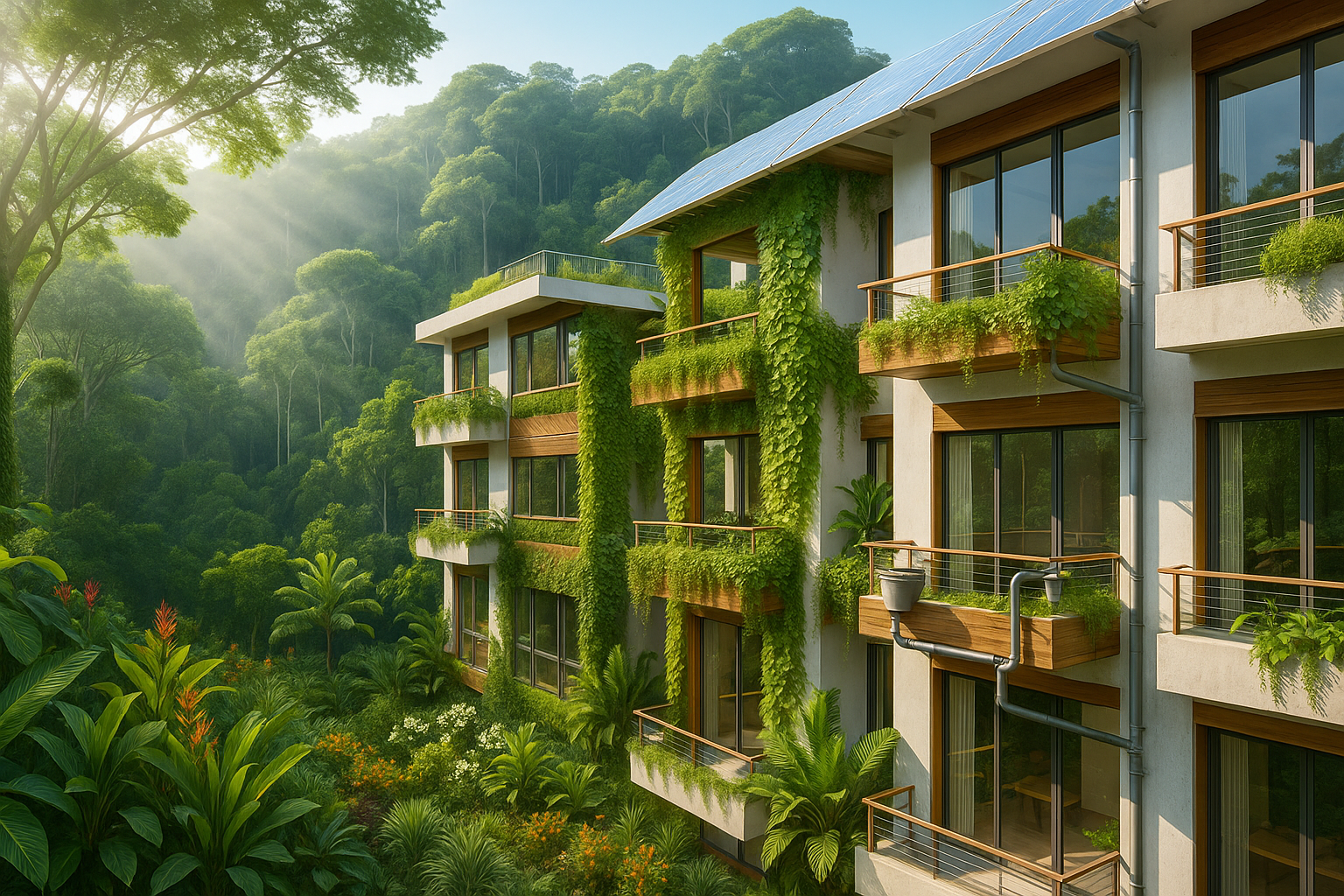
Green roofs and vertical gardens are another possibility, particularly where conventional garden space is limited. They can help reduce heat, improve biodiversity, and enhance the appearance of buildings. Furthermore, shaded walking paths and cycling tracks can encourage residents to spend more time outdoors and choose environmentally friendly forms of short-distance transportation.
Waste Management
Waste management is often overlooked during the planning of residential communities. However, a sustainable gated community should have a well-organized waste-management system from the beginning.
First, separate collection points can be provided for recyclable materials, organic waste, and general waste. In addition, organic kitchen and garden waste can be converted into compost for use in community landscaping. Recycling facilities can then help reduce the amount of waste sent to landfills.
Furthermore, residents can be encouraged to reduce single-use plastics and practice responsible waste segregation. Educational campaigns, clearly labelled bins, and community programs can make these habits easier to adopt. Therefore, sustainable waste management requires not only infrastructure but also active participation from residents.
Sustainable Transportation
Transportation within and around a gated community also affects its environmental performance. Large developments can encourage residents to depend heavily on private cars, resulting in traffic, emissions, and noise.
To address this issue, communities can provide safe pedestrian pathways and dedicated cycling routes. Moreover, electric-vehicle charging stations can be installed in parking areas as electric mobility becomes more common. Community shuttle services can also reduce the need for multiple private vehicle trips.
In addition, well-planned mixed-use amenities can make daily necessities accessible within walking distance. For example, small convenience stores, recreational facilities, parks, and community services can be located strategically. Consequently, residents may not need to use a car for every short journey.
Smart Technology for Sustainable Living
Technology can further improve the environmental performance of gated communities. Smart meters, automated lighting, intelligent irrigation systems, and building-management systems can monitor resource consumption and identify unnecessary usage.
For example, motion sensors can switch lights on only when people are present. Similarly, smart irrigation systems can adjust watering schedules according to weather conditions and soil moisture. As a result, water and electricity can be used more efficiently.
Moreover, residents can use mobile applications or digital dashboards to monitor their household energy and water consumption. This information can encourage people to make more sustainable choices because they can see the direct impact of their daily habits.
Benefits for Residents
Sustainable architecture does not benefit only the environment. It can also improve the quality of life for residents. Energy-efficient buildings can provide better indoor comfort, while natural ventilation and daylight can create healthier living spaces. Green areas can provide opportunities for exercise, relaxation, and social interaction.
Furthermore, resource-efficient systems can reduce operating and maintenance costs over time. Although some sustainable technologies may require higher initial investment, their long-term savings can make them financially worthwhile. Therefore, sustainability should be viewed as a long-term investment rather than simply an additional construction expense.
The Future of Gated Communities
The future of residential development will increasingly depend on how effectively communities balance comfort, technology, affordability, and environmental responsibility. Sustainable architecture provides a practical way to achieve this balance.
However, creating a sustainable gated community requires cooperation among architects, developers, engineers, local authorities, and residents. Design decisions must consider the local climate and ecosystem, while residents must also participate in responsible resource use.
Ultimately, a successful gated community should not simply provide beautiful houses behind secure gates. Instead, it should create a healthy, efficient, and environmentally responsible place to live. By incorporating renewable energy, water conservation, green spaces, sustainable materials, waste management, and smart technology, gated communities can become examples of responsible urban development.
Conclusion
In conclusion, sustainable architecture can transform gated communities into environmentally friendly and future-ready neighbourhoods. From energy-efficient buildings and rainwater harvesting to green landscaping and smart technology, there are numerous ways to reduce environmental impact while improving residents’ comfort.
Moreover, sustainability is not just about using advanced technology. It is about making thoughtful decisions at every stage of planning, construction, and daily living. Therefore, architects and developers should consider sustainability as a core principle rather than an optional feature.
Finally, when environmental responsibility becomes part of community design, gated communities can offer more than security and luxury. They can provide healthier surroundings, conserve valuable resources, reduce operating costs, and contribute to a greener future. In this way, sustainable architecture can help today’s gated communities become the responsible neighbourhoods of tomorrow.