Gated communities have evolved significantly over the years. In the past, homebuyers mainly looked for security, privacy, and attractive homes. However, today’s buyers want much more than a beautiful property behind secure gates. They are looking for communities that match their lifestyles, interests, routines, and personal needs. As a result, personalized amenities are redefining gated community living and creating residential environments that feel more comfortable, convenient, and connected.
From wellness facilities and smart technology to recreational spaces and customized services, modern gated communities are becoming lifestyle destinations rather than simply collections of homes. Moreover, developers are increasingly focusing on what residents actually want instead of offering the same standard amenities to everyone.
What Are Personalized Amenities?
Personalized amenities are facilities and services designed around the specific preferences and lifestyles of residents. Unlike traditional amenities such as a basic swimming pool or clubhouse, personalized amenities provide more choice and flexibility.
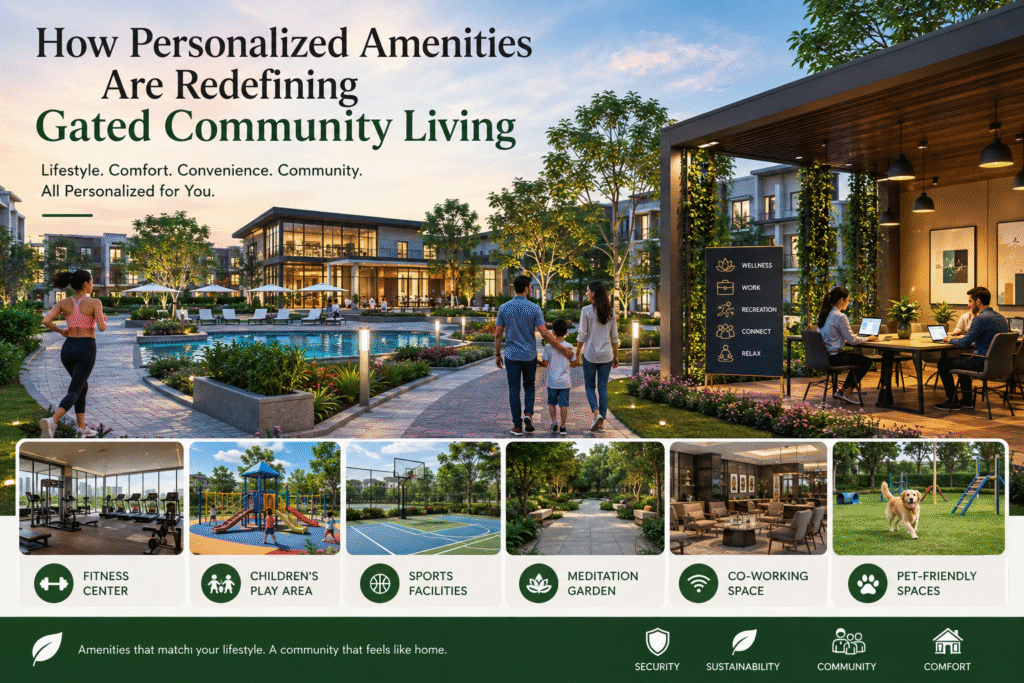
For example, a community may offer dedicated fitness zones, meditation gardens, children’s activity areas, co-working lounges, pet-friendly spaces, outdoor kitchens, hobby rooms, or sports facilities. Furthermore, technology can allow residents to customize how they access and use these facilities.
Therefore, personalized amenities are not simply about adding more features. Instead, they are about creating experiences that make everyday living easier and more enjoyable.
1. Supporting Different Lifestyles
One of the biggest advantages of personalized amenities is their ability to accommodate different lifestyles.
For instance, young professionals may appreciate co-working spaces, high-speed internet, meeting rooms, and quiet lounges. Meanwhile, families may prefer children’s play areas, sports courts, swimming pools, and community event spaces.
Similarly, fitness enthusiasts may value modern gyms, walking trails, yoga studios, and cycling routes. On the other hand, older residents may prefer landscaped gardens, peaceful seating areas, wellness centers, and easily accessible recreational spaces.
Consequently, gated communities can appeal to a broader range of residents by offering amenities that serve different needs.
2. Creating Wellness-Focused Communities
Health and wellness have become increasingly important in residential living. Therefore, developers are incorporating amenities that encourage residents to take better care of their physical and mental well-being.
Modern gated communities may include yoga studios, meditation spaces, fitness centers, walking paths, landscaped gardens, swimming pools, and outdoor exercise zones. Additionally, some communities may provide wellness rooms or spaces for group activities.
For example, a peaceful garden can give residents a place to relax after a busy day. Likewise, walking trails can encourage regular physical activity without requiring residents to leave the community.
As a result, wellness amenities can transform a residential development into an environment that actively supports healthier routines.
3. Making Family Life More Convenient
Families often have different schedules and responsibilities. Consequently, convenience becomes an important factor when choosing a home.
Personalized amenities can make everyday family life easier. Children’s play areas, activity rooms, sports facilities, and community gathering spaces can provide entertainment close to home. Furthermore, family-friendly outdoor areas allow parents and children to spend quality time together.
Some modern communities may also provide spaces for children’s classes, workshops, celebrations, and recreational activities. Thus, residents can enjoy a variety of experiences without constantly traveling outside the community.
In addition, well-designed amenities can encourage children to interact with other residents, helping them develop friendships and a stronger sense of community.
4. Supporting Remote Work
The growth of flexible and remote working has also influenced residential design. Consequently, co-working spaces have become valuable amenities in modern gated communities.
Instead of working exclusively from a bedroom or kitchen table, residents can use dedicated workspaces with comfortable seating, reliable internet, meeting rooms, and quiet areas.
Moreover, these spaces can provide a professional environment without requiring a daily commute. Residents can therefore maintain a better balance between their professional and personal lives.
At the same time, shared workspaces can create opportunities for residents from different professional backgrounds to meet and exchange ideas.
5. Technology for a More Personalized Experience
Technology is another important element changing gated community living. Smart systems can make amenities more accessible and convenient.
For example, residents may use mobile applications to reserve a tennis court, book a community hall, schedule a fitness class, or receive information about upcoming activities. Additionally, smart access systems can simplify entry into facilities while improving security.
Furthermore, community apps can help residents communicate with management, submit maintenance requests, receive announcements, and participate in community events.
As technology continues to develop, gated communities can offer increasingly personalized experiences based on residents’ preferences and usage patterns.
6. Creating Spaces for Social Connection
Although privacy is an important reason people choose gated communities, social interaction is equally valuable. Therefore, personalized amenities can be designed to encourage meaningful connections among neighbors.
Outdoor cafés, community gardens, barbecue areas, hobby rooms, event lawns, and multipurpose halls can provide places where residents can meet naturally.
For example, a community garden may bring together residents who enjoy gardening. Similarly, a sports facility can connect people with shared interests.
As a result, amenities can do more than provide entertainment. They can help transform neighbors into a connected community.
7. Catering to Pet Owners
Pet-friendly living is another growing consideration for homebuyers. Consequently, some gated communities are introducing amenities specifically designed for pets and their owners.
Dog parks, walking trails, pet washing stations, and open green spaces can make life more convenient for pet owners. Moreover, these facilities can encourage residents to spend more time outdoors.
Therefore, pet-friendly amenities can become an important differentiating factor for communities competing to attract modern homebuyers.
8. Increasing Property Appeal and Value
Personalized amenities can also contribute to the overall appeal of a property. When a community offers facilities that genuinely improve residents’ daily lives, buyers may perceive greater value in the development.
For instance, a community with wellness facilities, smart technology, recreational spaces, and flexible work areas may stand out from developments offering only basic facilities.
However, simply having numerous amenities does not guarantee higher value. Instead, the quality, maintenance, accessibility, and relevance of those amenities matter significantly.
Therefore, developers should focus on useful and well-designed features rather than adding amenities simply to create a longer brochure.
9. Building Communities Around Resident Preferences
Perhaps the most important change is that residents are increasingly becoming part of the decision-making process. Developers can gather feedback through surveys, community meetings, digital platforms, and resident engagement programs.
As a result, amenities can evolve according to changing needs.
For example, if residents show greater interest in fitness, additional wellness programs can be introduced. Similarly, if more residents begin working remotely, co-working facilities can be expanded.
This approach creates a more adaptable community where amenities continue to remain relevant over time.
The Future of Personalized Gated Community Living
The future of gated communities will likely focus less on simply offering more amenities and more on offering the right amenities.
As lifestyles continue to change, communities will need to become increasingly flexible. Smart technology, wellness-focused design, sustainable spaces, recreational facilities, and personalized services will likely play an even larger role.
Moreover, residents will expect their communities to provide experiences that complement their individual lifestyles. Therefore, successful gated communities will be those that understand their residents and continuously adapt to their needs.
Conclusion
Personalized amenities are changing the way people think about gated community living. Instead of focusing only on security and attractive homes, modern developments are creating complete lifestyle environments designed around comfort, convenience, wellness, recreation, work, and social connection.
Furthermore, personalized amenities allow residents to enjoy services and spaces that genuinely match their interests and daily routines. At the same time, they can strengthen community relationships and enhance the overall appeal of a property.
Ultimately, the future of gated community living is not simply about living behind secure gates. It is about creating a place where every resident can enjoy a lifestyle that feels uniquely their own.