
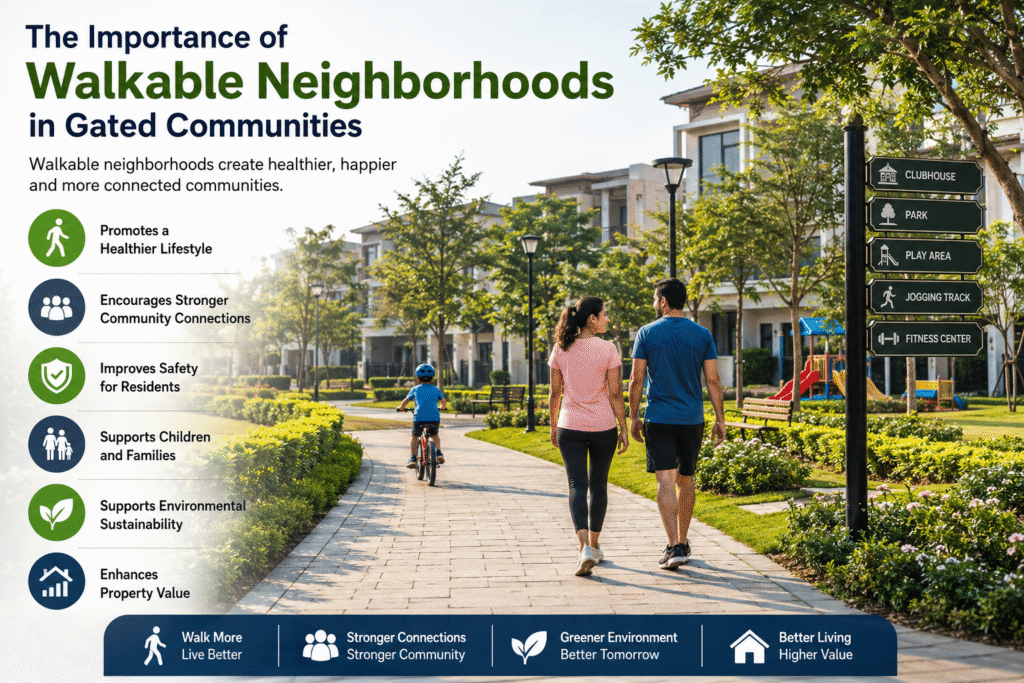
In today’s fast-paced world, homebuyers are looking for more than just a beautiful house. They want a lifestyle that promotes convenience, health, safety, and a strong sense of community. As a result, walkable neighborhoods have become one of the most desirable features in modern gated communities. While security, premium amenities, and privacy remain important, the ability to walk comfortably within the community significantly enhances everyday living.
Moreover, walkable neighborhoods encourage residents to spend more time outdoors, interact with neighbors, and enjoy a healthier lifestyle. Whether it is a morning jog, an evening stroll, or a walk to the clubhouse, thoughtfully designed pathways make daily life more enjoyable. Consequently, developers are increasingly prioritizing walkability as an essential part of gated community planning.
What Is a Walkable Neighborhood?
A walkable neighborhood is designed to make walking safe, convenient, and enjoyable. Instead of relying on vehicles for every activity, residents can comfortably reach parks, recreational facilities, gardens, playgrounds, fitness centers, and community spaces on foot.
Furthermore, walkable neighborhoods feature well-maintained sidewalks, landscaped pathways, adequate lighting, pedestrian crossings, shaded walkways, and traffic-calming measures. Together, these elements create an environment where people of all ages feel comfortable walking throughout the community.
Promotes a Healthier Lifestyle
One of the greatest benefits of walkable neighborhoods in gated communities is improved physical health. Since walking is one of the simplest forms of exercise, residents naturally become more active when safe walking paths are easily accessible.
For instance, instead of driving to a nearby recreational area, residents can simply take a pleasant walk. Over time, these daily walks contribute to improved cardiovascular health, better weight management, stronger muscles, and increased energy levels.
Additionally, regular walking reduces stress, improves sleep quality, and supports mental well-being. Therefore, walkable neighborhoods encourage healthier habits without requiring significant lifestyle changes.
Encourages Stronger Community Connections
Beyond physical health, walkable neighborhoods strengthen social relationships. When people spend time outdoors, they naturally meet neighbors, greet one another, and build lasting friendships.
For example, parents walking with children often interact with other families at playgrounds. Similarly, senior residents enjoy conversations during evening walks, while fitness enthusiasts connect through shared exercise routines.
As a result, these everyday interactions create a stronger sense of belonging. Instead of living among strangers, residents become part of a welcoming and supportive community.
Improves Safety for Residents
Safety is one of the primary reasons people choose gated communities. However, walkable design adds another valuable layer of protection.
Wide sidewalks separated from roads reduce the risk of accidents. Likewise, well-lit pathways improve visibility during early mornings and evenings. Furthermore, speed limits and traffic-calming measures help ensure vehicles move slowly within residential areas.
Children can safely ride bicycles, seniors can enjoy leisurely walks, and families can spend time outdoors with greater peace of mind. Consequently, walkable neighborhoods contribute significantly to overall resident safety.
Supports Children and Families
Families with young children especially appreciate walkable communities. Instead of worrying about heavy traffic, parents can allow children to walk or cycle within designated safe areas.
Moreover, children gain greater independence by walking to parks, sports courts, libraries, or recreational facilities without relying on constant transportation.
Meanwhile, families benefit from spending more quality time together outdoors. Evening walks, weekend bike rides, and visits to community parks become enjoyable family traditions that strengthen relationships.
Creates a Peaceful Living Environment
Walkable neighborhoods naturally reduce vehicle dependence inside the community. As fewer short-distance trips require cars, traffic congestion decreases considerably.
Consequently, quieter streets create a more peaceful atmosphere. Residents enjoy cleaner surroundings, lower noise levels, and improved air quality.
Additionally, landscaped walking trails, flowering gardens, and tree-lined avenues make daily walks relaxing and refreshing. This peaceful environment enhances both physical comfort and emotional well-being.
Enhances Property Value
Walkability has become an increasingly important consideration for homebuyers and real estate investors. Properties located in highly walkable gated communities often attract greater demand because buyers recognize the long-term lifestyle benefits.
Furthermore, attractive pedestrian infrastructure reflects thoughtful planning and quality development. Buyers are generally willing to pay a premium for communities that offer convenience, safety, and accessibility.
As demand continues to grow, homes in walkable neighborhoods often experience stronger appreciation over time. Therefore, investing in such a community can provide both lifestyle and financial advantages.
Supports Environmental Sustainability
Walkable neighborhoods also contribute to environmental conservation. Since residents rely less on cars for short trips, fuel consumption decreases while carbon emissions are reduced.
Additionally, many gated communities incorporate eco-friendly landscaping, green spaces, rainwater harvesting systems, and sustainable design practices that complement walkable infrastructure.
As a result, residents enjoy a healthier environment while contributing to broader sustainability goals. Even small reductions in daily vehicle use can have a meaningful environmental impact over time.
Encourages Active Aging
Walkable neighborhoods are particularly valuable for older adults. Seniors benefit greatly from safe, accessible pathways that encourage regular physical activity without requiring strenuous exercise.
Moreover, walking helps improve balance, flexibility, cardiovascular health, and overall mobility. At the same time, outdoor interactions reduce feelings of isolation and promote emotional well-being.
Accessible pathways with seating areas, shaded rest spots, and smooth surfaces allow elderly residents to remain active and independent for longer periods.
Increases Convenience in Everyday Life
Convenience is another significant advantage of walkable gated communities. Residents can easily access everyday amenities without using a vehicle.
For example, walking to the clubhouse, fitness center, swimming pool, children’s park, convenience store, or community garden becomes part of a pleasant daily routine.
Furthermore, reduced dependence on cars saves fuel costs, minimizes parking concerns, and makes daily activities more efficient. Consequently, residents enjoy a more relaxed and convenient lifestyle.
Features That Make a Neighborhood Walkable
Several design elements contribute to successful walkable neighborhoods in gated communities, including:
- Wide and well-maintained sidewalks
- Tree-lined shaded pathways
- Beautiful landscaping and gardens
- Dedicated jogging and cycling tracks
- Pedestrian-friendly street crossings
- Adequate lighting throughout the community
- Traffic-calming measures and low-speed roads
- Easy access to parks, playgrounds, and recreational facilities
- Comfortable seating and rest areas
- Clearly marked walking routes
Together, these features create an environment where walking becomes enjoyable rather than inconvenient.
The Future of Walkable Gated Communities
As urban lifestyles continue to evolve, walkability will become even more important. Homebuyers increasingly value communities that support wellness, sustainability, convenience, and social interaction.
In addition, developers are integrating smart technology with pedestrian-friendly designs through smart lighting, digital security systems, app-based community management, and eco-friendly infrastructure.
Therefore, future gated communities will likely place even greater emphasis on creating safe, connected, and walkable environments that improve residents’ overall quality of life.
Conclusion
The importance of walkable neighborhoods in gated communities extends far beyond convenience. They promote healthier lifestyles, strengthen social connections, improve safety, support environmental sustainability, and enhance property values. Moreover, they create vibrant communities where residents of all ages can enjoy a better quality of life.
As buyers increasingly seek homes that combine comfort, wellness, and long-term value, walkable neighborhoods are becoming a defining feature of modern residential developments. Ultimately, choosing a gated community with thoughtfully designed pedestrian spaces is not just an investment in real estate—it is an investment in a healthier, happier, and more connected way of living.