Introduction to Sustainable Living in Gated Communities
In recent years, sustainable living has shifted from being a choice to a necessity. As urban populations grow and environmental concerns intensify, modern gated communities are evolving to meet eco-conscious expectations. These communities are no longer defined solely by security and luxury; instead, they now focus on minimizing environmental impact while enhancing residents’ quality of life. Therefore, eco-friendly features have become an integral part of contemporary residential planning.
Energy Efficiency: Powering Homes the Smart Way
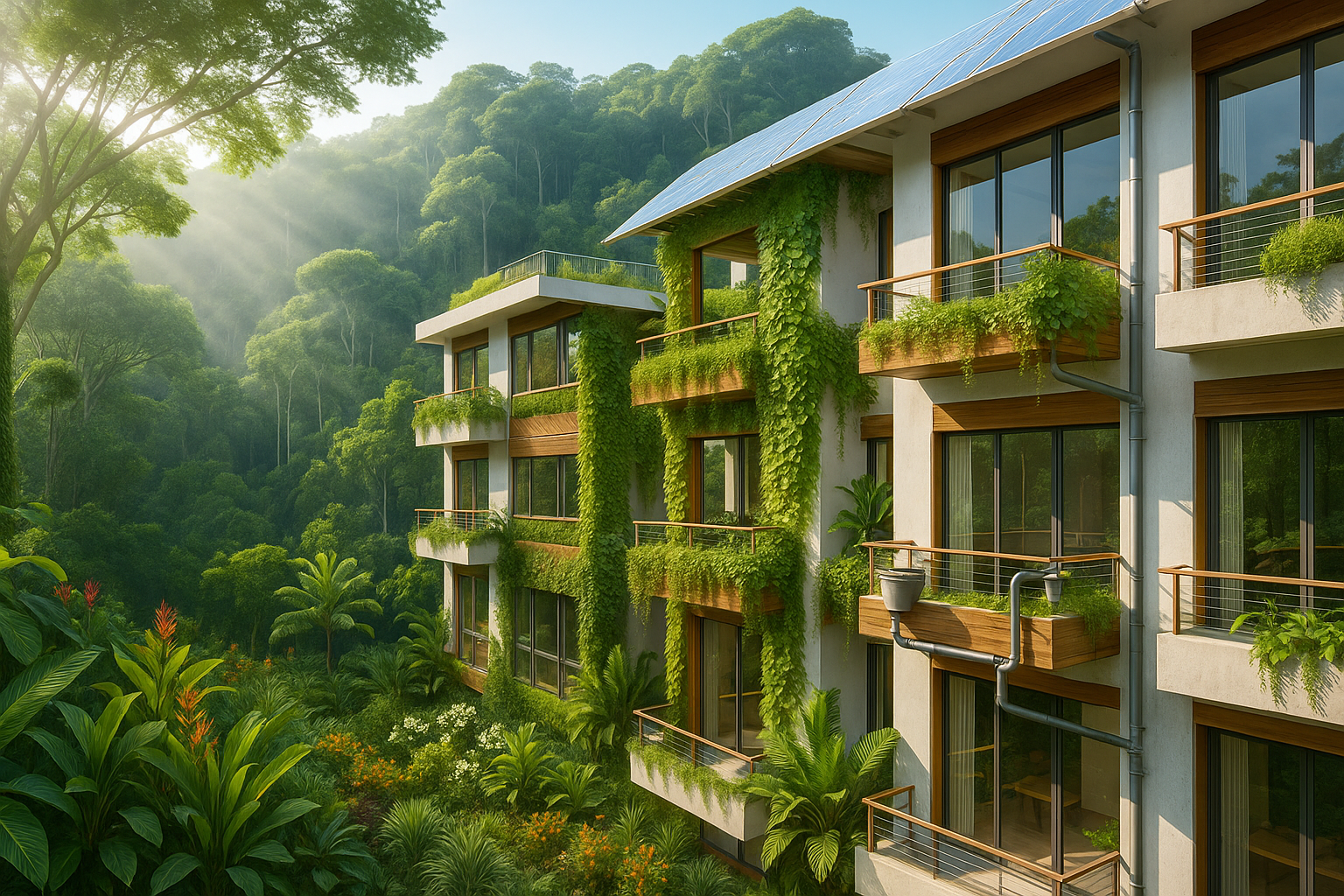
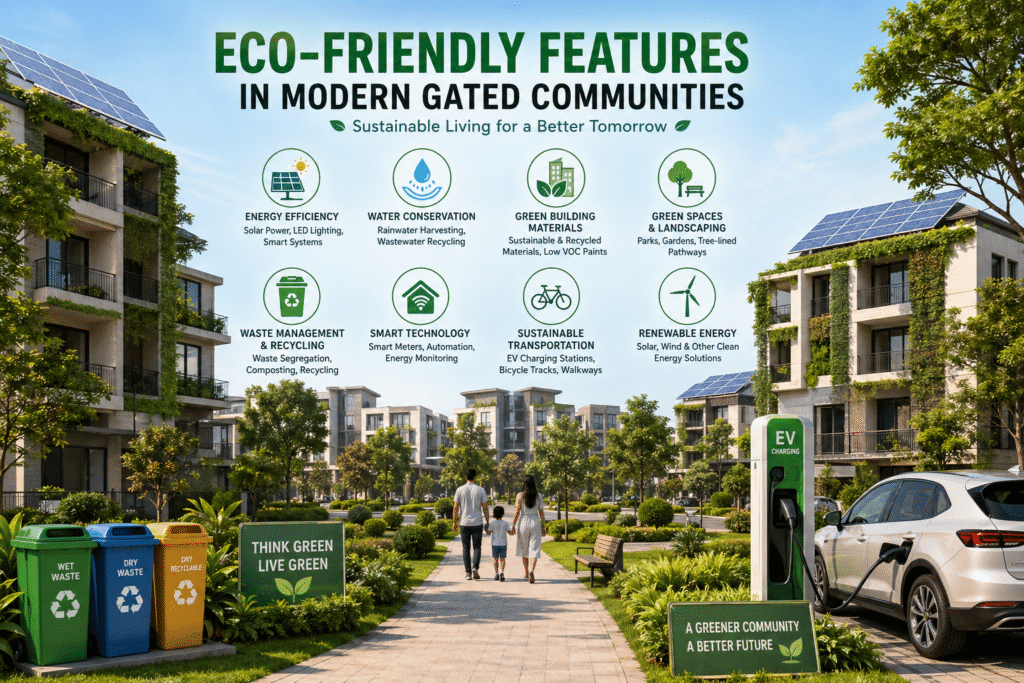
To begin with, energy efficiency stands at the core of sustainable gated communities. Developers are increasingly incorporating LED lighting, solar panels, and energy-efficient appliances into residential designs. For example, solar panels installed on rooftops and shared spaces generate clean energy, thereby reducing dependence on traditional electricity sources. In addition, motion-sensor lighting in corridors and outdoor areas ensures that energy is used only when needed. As a result, residents benefit from reduced electricity bills while contributing to a lower carbon footprint.
Water Conservation: Every Drop Matters
Moreover, water conservation has become a critical focus in modern developments. With water scarcity affecting many regions, gated communities are adopting systems such as rainwater harvesting and wastewater recycling. Rainwater is collected and stored for non-drinking purposes like gardening and cleaning. Meanwhile, sewage treatment plants recycle wastewater for reuse. Consequently, these measures significantly reduce reliance on municipal water supplies and encourage responsible consumption.
Green Building Materials: Building Responsibly
In addition to conserving resources, the use of sustainable construction materials plays a vital role. Builders now prefer eco-friendly options such as recycled steel, bamboo, and low-VOC paints. These materials not only reduce environmental damage during construction but also improve indoor air quality. Furthermore, proper insulation techniques help maintain indoor temperatures, thereby reducing the need for excessive heating or cooling. Thus, residents enjoy healthier and more energy-efficient living spaces.
Green Spaces and Landscaping: Bringing Nature Closer
Equally important is the integration of greenery within residential spaces. Modern gated communities prioritize landscaped gardens, parks, and tree-lined pathways. These green areas not only enhance aesthetic appeal but also improve air quality and reduce urban heat. Additionally, planting native species minimizes water usage and maintenance efforts. Hence, these communities create a refreshing environment that promotes both physical and mental well-being.
Waste Management and Recycling Systems
Another significant eco-friendly feature is efficient waste management. Gated communities are implementing structured systems for waste segregation and recycling. Residents are encouraged to separate biodegradable and non-biodegradable waste, which is then processed accordingly. Composting units convert organic waste into natural fertilizer for gardens. As a result, waste generation is minimized, and resources are reused effectively, supporting a sustainable lifestyle.
Smart Technology for Sustainable Living
Furthermore, the integration of smart technology enhances sustainability efforts. Smart meters, automated lighting, and energy-monitoring systems allow residents to track their consumption patterns. For instance, smart irrigation systems ensure optimal water usage without wastage. Similarly, centralized control systems optimize energy use in shared spaces. Therefore, technology not only adds convenience but also promotes mindful resource management.
Sustainable Transportation Options
In the same vein, transportation within gated communities is becoming more eco-friendly. Many developments now include electric vehicle charging stations, bicycle tracks, and pedestrian-friendly pathways. Carpooling initiatives and shuttle services are also encouraged to reduce the number of vehicles on the road. Consequently, these measures help lower carbon emissions and create a cleaner living environment.
Renewable Energy Beyond Solar Power
Additionally, some advanced communities are exploring alternative renewable energy sources beyond solar power. Wind energy, geothermal systems, and hybrid solutions are being introduced to further reduce dependence on fossil fuels. Although these technologies may involve higher initial costs, they offer long-term environmental and financial benefits. Hence, they represent a forward-thinking approach to sustainable living.
Promoting Environmental Awareness Among Residents
On the social side, eco-friendly gated communities actively promote environmental awareness. Regular workshops, campaigns, and community events encourage residents to adopt sustainable habits. Activities such as tree-planting drives and clean-up initiatives foster a sense of shared responsibility. As a result, residents become active contributors to environmental conservation.
Challenges in Implementing Eco-Friendly Features
However, implementing these sustainable features is not without challenges. The initial investment required for eco-friendly infrastructure can be higher than conventional methods. Nevertheless, these costs are often offset by long-term savings and environmental benefits. Moreover, as technology advances, sustainable solutions are becoming more affordable and widely accessible. Therefore, the transition to eco-friendly living continues to gain momentum.
The Future of Sustainable Gated Communities
Looking ahead, the future of gated communities lies in deeper integration of sustainability and technology. Innovations such as smart grids, advanced recycling systems, and net-zero energy homes are expected to become standard features. As awareness grows, more developers and residents will prioritize environmentally responsible living. Thus, gated communities will play a crucial role in shaping greener urban landscapes.
Conclusion: A Greener Way of Living
In conclusion, eco-friendly features in modern gated communities are transforming urban living. From energy efficiency and water conservation to green spaces and smart technology, these innovations offer numerous benefits. Not only do they protect the environment, but they also enhance residents’ comfort and well-being. Ultimately, embracing sustainable practices is not just a trend—it is a necessary step toward a healthier and more sustainable future.