In today’s fast-paced urban lifestyle, gated communities have evolved beyond being mere residential spaces. They have, in fact, transformed into vibrant social ecosystems where people come together to celebrate life, culture, and traditions. One of the most beautiful aspects of this evolution is how festivals and cultural events are celebrated within these communities. Not only do these celebrations preserve traditions, but they also foster a sense of belonging among residents.
A Shared Sense of Celebration
To begin with, festivals in gated communities are not limited to individual homes. Instead, they become collective experiences. Whether it’s Diwali, Pongal, Christmas, Eid, or New Year, residents actively participate in organizing and celebrating these occasions together. As a result, the joy multiplies, and even those who may be far from their hometowns feel connected.
Moreover, shared celebrations help bridge cultural gaps. In diverse communities where residents come from different regions, festivals become opportunities to learn about each other’s traditions. For instance, a North Indian family might introduce others to Holi traditions, while a South Indian family may showcase Pongal rituals. Consequently, this exchange creates a rich cultural tapestry within the community.
Organized Committees and Planning
Furthermore, most gated communities have dedicated cultural or event committees responsible for organizing celebrations. These committees plan everything in advance—from decorations and performances to food stalls and competitions.
In addition, planning is often collaborative. Residents volunteer their time and skills, whether it’s designing invitations, arranging lighting, or coordinating performances. This not only ensures smooth execution but also strengthens interpersonal bonds.
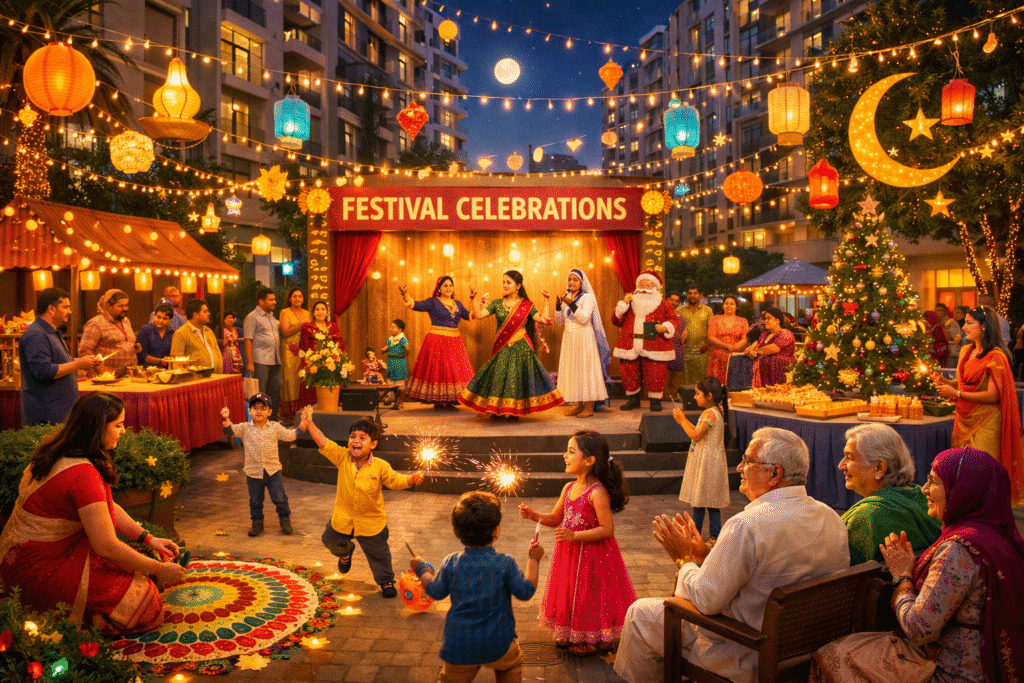
Transitioning from planning to execution, the level of detail in these events can be impressive. For example, during festive seasons, common areas are decorated with lights, rangoli, flowers, and themed installations. This transforms the entire community into a festive hub.
Inclusive Celebrations for All Age Groups
Another important aspect is inclusivity. Festivals in gated communities are designed to engage people of all age groups. Children participate in fancy dress competitions, games, and storytelling sessions. Meanwhile, adults enjoy cultural programs, music, dance, and food festivals.
Similarly, senior citizens are often given special roles, such as judging competitions or sharing traditional stories and experiences. This inclusion ensures that everyone feels valued and involved.
Additionally, these celebrations create lasting memories for children. Growing up in such an environment helps them understand cultural diversity and the importance of community bonding from an early age.
Cultural Performances and Talent Showcases
One of the highlights of festival celebrations is the cultural programs. Residents showcase their talents through dance, music, drama, and other performances. Not only does this provide entertainment, but it also encourages creativity.
For instance, during annual cultural events, residents may organize themed performances representing different states or countries. As a result, the event becomes both entertaining and educational.
Moreover, these platforms often reveal hidden talents within the community. A neighbor you barely knew might turn out to be an excellent singer or dancer. Consequently, such discoveries strengthen connections among residents.
Food, Festivities, and Togetherness
No festival is complete without food, and gated communities truly embrace this aspect. Potluck events, food stalls, and community feasts are common during celebrations.
In many cases, residents prepare traditional dishes from their regions and share them with others. This not only enhances the festive spirit but also introduces people to new cuisines. For example, during a multicultural event, one can enjoy everything from homemade sweets to regional delicacies.
Furthermore, food becomes a medium of bonding. Sitting together, sharing meals, and exchanging recipes create a warm and welcoming atmosphere.
Decorations and Themed Ambience
Equally important is the visual appeal of festivals. Gated communities often go all out with decorations. From colorful lights during Diwali to Christmas trees and lanterns during December celebrations, every detail adds to the festive mood.
Additionally, themed decorations are becoming increasingly popular. For example, eco-friendly themes using sustainable materials are often encouraged. This not only enhances creativity but also promotes environmental awareness.
As a result, the entire community transforms into a lively and picturesque space, making celebrations even more enjoyable.
Promoting Unity and Social Bonding
Beyond the festivities, these celebrations play a crucial role in building strong relationships among residents. In a world where people often lead busy and isolated lives, such events provide an opportunity to connect.
For instance, neighbors who may have only exchanged greetings earlier get a chance to interact and build friendships. Over time, this sense of familiarity creates a supportive and secure living environment.
Moreover, celebrating together fosters unity. Regardless of cultural or religious differences, residents come together with a shared spirit of joy and respect. Consequently, this strengthens the overall harmony within the community.
Encouraging Cultural Awareness and Respect
Another significant benefit is cultural awareness. In gated communities with diverse populations, festivals serve as educational experiences.
For example, during Eid celebrations, residents may learn about the significance of fasting and charity. Similarly, during Christmas, they might understand the traditions of gift-giving and community service.
Thus, these celebrations go beyond enjoyment—they promote mutual respect and understanding. Over time, this helps create a more inclusive and harmonious society.
Safety and Convenience
In addition to cultural benefits, celebrating festivals within gated communities offers practical advantages. Safety is a major factor, especially during large gatherings. Since these communities are secured, residents can celebrate without major concerns.
Furthermore, convenience plays a key role. There is no need to travel long distances or deal with crowded public spaces. Everything is organized within the premises, making it easier for families, especially those with children or elderly members.
Evolving Trends in Celebrations
Interestingly, festival celebrations in gated communities are continuously evolving. With the rise of technology, many communities now incorporate digital elements such as online invitations, event apps, and virtual participation for those who cannot attend in person.
Additionally, there is a growing focus on sustainability. Eco-friendly decorations, reduced plastic usage, and community clean-up drives are becoming integral parts of celebrations.
Moreover, social initiatives are often included. For instance, residents may organize charity drives, donate to the underprivileged, or conduct awareness programs during festivals. This adds a meaningful dimension to the celebrations.
Conclusion
In conclusion, festivals and cultural events in gated communities are much more than just celebrations. They are opportunities to connect, share, and grow together as a community. Through collective efforts, inclusive participation, and cultural exchange, these events create a vibrant and harmonious living environment.
Ultimately, as urban living continues to evolve, the role of gated communities in preserving traditions and fostering social bonds becomes increasingly important. By celebrating festivals together, residents not only keep their cultures alive but also build a sense of unity that truly makes a place feel like home.