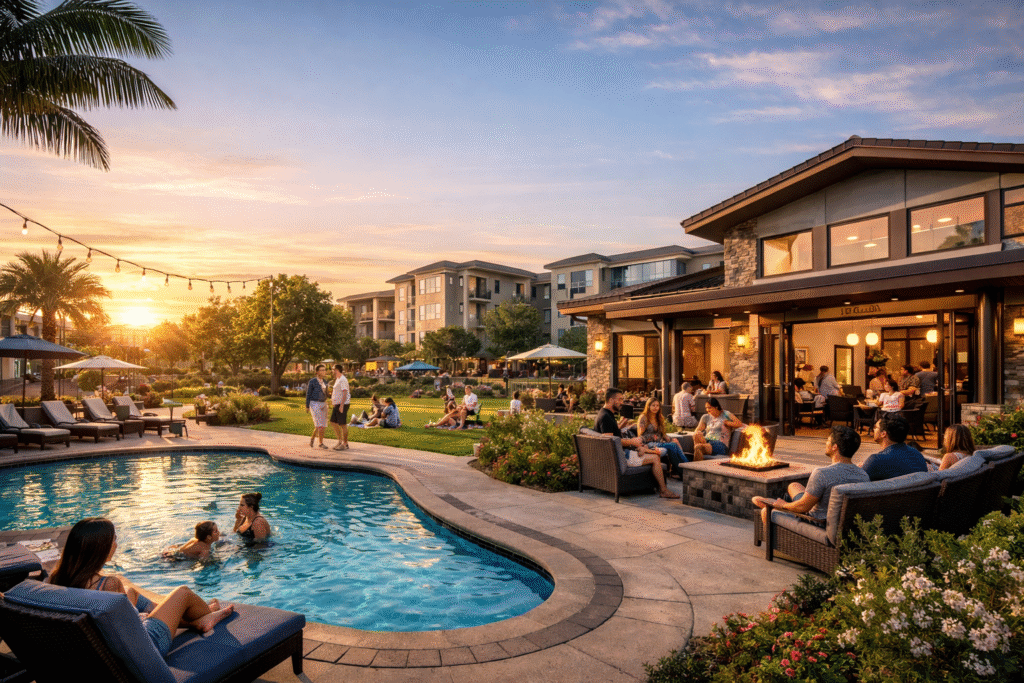
In today’s urban housing landscape, luxury is no longer defined solely by marble countertops or panoramic views. Instead, it is increasingly shaped by shared spaces — pools shimmering at sunset, landscaped parks filled with laughter, and clubhouses buzzing with activity. For renters, these amenities are more than aesthetic extras; they represent a new way of living where comfort, community, and convenience intersect.
The Shift from Private Luxury to Shared Experience
Traditionally, luxury in housing was about ownership. Homeowners invested in private gardens, personal gyms, and exclusive leisure spaces. However, as renting becomes more common across cities, the idea of luxury has evolved.
Now, renters often gain access to amenities that would be difficult to afford individually. A swimming pool, for example, might be financially unrealistic for a single household. Yet, within a residential complex, it becomes a shared asset — maintained professionally and enjoyed collectively.
Consequently, luxury shifts from possession to participation. Renters no longer measure comfort only by what lies inside their apartment, but by what exists just beyond their door.
Pools: More Than a Place to Swim
At first glance, a pool may appear to be simply a recreational feature. However, from a renter’s perspective, it symbolizes much more.
For one, pools offer a daily escape from the stress of work and city noise. After a long day, stepping into cool water provides instant relief — both physically and mentally. Additionally, pools foster informal social interaction. Neighbors who might otherwise remain strangers often meet during morning laps or weekend relaxation sessions.
Moreover, shared pools introduce a sense of holiday living into everyday routines. Renters often describe the experience as feeling like a “staycation,” where leisure is woven into daily life rather than reserved for special occasions.
Thus, pools represent not just luxury, but lifestyle — a reminder that rest and recreation can coexist with routine.
Parks: Nature as a Shared Privilege
Similarly, landscaped parks within residential communities offer renters something increasingly rare in cities: accessible green space.
Urban renters frequently face the challenge of limited outdoor access. Public parks may be crowded or distant, while private homes with gardens remain financially out of reach. Therefore, community parks become invaluable.
These spaces serve multiple purposes. Children find safe places to play, professionals enjoy peaceful walking paths, and elderly residents gain a comfortable environment for fresh air and conversation.
Furthermore, shared parks subtly strengthen community bonds. When residents see one another regularly — whether during morning jogs or evening strolls — familiarity grows naturally. Over time, this transforms anonymous buildings into recognizable neighborhoods.
In this way, parks offer renters not just greenery, but belonging.
Clubhouses: The Social Heart of Rental Living
While pools and parks focus on relaxation, clubhouses bring energy and connection. For renters, these spaces often function as the social core of a community.
Clubhouses host everything from fitness classes to celebrations, from remote work sessions to weekend gatherings. Consequently, they blur the boundary between private living and social engagement.
Importantly, they also reduce isolation — a common issue in urban rental life. Moving frequently can make it difficult for renters to build lasting relationships. However, a shared clubhouse creates opportunities for interaction without pressure.
Whether attending a yoga class or joining a festival event, renters can participate at their own pace. Over time, these small interactions often grow into meaningful connections.
Therefore, clubhouses transform buildings into communities and neighbors into acquaintances — sometimes even friends.
Financial Value Beyond Rent
Another critical aspect of shared luxury lies in its financial implications. At first, rental units with amenities may seem more expensive. However, when renters consider the broader picture, the value often becomes clear.
For instance, a gym membership, weekend resort visit, or co-working space subscription can add up quickly. Yet, when these features are included within residential amenities, renters effectively consolidate multiple lifestyle expenses into one payment.
Additionally, shared facilities reduce maintenance costs for individuals. Instead of worrying about cleaning, repairs, or staffing, renters benefit from professionally managed spaces.
As a result, what initially appears as higher rent often translates into greater overall convenience and savings.
Psychological Comfort and Lifestyle Identity
Beyond financial considerations, shared amenities influence how renters perceive their lifestyle. Living in a community with well-maintained leisure spaces often fosters pride and satisfaction.
Even if renters do not use every facility daily, the mere presence of these spaces enhances their sense of comfort. Knowing that a peaceful park, lively clubhouse, or refreshing pool is available creates a subtle psychological benefit.
Moreover, such environments contribute to lifestyle identity. Renters often choose communities not just for housing, but for how those spaces reflect their aspirations — whether wellness-focused, family-oriented, or socially vibrant.
Thus, shared luxury shapes not only daily routines but also personal narratives.
Challenges and Considerations
Despite the advantages, shared amenities are not without challenges. Overcrowding, maintenance delays, and usage restrictions can sometimes reduce their appeal.
Furthermore, renters may feel less ownership over shared spaces compared to homeowners. Since access depends on tenancy, the benefits may feel temporary.
However, many modern communities address these concerns through digital booking systems, professional facility management, and community engagement initiatives. Consequently, the shared model continues to improve and adapt.
The Future of Rental Luxury
Looking ahead, shared amenities are likely to play an even greater role in rental housing. As urban land becomes more expensive and living spaces become more compact, communal luxury offers an efficient solution.
Developers increasingly design residential complexes where shared environments are not secondary features but central attractions. Pools, parks, and clubhouses are now planned as lifestyle anchors rather than decorative additions.
For renters, this means housing is evolving into something richer than shelter. It is becoming an experience — one where comfort, recreation, and community coexist.
Conclusion
Ultimately, shared luxury redefines what it means to live well as a renter. Pools provide relaxation and connection, parks offer nature and belonging, and clubhouses create spaces for social life to flourish.
Together, these amenities transform rental housing from a temporary arrangement into a meaningful living environment. They show that luxury does not always need to be owned to be enjoyed. Sometimes, it becomes more powerful when shared.
In this new era of housing, renters are not merely occupying spaces — they are participating in lifestyles shaped by community, convenience, and collective comfort.