
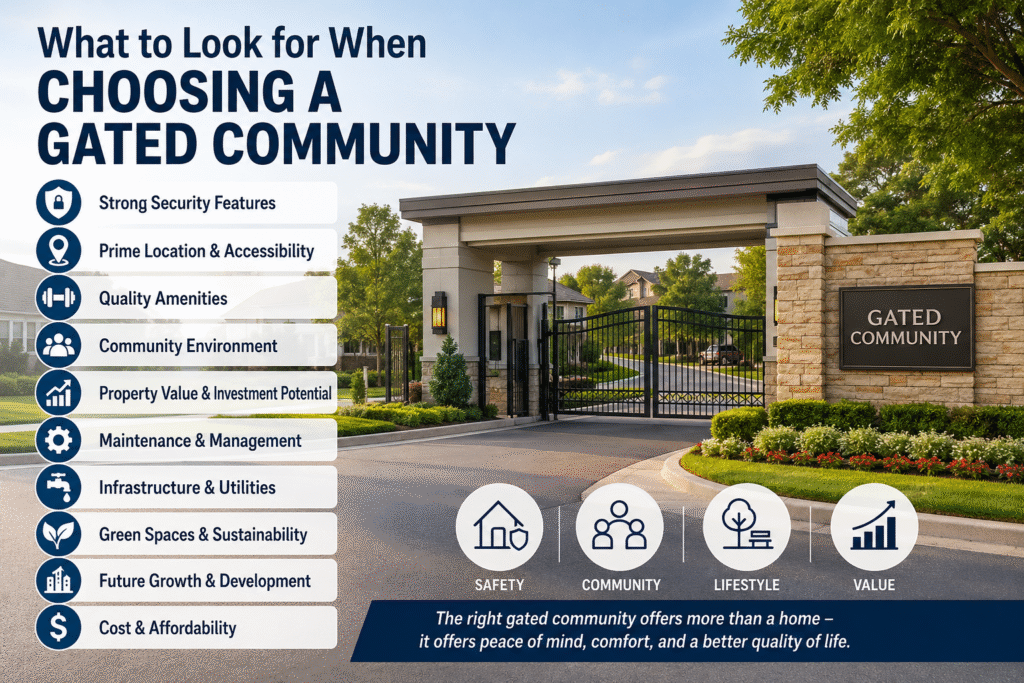
Choosing a home is one of the most important decisions a person can make. While location, budget, and property size are often top priorities, the type of community you choose can significantly impact your lifestyle. In recent years, gated communities have become increasingly popular because they offer security, convenience, and a sense of belonging. However, not all gated communities are the same. Therefore, it is essential to evaluate several factors before making a final decision.
In this article, we will explore what to look for when choosing a gated community and how to ensure your investment meets both your current and future needs.
Security Features
First and foremost, security is one of the primary reasons people choose gated communities. While a gated entrance itself offers an additional layer of protection, it is important to look beyond the gate.
For example, check whether the community has trained security personnel, surveillance cameras, visitor management systems, and regular patrols. Additionally, inquire about emergency response procedures and access control measures. A well-managed security system can provide peace of mind for residents and their families.
Furthermore, ask current residents about their experiences regarding safety. Their feedback can offer valuable insights into how effective the security measures truly are.
Location and Accessibility
Secondly, the location of the gated community plays a crucial role in your daily life. Even if the community offers excellent amenities, an inconvenient location may create challenges in the long run.
Therefore, consider its proximity to workplaces, schools, hospitals, shopping centers, and public transportation. Moreover, evaluate traffic conditions during peak hours. A shorter commute can save time and reduce daily stress.
In addition, look at future development plans in the surrounding area. Upcoming infrastructure projects, commercial developments, or transportation improvements may positively impact property values and convenience.
Quality of Amenities
Another important factor to consider is the availability and quality of amenities. Modern gated communities often offer facilities such as swimming pools, fitness centers, parks, playgrounds, clubhouses, walking trails, and sports courts.
However, it is not enough for these amenities to simply exist. Instead, assess how well they are maintained and whether they meet your lifestyle needs. For instance, families with children may prioritize playgrounds and recreational areas, while fitness enthusiasts may value a fully equipped gym.
Additionally, consider whether the amenities are included in the maintenance fees or require extra charges.
Community Environment and Lifestyle
Beyond physical features, the overall atmosphere of a community can greatly influence your living experience. Consequently, spend some time exploring the neighborhood before making a decision.
Observe how residents interact with one another and whether community events are regularly organized. A friendly and welcoming environment can foster strong social connections and improve overall satisfaction.
Moreover, determine whether the community’s lifestyle aligns with your preferences. Some gated communities focus on family-friendly living, while others cater to retirees, professionals, or luxury homeowners.
Choosing a community that matches your lifestyle can contribute to long-term happiness and comfort.
Property Value and Investment Potential
Since purchasing a home is also a financial investment, evaluating property value trends is essential. Generally, well-maintained gated communities tend to maintain or increase property values over time.
Nevertheless, it is wise to research historical property appreciation rates in the area. Additionally, analyze factors such as neighborhood demand, development quality, and future growth prospects.
Consulting a real estate professional can also help you better understand the market conditions and investment potential of the community.
As a result, you can make a more informed decision that benefits you financially in the future.
Maintenance and Management
A gated community’s appearance and functionality largely depend on effective management. Therefore, investigate the homeowners’ association (HOA) or management company responsible for maintaining the property.
Pay attention to the cleanliness of common areas, landscaping, roads, and recreational facilities. Well-maintained surroundings reflect good management practices and contribute to a pleasant living environment.
Furthermore, review the HOA rules and regulations carefully. While these rules help preserve property values and community standards, some restrictions may affect your lifestyle choices.
Understanding these guidelines beforehand can prevent misunderstandings later.
Infrastructure and Utilities
Reliable infrastructure is another critical aspect to consider. Before committing to a property, inspect the quality of roads, drainage systems, street lighting, water supply, and electricity services.
Additionally, assess internet connectivity, especially if you work remotely or rely heavily on digital services. Modern homeowners increasingly prioritize high-speed internet access for work, education, and entertainment.
Likewise, backup power systems and water storage facilities can provide added convenience during service interruptions.
Green Spaces and Sustainability
Today, many homebuyers value environmentally friendly living spaces. Consequently, green spaces and sustainable practices have become important considerations when selecting a gated community.
Look for landscaped gardens, parks, walking trails, and tree-lined streets. These features not only enhance visual appeal but also promote physical and mental well-being.
Moreover, communities that implement sustainable initiatives such as rainwater harvesting, solar lighting, waste management programs, and energy-efficient systems can contribute to a healthier environment and lower utility costs.
Future Growth and Development
While evaluating a gated community, it is equally important to consider its future prospects. For example, nearby infrastructure developments, educational institutions, commercial centers, and transportation projects can increase property values over time.
On the other hand, certain developments may create traffic congestion or reduce privacy. Therefore, researching municipal development plans can help you anticipate future changes and make a more strategic decision.
In many cases, choosing a community in a growing area can provide significant long-term benefits.
Cost and Affordability
Finally, affordability should remain a key factor throughout your decision-making process. Beyond the purchase price, consider ongoing expenses such as maintenance fees, property taxes, utility costs, and special assessments.
While luxurious amenities and premium features may seem attractive, they often come with higher monthly fees. Therefore, ensure that the overall cost fits comfortably within your budget.
Additionally, compare multiple communities to determine which offers the best value for your money.
A balanced approach can help you enjoy the benefits of gated community living without experiencing financial strain.
Conclusion
Choosing the right gated community involves much more than selecting a beautiful home. Instead, it requires careful consideration of security, location, amenities, management quality, infrastructure, investment potential, and affordability.
By thoroughly evaluating these factors, you can find a community that supports your lifestyle, protects your investment, and enhances your quality of life. Furthermore, taking the time to conduct proper research will help ensure long-term satisfaction with your decision.
Ultimately, a well-chosen gated community offers more than just a place to live—it provides a secure, comfortable, and enriching environment where you can truly feel at home.