
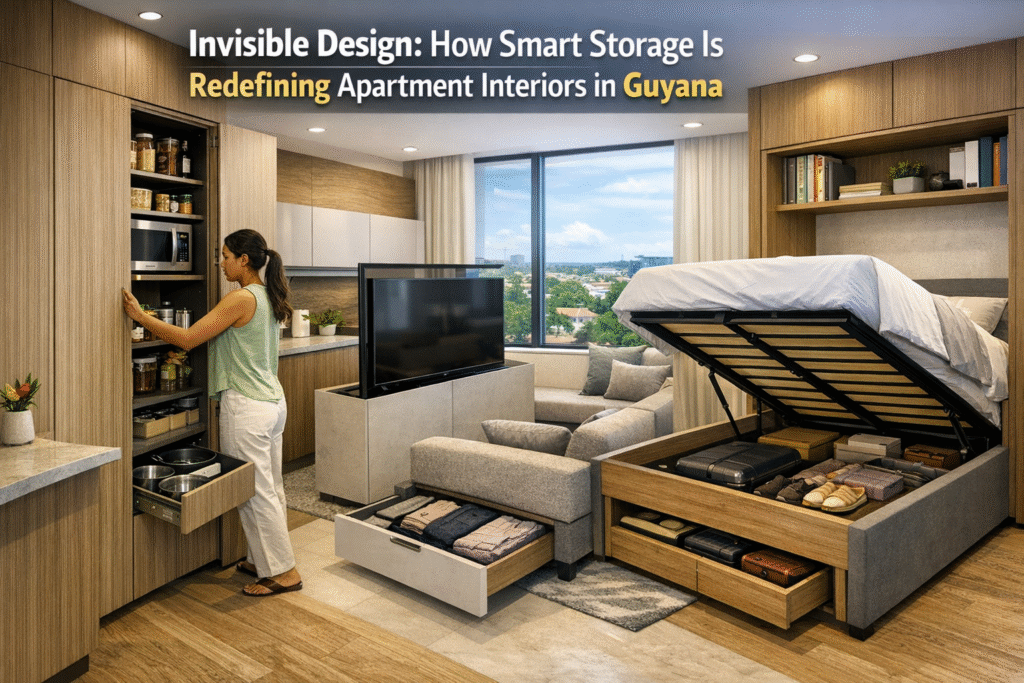
In today’s rapidly evolving urban landscape, apartment living has become the norm rather than the exception. As cities grow denser and homes become more compact, designers are facing a crucial challenge: how to create interiors that feel spacious, functional, and visually calm without expanding the physical footprint. Invisible design, powered by smart storage solutions, is emerging as the answer. By hiding clutter and integrating storage seamlessly into architecture, modern apartments are being redefined from the inside out.
The Rise of Invisible Design
To begin with, invisible design focuses on what you don’t see. Unlike traditional interiors where storage units are clearly visible—cupboards, shelves, and cabinets—this approach conceals functionality behind clean lines, flush surfaces, and multifunctional elements. As a result, living spaces feel lighter, more open, and intentionally designed.
Moreover, invisible design aligns perfectly with modern lifestyles. With more people working from home, downsizing, or choosing minimalist living, the need for efficient storage has never been greater. Therefore, smart storage is no longer a luxury—it is a necessity.
Why Smart Storage Matters More Than Ever
First and foremost, apartment interiors must serve multiple purposes. A single room often functions as a living area, workspace, dining space, and sometimes even a guest room. Consequently, visible clutter can quickly overwhelm a space, making it feel cramped and chaotic.
Smart storage addresses this issue by ensuring that every item has a place—out of sight but easily accessible. For instance, hidden cabinets, recessed shelving, and modular furniture allow residents to maintain order without sacrificing aesthetics. In turn, this creates a sense of mental calm, which is increasingly important in fast-paced urban environments.
Additionally, smart storage improves daily efficiency. When belongings are organized intuitively, everyday routines become smoother and less stressful. Thus, invisible design is not just about looks—it’s about better living.
Built-In Storage: Blending With Architecture
One of the most powerful aspects of invisible design is built-in storage. Instead of adding furniture after construction, storage is integrated directly into walls, floors, and ceilings. For example, full-height wall panels may conceal wardrobes, bookshelves, or even home offices.
Furthermore, floor-integrated storage—such as raised platforms with concealed drawers—maximizes unused space. Similarly, ceiling-height cabinets take advantage of vertical volume that often goes unused in apartments. As a result, designers can increase storage capacity without visually shrinking the room.
Most importantly, these built-in solutions preserve architectural continuity. When storage blends seamlessly with walls, the apartment feels cohesive rather than crowded.
Multifunctional Furniture: Doing More With Less
Equally important in invisible design is multifunctional furniture. Today’s smart furniture pieces are designed to transform effortlessly, offering storage while serving other purposes. For instance, beds with hidden drawers, sofas with concealed compartments, or dining tables that fold away into walls are becoming increasingly popular.
Not only does this approach save space, but it also enhances flexibility. A room can shift from a living area to a workspace within minutes. Consequently, apartments become more adaptable to changing lifestyles, especially for young professionals and small families.
In addition, modular furniture allows homeowners to customize storage based on their needs. Over time, components can be rearranged or upgraded, making the interior future-proof.
Kitchens and Bathrooms: Clutter-Free Essentials
Invisible design has made a particularly strong impact in kitchens and bathrooms—two areas traditionally prone to clutter. In modern apartments, kitchens now feature handle-less cabinets, pull-out pantries, and appliance garages that hide everyday tools.
Meanwhile, bathrooms are embracing recessed shelves, mirror cabinets, and concealed laundry storage. As a result, these functional spaces feel more like spa environments than utility rooms.
Furthermore, smart storage in these areas improves hygiene and ease of maintenance. Fewer exposed surfaces mean less dust accumulation and easier cleaning, which is a major advantage for busy urban residents.
Technology Meets Storage Design
In recent years, technology has further elevated invisible design. Smart storage systems now incorporate soft-close mechanisms, sensor lighting, and automated access. For example, drawers may open with a gentle push, while interior lights activate automatically when cabinets are opened.
Additionally, app-connected storage systems allow homeowners to track organization or adjust layouts digitally. Although subtle, these innovations enhance user experience and reinforce the idea that storage should work quietly in the background.
As technology continues to evolve, invisible design will likely become even more intuitive and personalized.
Psychological Impact of Decluttered Spaces
Beyond functionality, invisible design has a profound psychological effect. Studies consistently show that clutter increases stress and reduces focus. Therefore, by minimizing visual noise, smart storage contributes to mental well-being.
Clean, uninterrupted surfaces allow the eye to rest, creating a sense of openness even in smaller apartments. As a result, residents often feel more relaxed, productive, and in control of their environment.
Moreover, invisible design encourages mindful ownership. When storage is limited yet efficient, people naturally prioritize what they truly need, fostering a more intentional lifestyle.
Sustainability Through Smart Storage
Interestingly, invisible design also supports sustainability. By optimizing space, apartments require fewer materials and less furniture. In addition, modular and built-in storage reduces the need for frequent replacements, lowering long-term waste.
Furthermore, smart storage promotes smaller living spaces, which consume less energy for heating, cooling, and lighting. Therefore, invisible design contributes not only to better interiors but also to more environmentally responsible living.
The Future of Apartment Interiors
Looking ahead, invisible design is set to become a defining feature of apartment interiors. As urban living continues to evolve, the demand for spaces that are flexible, efficient, and emotionally comforting will only increase.
In the future, we can expect even greater integration between storage, architecture, and technology. Walls will adapt, furniture will transform effortlessly, and storage will become almost entirely unseen—yet indispensable.
Conclusion
In conclusion, invisible design is quietly transforming the way we experience apartment living. Through smart storage solutions, interiors are becoming cleaner, calmer, and more adaptable without sacrificing functionality. By hiding clutter and blending storage into the very fabric of design, modern apartments are proving that less visible can mean more livable.
Ultimately, invisible design is not about hiding life—it’s about making space for it.