As cities across the globe continue to warm due to climate change and rapid urbanization, the design of residential buildings must evolve. Urban heat islands — where concrete, asphalt, and buildings trap heat — are pushing temperatures higher in city centers. For residents, this means discomfort, higher energy costs, and health risks during extreme heat events. One of the most promising responses to this challenge is the rise of heat-resistant apartments — homes specifically designed to stay cool, reduce energy demand, and improve quality of life even as outdoor temperatures climb.
In this blog, we explore what heat-resistant apartments are, why they’re essential, and how architects, developers, and homeowners can bring them to life.
Why Heat-Resistant Apartments Matter
The world has already warmed by more than 1.1°C above pre-industrial levels, and cities often experience even greater temperature increases due to the urban heat island effect. These rising temperatures have serious consequences:
- Health impacts: Heat stress, dehydration, and heat-related illnesses disproportionately affect older adults, children, and those with chronic conditions.
- Energy consumption: As temperatures climb, so does the demand for air conditioning — spiking electricity use and straining grids.
- Cost burden: Higher energy consumption means increased utility bills for residents.
- Environmental impact: Heavy reliance on cooling technologies increases greenhouse gas emissions.
Heat-resistant apartments are not simply about comfort — they’re a strategic adaptation to a warming world, making homes safer, greener, and more economical.
Core Principles of Heat-Resistant Apartment Design
Designing for heat resistance goes beyond adding insulation or installing better air conditioners. It’s an integrated approach that combines site planning, material choice, building form, and modern technology to fundamentally reduce heat gain and improve indoor comfort.
Here are the foundational principles:
1. Passive Cooling First
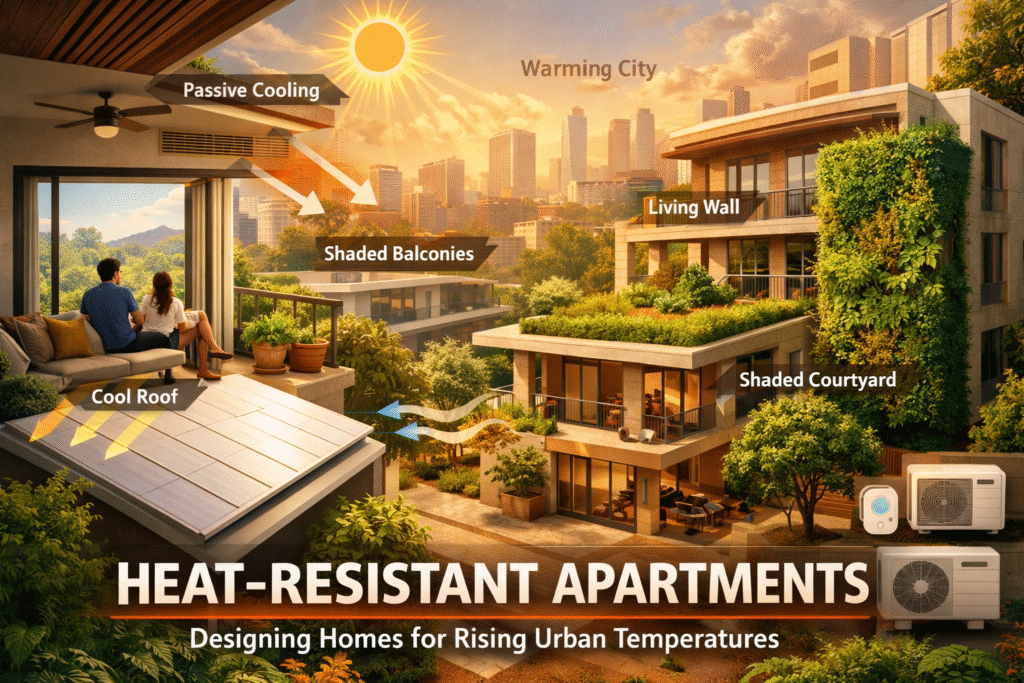
Passive cooling leverages design and natural resources to keep spaces comfortable without relying on mechanical systems. Key strategies include:
- Orientation: Aligning buildings to minimize direct sun exposure on walls and windows, especially during the hottest parts of the day.
- Shading devices: Deep overhangs, sun-shading fins, pergolas, and louvers reduce solar heat gain while allowing daylight.
- Cross-ventilation: Strategic placement of windows and openings enables breeze paths that flush out warm air naturally.
- Thermal mass: Materials like concrete, brick, and stone absorb heat during the day and release it at night when temperatures drop.
2. Reflective and Insulating Materials
Heat-resistant buildings integrate materials that reflect rather than absorb heat:
- Cool roofs: Light-colored or reflective roofing materials can reduce roof surface temperatures by up to 30°C compared to conventional dark roofs.
- Insulated walls: High-performance insulation slows heat transfer into living spaces.
- Reflective façades: Exterior finishes and paints with high solar reflectance reduce surface heat gain.
3. Green Elements and Urban Nature Integration
Vegetation cools through shade and evapotranspiration — the process by which plants release moisture into the air.
- Green roofs: Gardens or vegetation on rooftops reduce heat absorption and provide insulation.
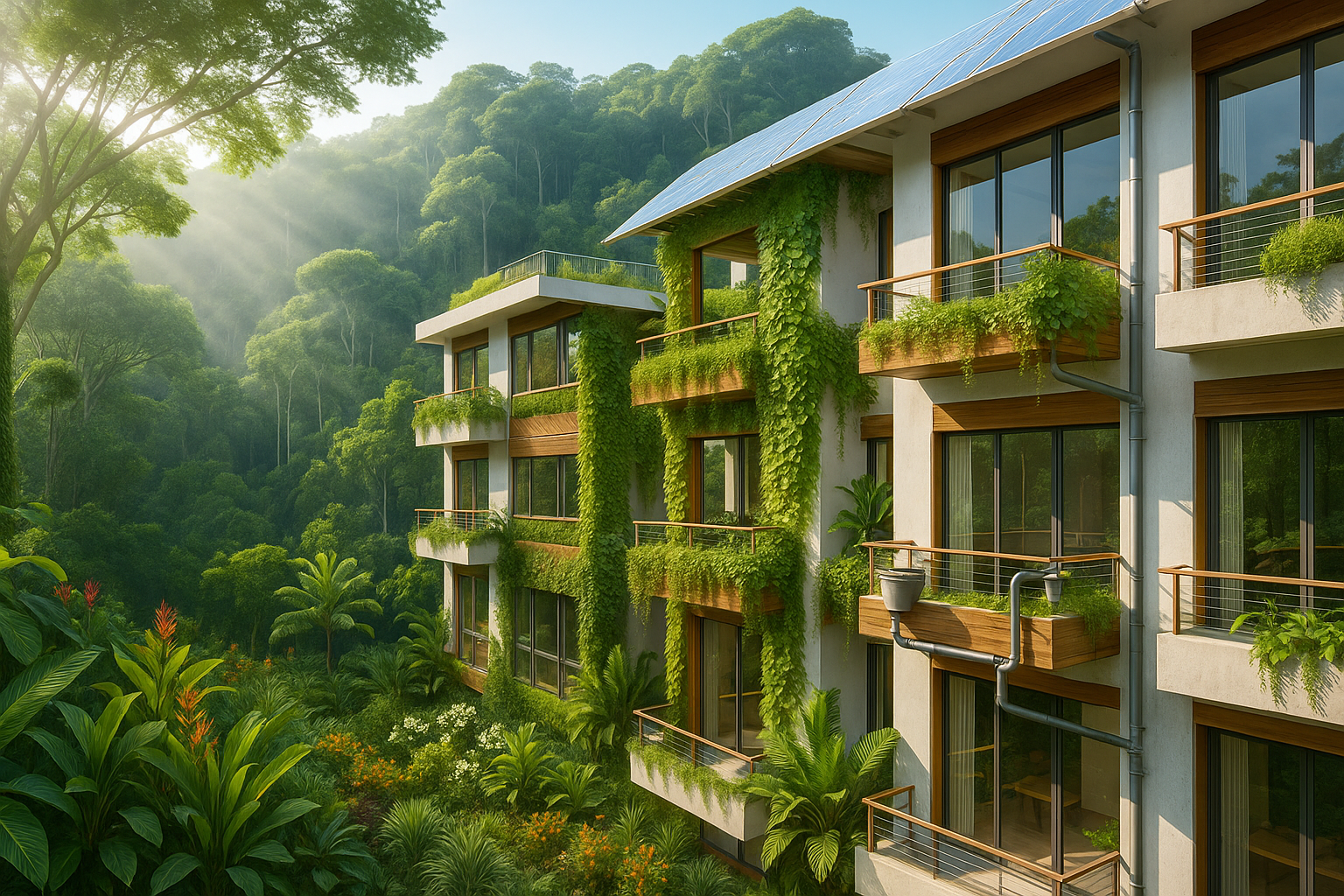
- Living walls: Vertical gardens on building façades help cool the air naturally.
- Trees and landscaping: Strategic placement around buildings offers shade and reduces surrounding surface temperatures.
4. Smart Use of Technology
Technology enhances performance and comfort:
- High-performance glazing: Windows that reduce solar heat gain while maximizing daylight.
- Automated shading systems: Sensors that adjust blinds or screens based on sun position and intensity.
- Energy-efficient HVAC: When mechanical cooling is needed, systems with high SEER (Seasonal Energy Efficiency Ratio) deliver comfort with lower energy use.
- Building management systems: Smart sensors can optimize ventilation, cooling, and shading in real time.
Design Solutions in Practice
Let’s look at practical heat-resistant design elements that can be adopted in modern apartments:
■ Innovative Roof Designs
Roofs are the most exposed surface and a major source of heat gain:
- Cool roofs with reflective membranes
- Green roof gardens
- Roof pergolas with shading and planter boxes
These not only lower indoor temperatures but also contribute to improved air quality and biodiversity.
■ Window and Balcony Strategies
Windows are both light sources and heat entry points:
- East- and west-facing windows receive the most heat. Minimizing their size or shading them effectively helps reduce indoor heat.
- Balconies with extended overhangs create shaded outdoor spaces and serve as heat buffers.
- Double-glazed, low-emissivity (low-E) windows significantly diminish heat penetration.
■ Passive Ventilation and Courtyards
Heat rises — a fact that architects can use to advantage:
- Central courtyards act as cool air generators if shaded and planted.
- Ventilation shafts and high ceilings promote air movement.
- Stack ventilation — warm air exits through high openings while cool air enters below.
Social and Economic Benefits
Designing for heat resistance isn’t just about buildings — it’s about people and communities.
Lower Energy Costs
By reducing reliance on air conditioning, households spend less on electricity, improving affordability — especially important in low-income areas.
Health and Wellbeing
Cooler indoor spaces reduce heat-related illnesses, improve sleep quality, and enhance overall comfort.
Climate Resilience
Heat-resistant apartments contribute to broader urban cooling strategies — reducing peak demand on electric grids and mitigating heat island effects.
Property Value and Market Appeal
Green and resilient buildings are increasingly valued by buyers and renters who prioritize sustainability, comfort, and cost efficiency.
Challenges and Considerations
While the advantages are clear, implementing heat-resistant apartments comes with challenges:
- Initial cost: Some passive cooling strategies and high-performance materials may cost more upfront, though they pay off over time through energy savings.
- Site constraints: Dense urban plots may limit ventilation options or shading potential.
- Behavioral adaptation: Residents must understand how to use design features — like opening windows strategically — to maximize benefits.
Addressing these challenges requires collaboration between architects, engineers, policymakers, and residents — and a shift toward long-term thinking in urban planning.
Looking Ahead: The Future of Cool Living
The urgency of rising urban temperatures demands innovative thinking and scalable solutions. Heat-resistant apartments represent more than architectural trends — they are a resilient response to climate change, urban growth, and human well-being.
As cities continue to heat up, the homes we design today will determine how comfortably and safely we live tomorrow. By embracing passive design principles, innovative materials, and climate adaptation technologies, we can create urban homes that stay cool, save energy, and strengthen communities.
The future of housing isn’t just about aesthetics and amenities — it’s about adaptation, sustainability, and human resilience. Heat-resistant apartments are a crucial part of that future.