
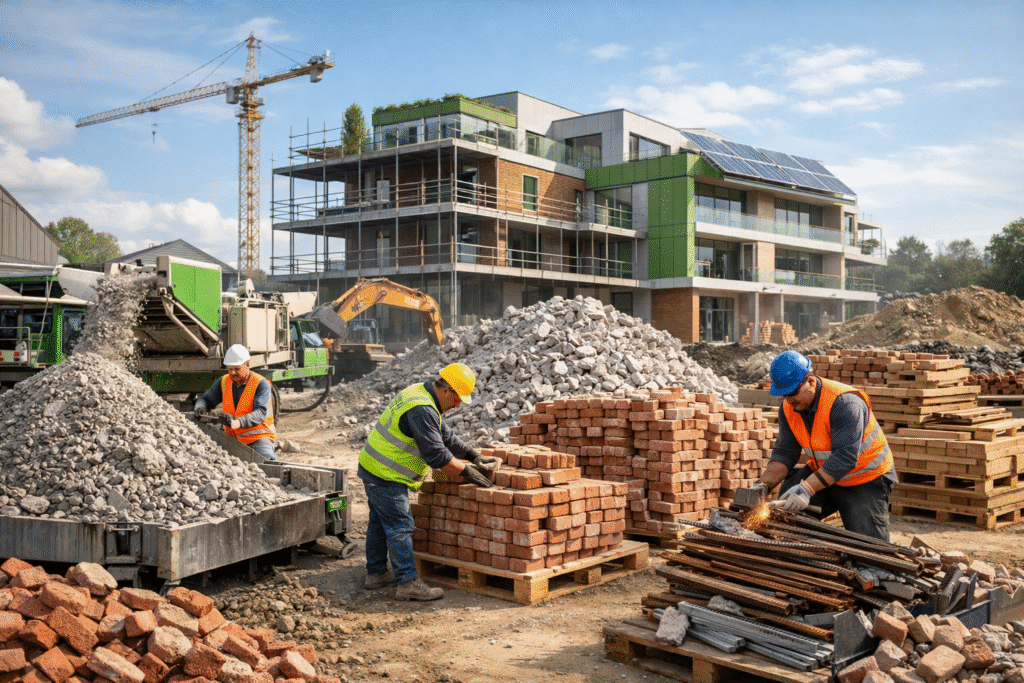
The construction industry has long been associated with progress, growth, and innovation. Yet, behind every new building lies an often-overlooked problem—construction and demolition waste. Concrete rubble, bricks, steel scraps, wood offcuts, and broken tiles frequently end up in landfills, contributing to environmental degradation and resource depletion.
Today, however, the narrative is changing. What was once considered useless debris is now being reimagined as a valuable resource. Across the world, construction waste is transforming into durable, cost-effective, and sustainable building materials. This shift is not just a trend—it is a necessity for a future-ready construction industry.
The Growing Challenge of Construction Waste
Construction and demolition activities generate millions of tons of waste every year. A significant portion of this waste comes from old buildings being demolished, road repairs, and renovation projects. Traditionally, most of this debris was dumped in landfills, consuming valuable land and polluting soil and groundwater.
Moreover, producing new construction materials requires vast amounts of natural resources such as sand, gravel, limestone, and timber. As urbanization accelerates, these resources are being extracted at an unsustainable rate. The combination of rising waste and shrinking resources has forced the industry to rethink its approach.
This is where recycled construction materials step in.
What Is Construction Debris Recycling?
Construction debris recycling involves collecting, processing, and reusing materials generated during construction, renovation, and demolition. Instead of discarding these materials, they are crushed, sorted, cleaned, and repurposed for new construction applications.
Common recyclable construction materials include:
- Concrete and masonry
- Bricks and tiles
- Steel and metal scraps
- Wood and timber
- Asphalt and road debris
- Glass and insulation materials
When processed correctly, these materials can perform nearly as well as virgin materials—sometimes even better.
Recycled Concrete: Building Strong Foundations Again
Concrete recycling leads the movement toward waste-based construction. Contractors crush old concrete into recycled concrete aggregate (RCA), which they use in new concrete mixes, road bases, pavements, and drainage layers.
Recycled concrete reduces the need for natural aggregates and lowers transportation costs. It also helps projects cut carbon emissions associated with mining and material processing. Engineers now design mixes that deliver strength and durability comparable to conventional concrete.
As a result, infrastructure projects increasingly rely on recycled concrete as a standard material rather than an alternative.
Giving Bricks and Masonry a Second Life
Builders once viewed broken bricks and tiles as low-value waste. Today, they reuse these materials in practical and creative ways. Crushed bricks serve as sub-base materials for roads, pathways, and landscaping projects.
Contractors also reclaim intact bricks from demolition sites and reuse them in new buildings. These reclaimed bricks add visual character, reduce material costs, and preserve the energy invested during their original production.
This approach combines sustainability with architectural appeal, making recycled masonry both functional and desirable.
Steel and Metal: Recycling Without Limits
Steel stands out as one of the most recyclable construction materials. Builders recover steel beams, reinforcement bars, and metal sheets from demolition sites and send them for reprocessing. Manufacturers then turn this scrap into new steel products without compromising quality.
Recycling steel saves large amounts of energy and significantly reduces carbon emissions. Compared to producing steel from raw iron ore, recycled steel requires far fewer resources.
Because of its durability and recyclability, recycled steel plays a vital role in modern, low-carbon construction.
Transforming Timber Waste into Engineered Wood
Construction sites generate large quantities of wood waste, including formwork, pallets, and cut-offs. Instead of discarding this material, manufacturers process it into engineered wood products such as particleboard, fiberboard, and cross-laminated timber (CLT).
Engineered wood products offer strength, versatility, and consistency. Builders use them in flooring systems, wall panels, roofing, and interior finishes. These products also store carbon, which helps offset emissions elsewhere in the construction process.
By extending the life of timber, the industry reduces deforestation and promotes responsible material use.
Innovation Beyond Traditional Recycling
Innovation continues to expand the possibilities of construction debris reuse. Companies now combine recycled glass with concrete to improve durability and aesthetics. Others blend plastic waste with construction debris to create lightweight bricks, blocks, and paving materials.
Some startups design modular wall panels and building components made almost entirely from mixed construction waste. These products support faster construction while minimizing environmental impact.
These advancements prove that waste materials can drive innovation rather than limit it.
Environmental and Economic Advantages
Using recycled construction materials delivers strong environmental benefits. Projects reduce landfill waste, conserve natural resources, and lower greenhouse gas emissions. Builders also decrease energy use by minimizing raw material extraction and processing.
From an economic perspective, recycled materials often reduce overall project costs. Local recycling facilities create jobs and shorten supply chains. As sustainability regulations tighten, recycled materials also help companies meet environmental compliance standards.
Together, these benefits make waste-based construction both practical and profitable.
Overcoming Industry Challenges
Despite progress, challenges remain. Recycling requires proper sorting, skilled labor, and modern processing equipment. Builders must also maintain strict quality control to ensure materials meet performance standards.
In addition, some clients still question the reliability of recycled materials. Education and successful case studies play a key role in changing these perceptions. As more projects demonstrate long-term performance, confidence continues to grow.
The Future of Building with Waste
The construction industry is moving toward a circular economy, where materials remain in continuous use rather than ending up as waste. Governments, architects, and engineers now support this transition through sustainable policies, certifications, and innovative designs.
As technology advances, construction debris will no longer represent waste. Instead, it will serve as a critical resource for building affordable, resilient, and sustainable structures.
Conclusion
The shift from waste to walls reflects a powerful transformation in modern construction. By converting debris into building materials, the industry reduces environmental impact while meeting growing demand.
Construction waste is no longer a liability. It is an opportunity to build smarter, greener, and more responsibly. As cities expand, recycled construction materials will play a vital role in shaping a sustainable future—one wall at a time.