
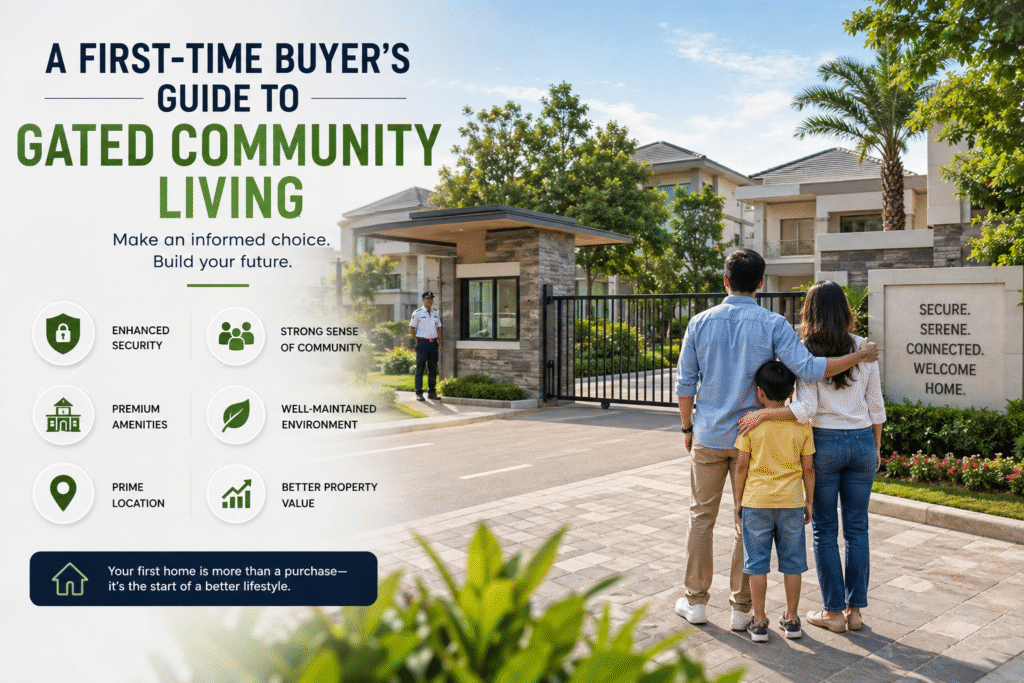
Buying your first home is one of the most exciting milestones in life. However, with so many housing options available, choosing the right place can feel overwhelming. In recent years, gated communities have become increasingly popular among first-time buyers due to their security, amenities, and sense of community. Nevertheless, before making a purchase, it is important to understand what gated community living truly involves.
This guide will help first-time homebuyers navigate the key aspects of gated community living and make an informed decision.
What Is a Gated Community?
A gated community is a residential area with controlled access points, often monitored by security personnel or electronic systems. Unlike traditional neighborhoods, these communities restrict entry to residents and authorized visitors.
Additionally, gated communities often feature shared amenities such as parks, swimming pools, fitness centers, walking trails, playgrounds, and community halls. As a result, residents enjoy a more organized and secure living environment.
Why First-Time Buyers Are Choosing Gated Communities
Many first-time buyers are attracted to gated communities for several reasons. First and foremost, security is a major advantage. Controlled entry points help reduce unauthorized access and create a safer environment for residents.
Furthermore, these communities offer a variety of lifestyle benefits. For example, recreational facilities, landscaped gardens, and dedicated play areas provide convenience and enjoyment without requiring residents to travel far from home.
Moreover, the sense of belonging created by community events and shared spaces often appeals to families, young professionals, and retirees alike.
Evaluate Your Budget Carefully
Before falling in love with a particular community, it is essential to establish a realistic budget. While gated communities provide many benefits, they may also come with additional costs.
For instance, homeowners are often required to pay maintenance or association fees. These fees contribute to the upkeep of common areas, security systems, landscaping, and amenities.
Therefore, when calculating affordability, consider not only the property’s purchase price but also recurring expenses. By doing so, you can avoid financial stress in the future.
Understand the Community Rules
One important aspect of gated community living is adherence to community guidelines. These rules help maintain order, aesthetics, and property values.
For example, there may be regulations regarding exterior paint colors, landscaping, parking, pet ownership, or noise levels. While these guidelines benefit the community as a whole, some buyers may find them restrictive.
Consequently, reviewing the community’s regulations before purchasing is crucial. This ensures that the lifestyle aligns with your expectations and preferences.
Examine the Security Features
Security is often the primary reason people choose gated communities. However, not all communities offer the same level of protection.
Therefore, take time to evaluate the available security measures. Consider features such as:
- Security guards at entrances
- CCTV surveillance systems
- Visitor management systems
- Access cards or biometric entry
- Emergency response procedures
Additionally, ask questions about how security incidents are handled and whether security services operate around the clock. The more information you gather, the more confident you’ll feel about your decision.
Assess the Amenities
Amenities can significantly enhance your quality of life. However, it is important to determine whether you will actually use them.
For instance, a community may offer a swimming pool, gym, clubhouse, tennis courts, or jogging tracks. While these facilities sound attractive, they may contribute to higher maintenance fees.
As a result, prioritize amenities that match your lifestyle. If you enjoy fitness activities, a well-equipped gym may be valuable. On the other hand, families with children may place greater importance on playgrounds and open green spaces.
Consider the Location
No matter how attractive a gated community may be, location remains a critical factor.
Ideally, your new home should provide convenient access to workplaces, schools, hospitals, shopping centers, and public transportation. Otherwise, long daily commutes could diminish the benefits of community living.
Furthermore, investigate future development plans in the surrounding area. New infrastructure projects, commercial centers, or transportation improvements can positively influence property values over time.
Therefore, choosing a strategically located community can provide both convenience and long-term investment potential.
Explore the Community Atmosphere
Every gated community has its own unique culture and environment. Some cater primarily to families, while others attract young professionals or retirees.
Before purchasing, spend time visiting the community at different times of the day. Observe how residents interact and assess the overall atmosphere.
Additionally, speaking with current residents can provide valuable insights into community life. They can share experiences regarding management quality, maintenance standards, security effectiveness, and neighborhood relationships.
As a result, you gain a more realistic understanding of what daily life will be like after moving in.
Check Property Appreciation Potential
For most first-time buyers, a home is not only a place to live but also a long-term investment.
Fortunately, gated communities often maintain strong property values due to their security, amenities, and organized management. Nevertheless, appreciation rates can vary depending on location, market conditions, and community reputation.
Therefore, research historical property trends in the area and consult local real estate professionals. Understanding market dynamics can help you make a smarter investment decision.
Review Maintenance Standards
A well-maintained community contributes significantly to resident satisfaction and property value preservation.
Pay attention to the condition of roads, landscaping, common areas, lighting, and recreational facilities. Poor maintenance may indicate ineffective management or insufficient funding.
Furthermore, ask about maintenance schedules and response times for repairs. Communities with proactive management typically provide a more pleasant living experience.
Consequently, evaluating maintenance standards should be a key part of your home-buying process.
Think About Your Future Needs
While your current needs are important, it is equally essential to consider your future plans.
For example, if you plan to start a family, nearby schools and child-friendly amenities may become increasingly important. Similarly, if remote work is part of your career, reliable internet infrastructure and dedicated workspaces could be valuable features.
By thinking ahead, you can choose a property that continues to meet your needs for many years.
Final Thoughts
Purchasing a home in a gated community can be an excellent choice for first-time buyers seeking security, convenience, and a strong sense of community. However, making the right decision requires careful research and thoughtful planning.
By evaluating your budget, understanding community rules, assessing security measures, reviewing amenities, and considering future needs, you can confidently select a community that aligns with your lifestyle and goals.
Ultimately, a well-chosen gated community offers more than just a home—it provides a comfortable, secure, and rewarding environment where you can build lasting memories and enjoy peace of mind for years to come.