For generations, society linked community to ownership. Buy a home, plant roots, know your neighbors—that was the script. However, the modern world has quietly rewritten it. Today, millions of people rent not as a temporary phase but as a long-term lifestyle. And yet, despite the lack of property deeds, renters still build something powerful: belonging.
So the real question isn’t whether renters can create community. Instead, it’s how they do it—without ownership, without permanence, and often without guarantees.
The Myth That Ownership Creates Community
First, let’s challenge a deeply ingrained belief: that ownership automatically equals connection. While owning a home can offer stability, it does not magically produce community. In fact, many homeowners live behind closed doors, rarely interacting with those next door.
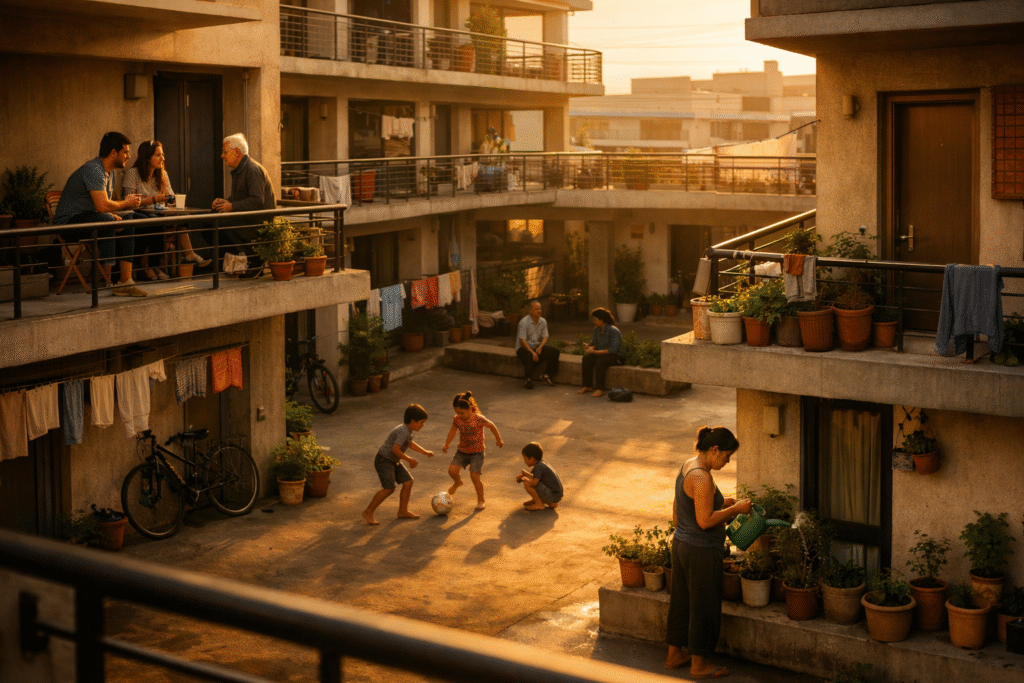
Meanwhile, renters often share hallways, elevators, courtyards, parking lots, and common frustrations. As a result, proximity and shared experience—not ownership—become the true foundations of community.
In other words, people don’t bond because they own land. They bond because they share life.
Renting Encourages Interaction, Not Isolation
Unlike standalone homes, rental spaces naturally create moments of interaction. For example, neighbors meet while collecting packages, waiting for lifts, or dealing with water outages. These small, repeated encounters build familiarity.
Over time, familiarity turns into recognition. Recognition turns into conversation. And eventually, conversation turns into connection.
Moreover, renters often arrive new to a city, a phase of life, or a job. Because of this, they actively seek connection rather than avoid it. They ask questions. They borrow tools. They share recommendations. Consequently, they form bonds faster.
Shared Transience Creates Shared Empathy
Interestingly, renters often live with uncertainty. Leases end. Rents rise. Moves happen. While this instability can feel stressful, it also creates empathy.
Everyone knows what it’s like to pack boxes again. Everyone understands the anxiety of renewal season. Therefore, renters often support one another emotionally, even without deep friendships.
This shared transience encourages kindness. Someone watches your plants when you travel. Someone helps carry furniture. Someone shares a contact for movers. These gestures may seem small, but they weave trust into everyday life.
Belonging Comes From Participation, Not Permanence
Ownership implies permanence, but belonging thrives on participation. Renters who invest emotionally—rather than financially—often feel more connected to their communities.
For instance, they join resident WhatsApp groups. They attend society meetings. They participate in festival celebrations. They contribute ideas, effort, and care.
Even without owning walls, they shape the atmosphere.
Furthermore, renters often bring diversity. They arrive from different cities, cultures, and backgrounds. As a result, rental communities tend to feel more dynamic and inclusive. New perspectives constantly refresh the social fabric.
Digital Spaces Strengthen Physical Communities
Today, community doesn’t rely only on physical presence. Digital tools play a major role in how renters connect.
Group chats alert neighbors about power cuts, deliveries, lost pets, or celebrations. Social media groups organize meetups, garage sales, and shared services. Through these platforms, renters stay informed and involved—even when busy.
Importantly, these digital connections lower social barriers. An introverted renter may hesitate to knock on a door but feels comfortable typing a message. Thus, technology quietly strengthens real-world belonging.
Renters Create Rituals, Not Roots
Homeowners often talk about “putting down roots.” Renters, on the other hand, create rituals.
Morning greetings at the gate. Evening walks with familiar faces. Sunday badminton games. Festival potlucks. These rituals give life rhythm and meaning, regardless of how long someone stays.
Even if a renter moves away, the memory of these rituals lingers. Belonging, therefore, doesn’t depend on duration. It depends on presence.
The Role of Design in Renter Communities
Physical design also shapes renter belonging. Open courtyards, shared terraces, co-working lounges, and children’s play areas encourage interaction. When spaces invite people to linger, community follows naturally.
In contrast, closed-off layouts discourage connection—even among owners. Thus, architects and developers influence belonging more than ownership ever could.
As co-living spaces and rental-first developments grow, they intentionally design for community. They recognize that renters value experience, not just square footage.
Emotional Investment Replaces Financial Investment
Ownership ties people through mortgages and maintenance. Renting, however, ties people through emotional investment.
Renters choose where to live based on lifestyle, access, and atmosphere. When a place aligns with their values, they care for it—even if they don’t own it.
They decorate thoughtfully. They respect shared spaces. They advocate for improvements. This sense of care proves that ownership is not a prerequisite for responsibility.
Belonging Is a Choice, Not a Contract
Ultimately, belonging comes down to choice. Renters choose to greet neighbors. They choose to participate. They choose to care.
Unlike ownership, which binds people legally, renter belonging feels voluntary. That choice makes it powerful.
Even if someone stays for only a year, they can still belong deeply during that time. Community doesn’t measure itself in decades. It measures itself in moments.
Redefining Community for a Rental Generation
As urban populations grow and mobility increases, renting will continue to dominate. Instead of viewing renters as temporary outsiders, society must recognize them as active community builders.
They create belonging without deeds, roots, or guarantees. They prove that home is not about owning space—it’s about sharing life within it.
In the end, community without ownership isn’t weaker. In many ways, it’s more intentional, more human, and more alive.