
Introduction
The construction industry has long relied on experience, manual supervision, and paper-based documentation. Clipboards, site diaries, and handwritten reports once defined project management. Today, that image is rapidly changing. Artificial Intelligence (AI) is entering construction sites, transforming how projects are planned, monitored, and executed. This shift is not about replacing people—it is about replacing inefficiency.
AI on construction sites enables smarter decisions, reduces risks, and improves productivity. By turning raw data into actionable insights, AI is redefining how modern buildings come to life.
The Shift From Manual Oversight to Intelligent Systems
Traditional construction management depends heavily on human observation. While expertise matters, it often struggles with scale and speed. Large projects generate massive amounts of data—far more than any team can manually process.
AI systems analyze this data instantly. From site activity to equipment usage, algorithms detect patterns that humans might miss. As a result, construction teams move from reactive problem-solving to proactive planning.
AI-Powered Planning and Scheduling
One of the biggest challenges in construction is keeping projects on schedule. Delays caused by weather, labor shortages, or supply chain disruptions can quickly inflate costs.
AI-driven scheduling tools analyze:
- Historical project data
- Real-time weather forecasts
- Workforce availability
- Equipment performance
Using this information, AI creates dynamic schedules that adapt as conditions change. If one task is delayed, the system recommends adjustments to prevent a chain reaction of setbacks. This flexibility keeps projects moving forward with minimal downtime.
Computer Vision and Site Monitoring
AI combined with computer vision is revolutionizing site monitoring. Cameras installed across construction sites continuously capture progress. AI software then compares real-time images with Building Information Modeling (BIM) designs.
This technology helps identify:
- Construction errors early
- Missing or misplaced components
- Deviations from design plans
Early detection reduces rework, saves costs, and improves build quality. Instead of waiting for inspections at key milestones, teams gain continuous visibility into site progress.
Enhancing Construction Safety With AI
Construction remains one of the most dangerous industries worldwide. AI plays a critical role in improving site safety by predicting risks before accidents occur.
AI systems analyze:
- Worker movement patterns
- Equipment proximity
- Historical safety incidents
When risky behavior is detected—such as workers entering hazardous zones—alerts are triggered immediately. This predictive approach shifts safety management from response to prevention, protecting lives and reducing liability.
Cost Control and Material Efficiency
Material waste and cost overruns are common construction challenges. AI helps control expenses by analyzing usage trends and predicting material requirements accurately.
With AI-driven insights, contractors can:
- Avoid over-ordering materials
- Reduce storage and handling costs
- Minimize construction waste
This efficiency not only saves money but also supports sustainable construction practices, a growing priority in the industry.
Replacing Paperwork With Real-Time Dashboards
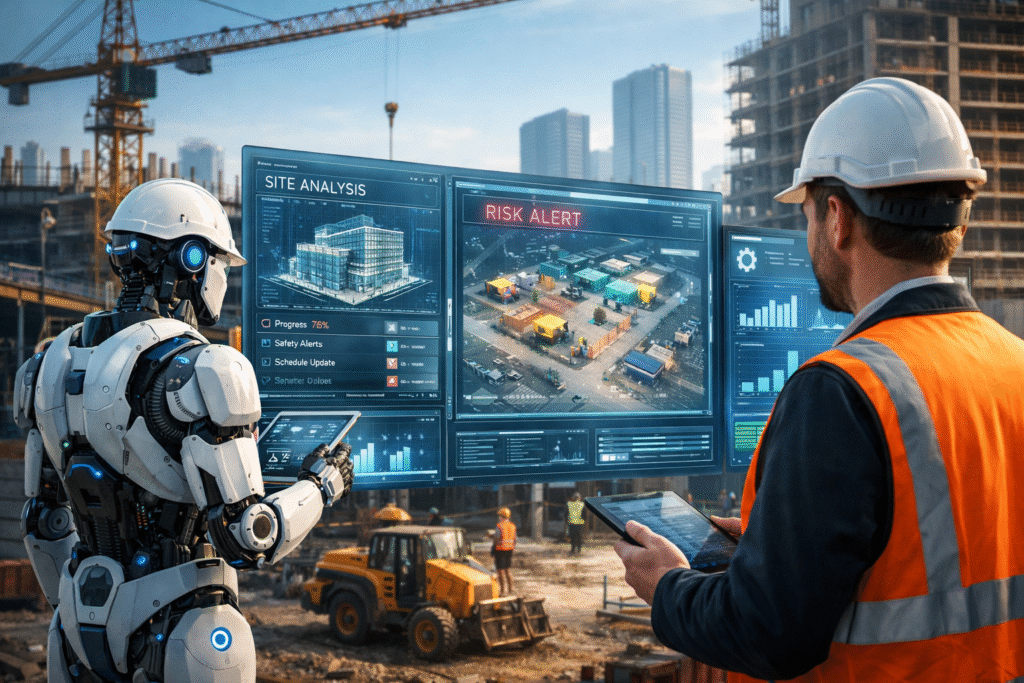
The traditional clipboard is being replaced by digital dashboards powered by AI. These platforms centralize project data and present it in easy-to-understand visual formats.
Project managers can track:
- Daily progress updates
- Safety compliance
- Budget performance
- Resource allocation
Real-time dashboards improve transparency and communication among stakeholders, ensuring everyone stays aligned throughout the project lifecycle.
The Human Role in an AI-Driven Construction Site
Despite growing automation, AI does not eliminate the need for skilled professionals. Instead, it enhances human capabilities. Engineers, architects, and site managers use AI insights to make better decisions, while focusing on leadership, creativity, and problem-solving.
AI handles the data. Humans handle the vision.
The Future of AI in Construction
As AI technology continues to evolve, construction sites will become more intelligent, efficient, and resilient. From autonomous equipment to predictive maintenance, AI will shape the next generation of infrastructure.
The clipboard era may be ending, but a smarter, safer, and more sustainable future is just beginning.
AI on construction sites is not a trend—it is the foundation of modern building.