For decades, the idea of “home” came with ownership. A name on a deed. A wall you could paint without asking permission. However, urban living has quietly rewritten that definition. Today, more people than ever are renting inside gated communities—spaces once designed almost exclusively for long-term owners.
So the question arises: can a rented home behind guarded gates truly feel like home, or does ownership still define belonging?
The New Meaning of Home in Cities
Traditionally, home meant permanence. Yet, modern city life values flexibility just as much. Jobs change. Cities change. Lifestyles evolve. As a result, renting is no longer a temporary compromise—it’s a deliberate choice.
Gated communities, meanwhile, promise safety, order, and lifestyle. When these two worlds meet—renting and gated living—the emotional definition of home begins to shift.
Instead of asking “Do I own this place?” people now ask, “Do I feel safe here? Do I belong here?”
Why Renters Choose Gated Communities
First and foremost, security plays a powerful role. Controlled entry points, surveillance, and guarded perimeters offer peace of mind that standalone buildings often lack. For renters, especially families, this sense of protection creates emotional stability.
Secondly, shared amenities add value beyond square footage. Parks, walking tracks, gyms, pools, and clubhouses create daily routines. Over time, these routines foster attachment—not to the apartment alone, but to the community itself.
Moreover, gated communities simplify life. Maintenance teams handle repairs. Landscaped areas remain consistent. As a result, renters spend less time managing problems and more time living.
Belonging Without Ownership
One might assume renters feel like outsiders in owner-dominated spaces. Yet, reality tells a more nuanced story. Belonging often grows through participation, not possession.
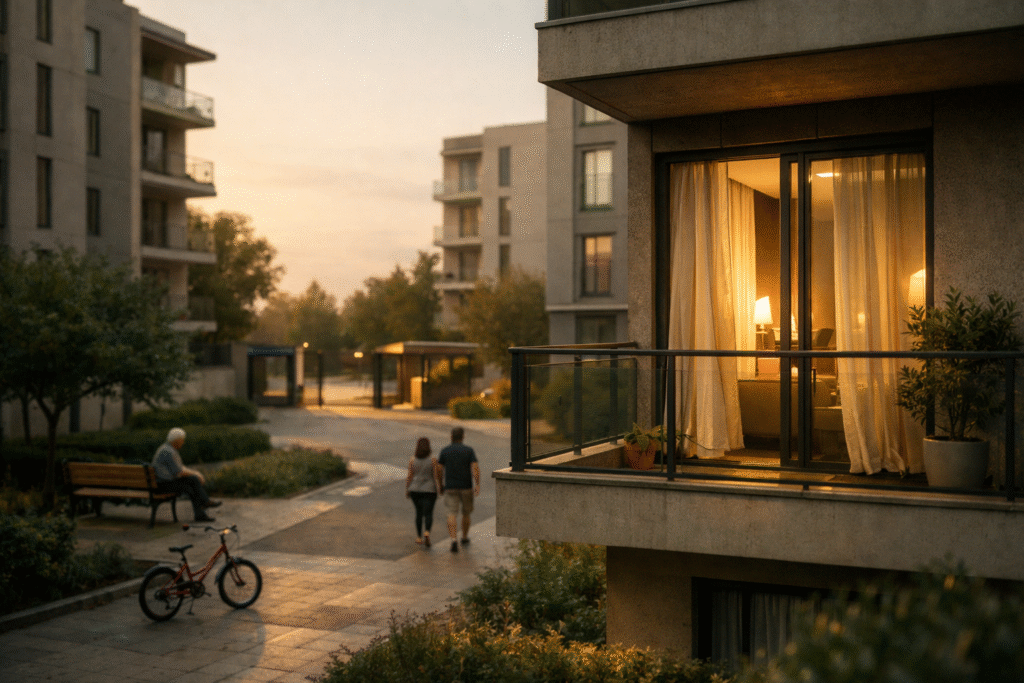
Children play together regardless of whose parents own or rent. Morning walkers exchange smiles. Festival celebrations blur lines between tenants and owners. Slowly, familiarity replaces formality.
That said, subtle boundaries still exist. Some renters hesitate to fully invest emotionally, knowing their stay may be temporary. However, many choose to be present anyway—because home, after all, is about now, not forever.
The Emotional Paradox of Renting
Renting inside a gated community creates a unique emotional tension. On one hand, renters enjoy luxury and structure. On the other, they live in a space that isn’t truly “theirs.”
Yet, paradoxically, this impermanence can feel freeing. Without the pressure of ownership, renters often feel lighter. They decorate selectively. They adapt easily. They focus on experiences rather than assets.
In this way, home becomes a feeling, not a financial milestone.
Community as the New Anchor
What truly makes gated communities feel like home is human connection. Shared elevators become conversation spaces. WhatsApp groups replace doorbells. Emergency situations reveal unexpected solidarity.
Over time, these interactions create emotional anchors. Even renters who move out often remember the community more than the apartment itself.
Interestingly, this sense of rootedness doesn’t come from walls or gates—but from people who share daily rhythms.
When It Doesn’t Feel Like Home
Of course, not all experiences are ideal. Some renters face subtle discrimination. Others feel excluded from decision-making processes dominated by owners’ associations. In such cases, the “gate” feels less like protection and more like separation.
Additionally, strict rules can sometimes limit personal expression. When flexibility disappears, emotional distance grows.
Therefore, for a gated community to feel like home, inclusion matters as much as infrastructure.
The Future of Renting in Gated Communities
As cities continue to grow denser, renting in gated communities is becoming a preferred lifestyle choice rather than a temporary phase. Developers are responding by designing projects that welcome long-term renters—offering flexible layouts, shared workspaces, and inclusive community policies. As a result, renting in gated communities now represents stability, safety, and lifestyle consistency without the burden of ownership. This shift signals a future where renters are no longer treated as transient occupants but as integral members of the community.
So, Can Renting in Gated Communities Feel Like Home?
The answer is yes—when safety meets connection and routine meets belonging. Renting in gated communities can feel like home when residents feel seen, included, and emotionally grounded in their surroundings. Ownership may offer permanence, but renting in gated communities offers presence, peace of mind, and the freedom to live fully in the moment. In the end, home is not defined by property papers—it is defined by where life feels settled, even if the address is rented.