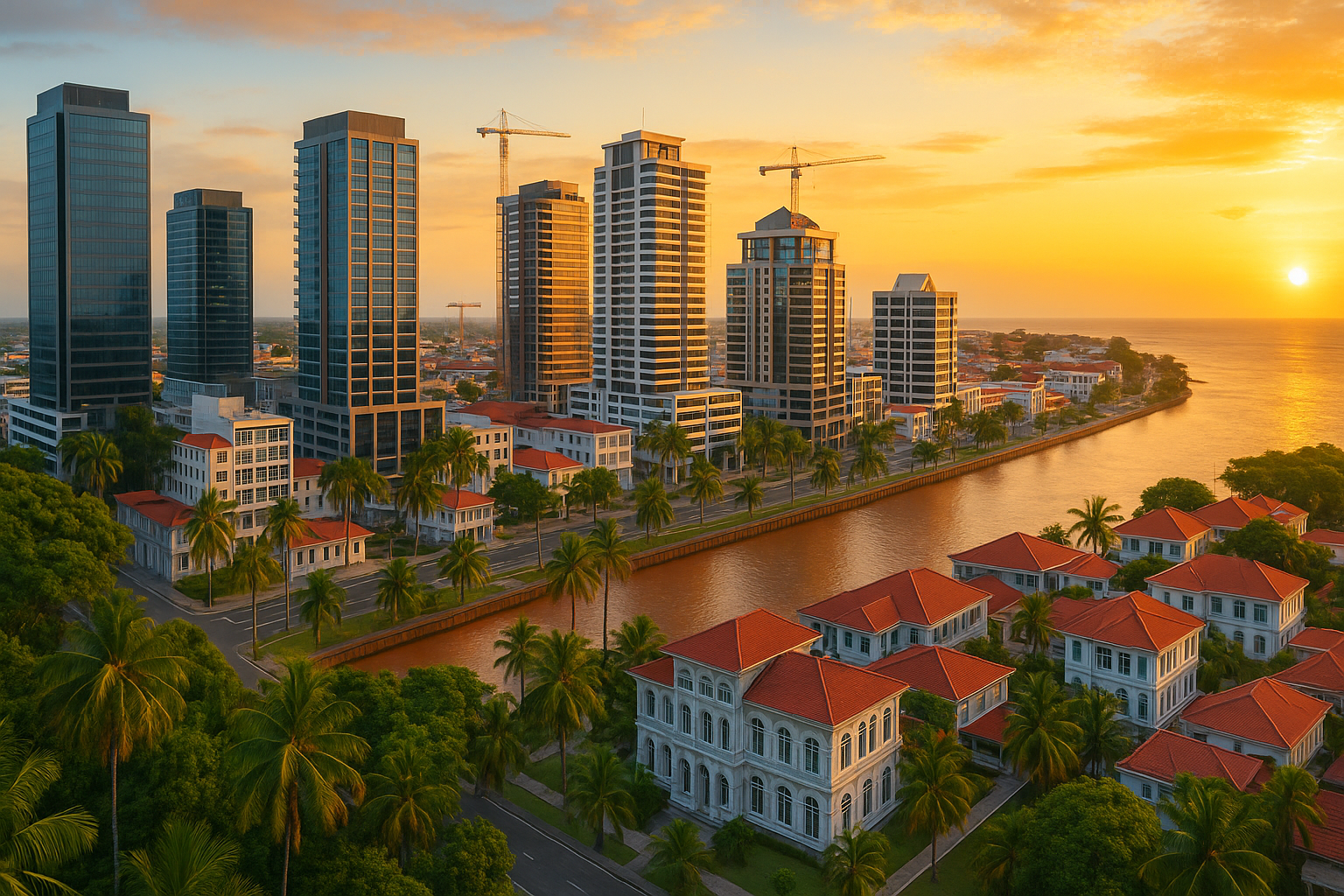
For decades, apartment living has been associated with concrete views, artificial lighting, and sealed windows that separate residents from the natural world. As cities grew taller and denser, nature slowly slipped out of daily life. Yet today, a quiet design revolution is challenging that reality. The biophilic design movement asks a powerful question: Can apartments reconnect us with nature—even in the heart of a city?
The answer, increasingly, is yes.
Understanding Biophilic Design
Biophilic design is rooted in a simple idea: humans have an innate connection to nature. The term “biophilia,” popularized by biologist E.O. Wilson, describes our natural tendency to seek relationships with living systems. When applied to architecture and interiors, biophilic design intentionally weaves natural elements into built environments.
This doesn’t mean turning apartments into jungles. Instead, it focuses on integrating light, air, materials, textures, views, and patterns that echo the natural world. The goal is not decoration, but experience—creating spaces that feel alive, restorative, and human.
Why Apartments Need Nature More Than Ever
Urban apartment dwellers often spend up to 90% of their time indoors. Long work hours, compact layouts, and digital lifestyles have reduced everyday contact with greenery, sunlight, and fresh air. This disconnection has real consequences.
Studies consistently show that lack of nature contributes to stress, anxiety, fatigue, and reduced productivity. In contrast, environments that include natural elements improve mood, cognitive function, sleep quality, and overall well-being. For apartment residents, biophilic design is not a luxury—it is becoming a necessity.
Bringing Nature Indoors: Key Biophilic Elements
Modern apartments are embracing biophilic design through a combination of thoughtful architecture and interior choices.
Natural Light and Ventilation
Sunlight is the foundation of biophilic spaces. Large windows, floor-to-ceiling glazing, skylights, and open layouts allow daylight to penetrate deeper into apartments. Operable windows and cross-ventilation introduce fresh air and subtle changes in temperature and sound, mimicking outdoor environments.
Indoor Greenery
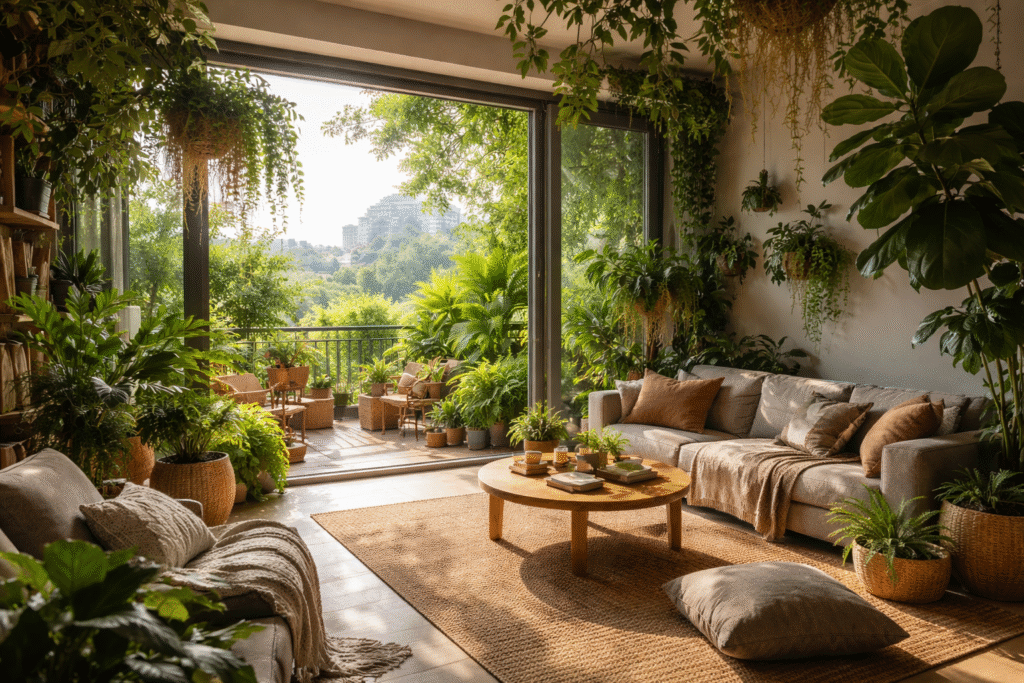
Plants are the most visible expression of biophilic design. From small herb gardens on kitchen counters to living walls in common areas, greenery softens hard surfaces and improves air quality. Even a few strategically placed plants can transform how a space feels.
Organic Materials and Textures
Wood, stone, clay, linen, bamboo, and cork create sensory warmth that synthetic materials cannot replicate. Textures that feel imperfect, tactile, and grounded remind residents of nature’s variability. Many designers now prioritize sustainable, locally sourced materials to deepen this connection.
Nature-Inspired Colors and Patterns
Earthy tones, botanical motifs, flowing lines, and fractal patterns subtly reference landscapes, leaves, and water. These visual cues calm the nervous system without overwhelming the space.
Views and Visual Connections
Apartments with views of trees, gardens, courtyards, or even sky perform better emotionally than those facing blank walls. Where external views are limited, murals, art, and reflective surfaces help simulate depth and movement.
The Role of Balconies and Transitional Spaces
Balconies have become one of the most emotionally significant spaces in modern apartments. Once overlooked, they now serve as mini-gardens, meditation corners, and outdoor extensions of living rooms.
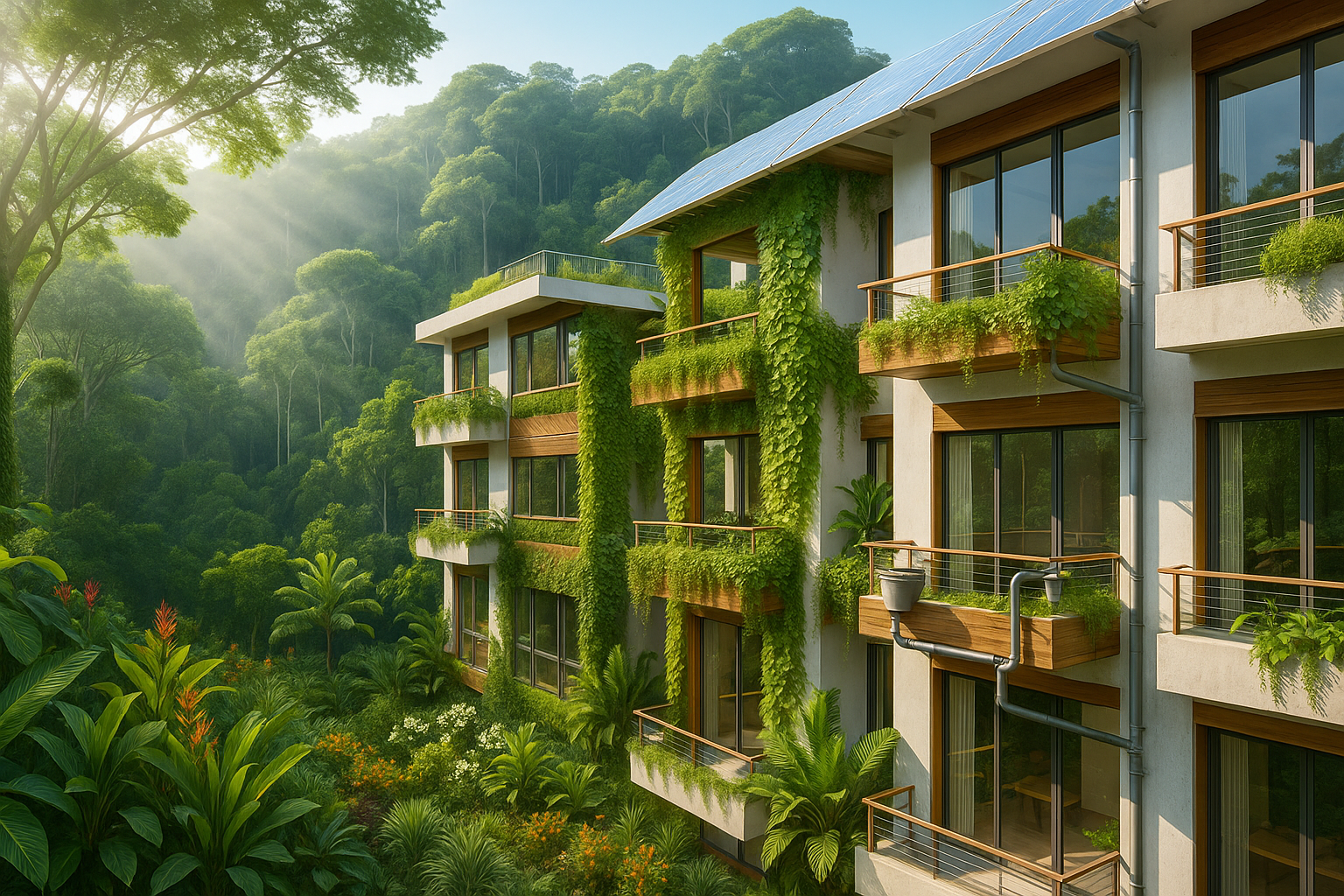
Biophilic design treats balconies as transitional zones between indoor comfort and outdoor freedom. Wooden decking, potted plants, vertical gardens, water features, and soft lighting turn balconies into nature-rich sanctuaries—even several floors above ground.
Similarly, shared spaces such as corridors, rooftops, and lobbies are being reimagined as green pathways rather than purely functional zones.
Technology Meets Nature
Interestingly, biophilic design does not reject technology—it collaborates with it. Smart lighting systems now mimic circadian rhythms, adjusting color temperature throughout the day. Automated irrigation supports indoor plants. Acoustic panels inspired by natural forms reduce noise pollution.
In high-rise apartments, where real soil and large trees may be impractical, technology helps recreate nature’s benefits without artificiality.
Challenges of Biophilic Apartments
Despite its benefits, biophilic design faces challenges in apartment settings. Limited space, budget constraints, maintenance concerns, and lack of natural light can restrict implementation. However, successful biophilic design is not about scale—it’s about intention.
A single window framed thoughtfully, one indoor tree, or a material choice that prioritizes authenticity can make a meaningful difference. The movement encourages designers and residents to work with constraints rather than against them.
The Emotional Impact of Living with Nature
What truly sets biophilic apartments apart is how they make people feel. Residents often describe these spaces as calmer, warmer, and more personal. Nature introduces rhythm into daily life—the slow growth of plants, shifting shadows, changing skies.
In an age of constant notifications and accelerated routines, biophilic apartments offer something rare: a sense of pause. They remind residents that life exists beyond screens and schedules.
The Future of Apartment Living
As cities continue to grow vertically, the success of urban living will depend on how well apartments support human health. Developers, architects, and homeowners are increasingly recognizing that nature is not an optional aesthetic—it is essential infrastructure.
Future apartments are likely to integrate biophilic principles from the earliest planning stages, combining sustainability, wellness, and design innovation. Green roofs, indoor forests, community gardens, and nature-connected layouts will become standard rather than exceptional.
So, Can Apartments Feel Like Nature?
Apartments may never replace forests or open fields. However, they can echo nature’s presence, patterns, and benefits in meaningful ways. Through biophilic design, apartments can become spaces that breathe, grow, and heal—places where urban life and natural life no longer feel like opposites.
In the end, biophilic design is not about bringing nature into apartments. It’s about remembering that humans were always meant to live with nature—no matter how high the building rises.