For decades, apartment design has followed a predictable pattern—straight walls, sharp corners, and box-shaped rooms stacked neatly one above another. While this approach maximizes efficiency, it often ignores how humans truly experience space. Recently, a quiet architectural shift has begun to challenge this norm. Apartments without corners, shaped by flowing curves instead of rigid angles, are redefining comfort, well-being, and emotional connection within urban living.
Curved architecture is no longer just an artistic experiment. It is emerging as a thoughtful response to how people move, feel, and live inside their homes.
The Psychological Impact of Corners and Curves
Human brains are wired to respond to shapes. Sharp angles and rigid corners tend to signal alertness and tension, while curves suggest safety, softness, and continuity. This response is deeply rooted in nature—rivers, hills, clouds, and even the human body are curved, not angular.
In apartments filled with right angles, residents may unconsciously experience visual stress. In contrast, curved walls and rounded transitions create a sense of calm and flow. Studies in environmental psychology show that people feel more relaxed and emotionally comfortable in spaces dominated by smooth forms rather than harsh edges.
Curved apartments subtly reduce mental fatigue, making them ideal for modern urban dwellers already overwhelmed by noise, screens, and fast-paced routines.
A Natural Flow of Movement
One of the most noticeable benefits of apartments without corners is how naturally people move through them. Traditional layouts often force abrupt directional changes—doorways that open into corners, furniture squeezed into tight angles, and hallways that feel narrow and restrictive.
Curved architecture eliminates these disruptions. Movement becomes intuitive, almost instinctive. Residents glide through spaces rather than navigating them. This seamless flow is especially beneficial for children, elderly residents, and people with mobility challenges, as curved paths reduce accidental bumps and sharp-edge collisions.
In daily life, this translates into a home that feels more accommodating and less restrictive.
Improved Spatial Perception in Small Apartments
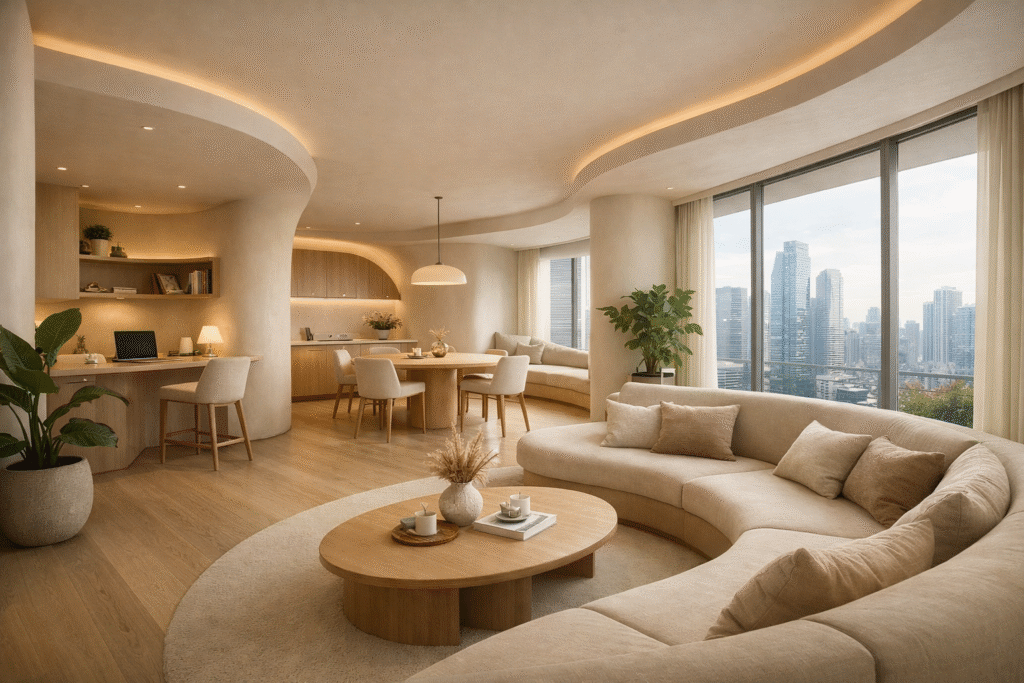
Urban apartments are shrinking, but curved architecture offers a clever solution to this challenge. Sharp corners visually segment space, making rooms feel smaller and boxed in. Rounded walls, on the other hand, dissolve boundaries and create the illusion of openness.
Curved apartments often feel larger than they actually are. The absence of corners allows light to travel more evenly across surfaces, eliminating dark pockets that typically form in angular rooms. This results in brighter interiors with a sense of continuous expansion.
For compact city apartments, curved design is not just aesthetic—it is a practical strategy for maximizing comfort in limited square footage.
Better Light Distribution and Acoustics
Lighting plays a crucial role in human comfort, and curved surfaces enhance how light behaves indoors. Instead of light abruptly stopping at corners, curved walls gently diffuse it throughout the room. This creates softer shadows and reduces glare, making spaces feel warmer and more inviting.
Acoustics also benefit from this design approach. Corners tend to trap sound, causing echoes and uneven noise distribution. Curved architecture allows sound waves to disperse more evenly, reducing harsh reflections and improving overall acoustic comfort.
In apartments where work-from-home setups and relaxation spaces coexist, this balance of light and sound is invaluable.
Emotional Safety and Biophilic Connection
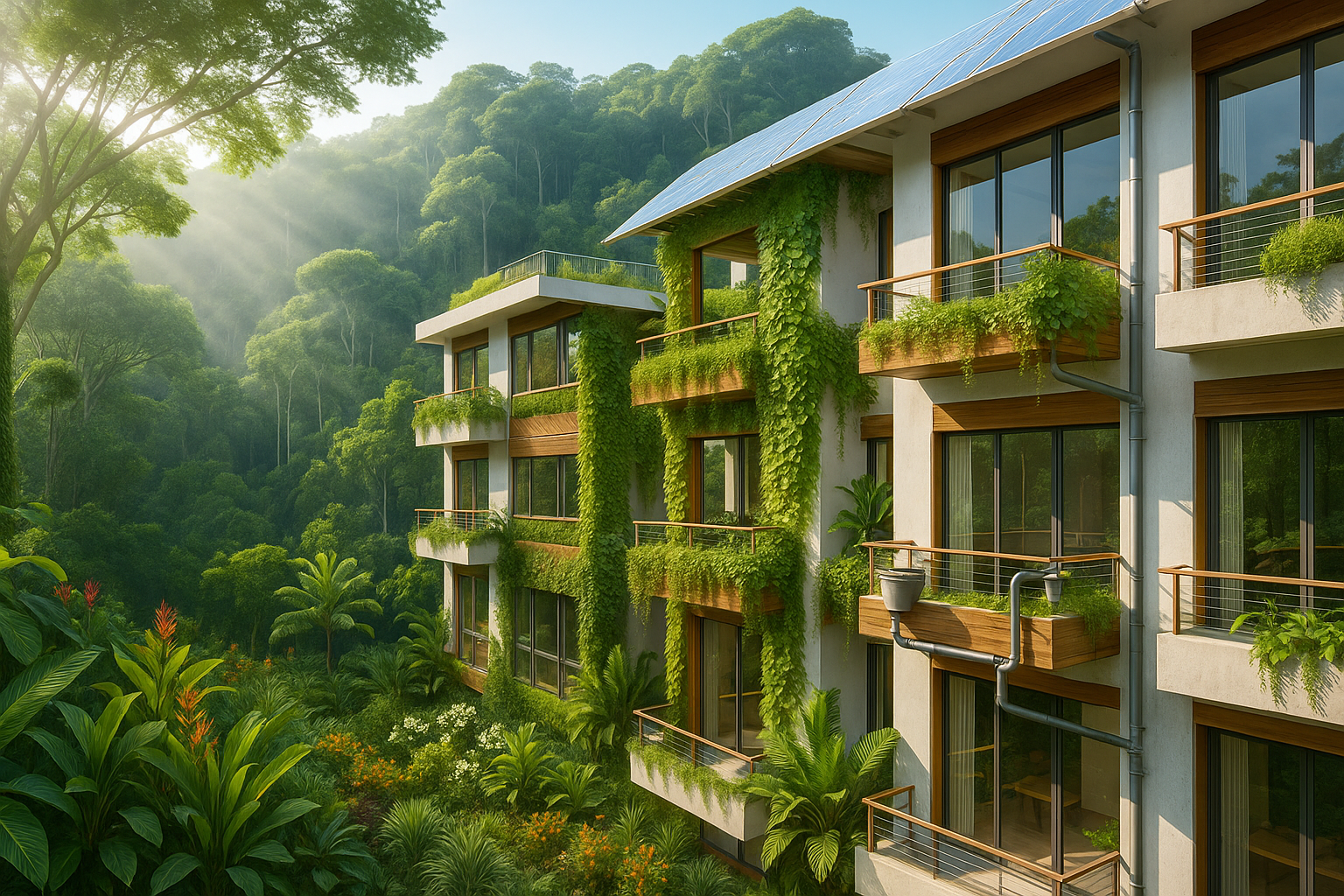
Curved architecture often aligns with biophilic design, which seeks to reconnect humans with nature. Rounded forms mimic organic elements found in the natural world, helping residents feel grounded and emotionally secure.
In apartments without corners, residents often describe a sense of being “held” by the space rather than confined within it. This emotional safety is subtle but powerful, particularly in high-density urban environments where stress levels run high.
By replacing rigid geometry with fluid forms, architects are creating homes that support mental well-being as much as physical shelter
Furniture, Functionality, and Custom Living
One common concern about curved apartments is furniture placement. While standard furniture is designed for straight walls, this challenge is increasingly addressed through custom-built solutions. Modular furniture, curved sofas, built-in storage, and adaptive shelving are becoming integral to these spaces.
Rather than limiting functionality, curved apartments encourage intentional living. Each element is designed to fit harmoniously within the space, reducing clutter and promoting mindful use of every square foot.
This shift often results in homes that feel more personal, expressive, and tailored to individual lifestyles.
Sustainability and Structural Efficiency
Beyond comfort and aesthetics, curved architecture can also contribute to sustainability. Curved structures often distribute stress more evenly, improving structural efficiency and reducing the need for excessive materials.
Additionally, improved airflow and light diffusion can lower energy consumption by reducing dependence on artificial lighting and climate control systems. When paired with sustainable materials and smart technologies, apartments without corners become a forward-thinking solution for eco-conscious urban living.
The Future of Apartment Design
As cities continue to grow vertically, the quality of indoor living spaces is becoming more important than sheer quantity. People are no longer satisfied with apartments that merely provide shelter; they seek homes that support emotional balance, health, and comfort.
Curved architecture represents a shift toward human-centered design—spaces shaped not just by engineering efficiency but by empathy. Apartments without corners challenge the long-standing belief that homes must be boxes, offering instead a vision of living that flows, adapts, and nurtures.
Conclusion
Apartments without corners are more than an architectural trend; they are a response to the evolving needs of modern life. By embracing curves, architects are creating homes that feel calmer, brighter, and more humane.
In a world filled with sharp deadlines and rigid routines, curved living spaces offer a gentle reminder that comfort lies in softness, flow, and thoughtful design. As urban living continues to evolve, curved architecture may well become the standard for apartments designed not just to house people—but to truly care for them.