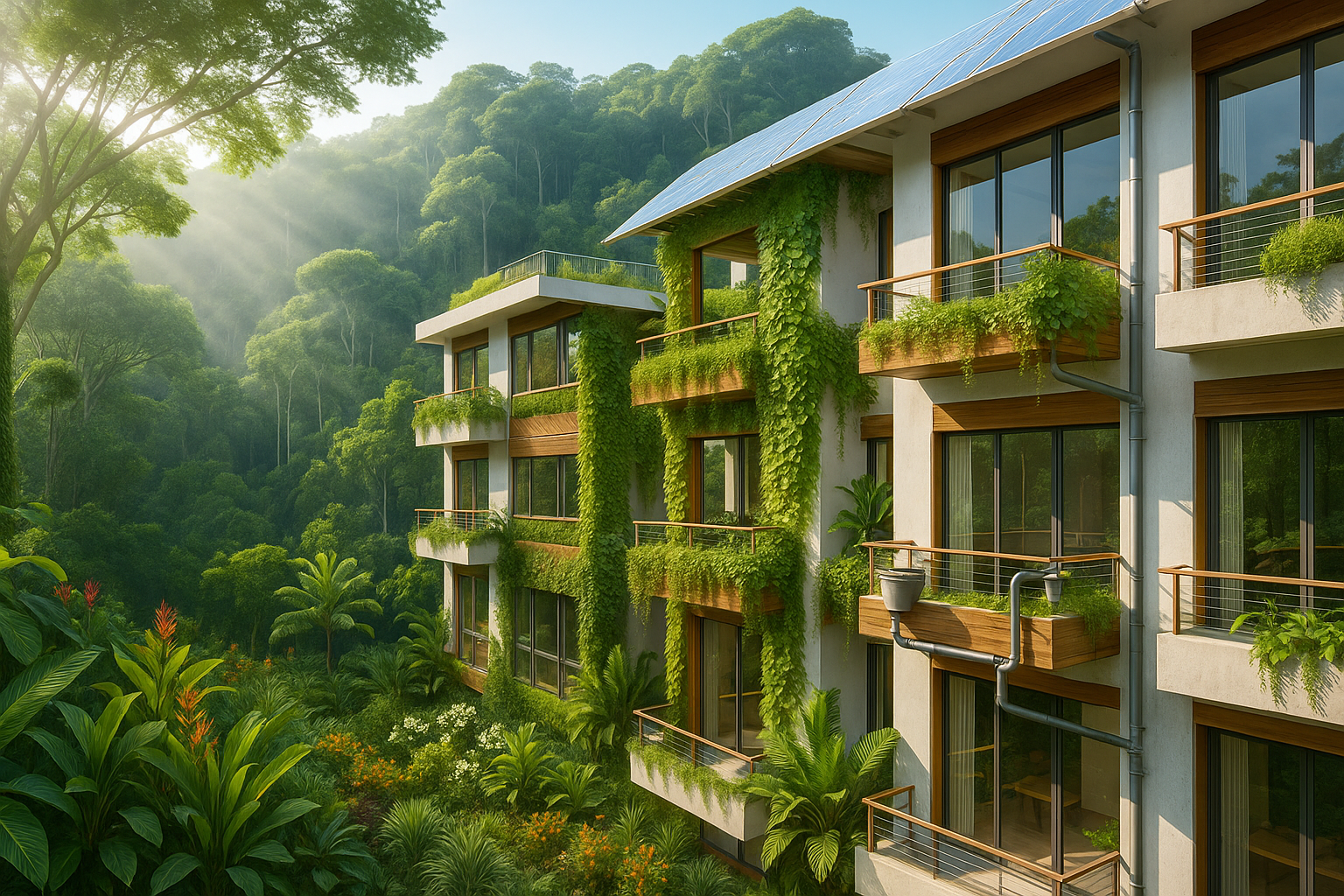
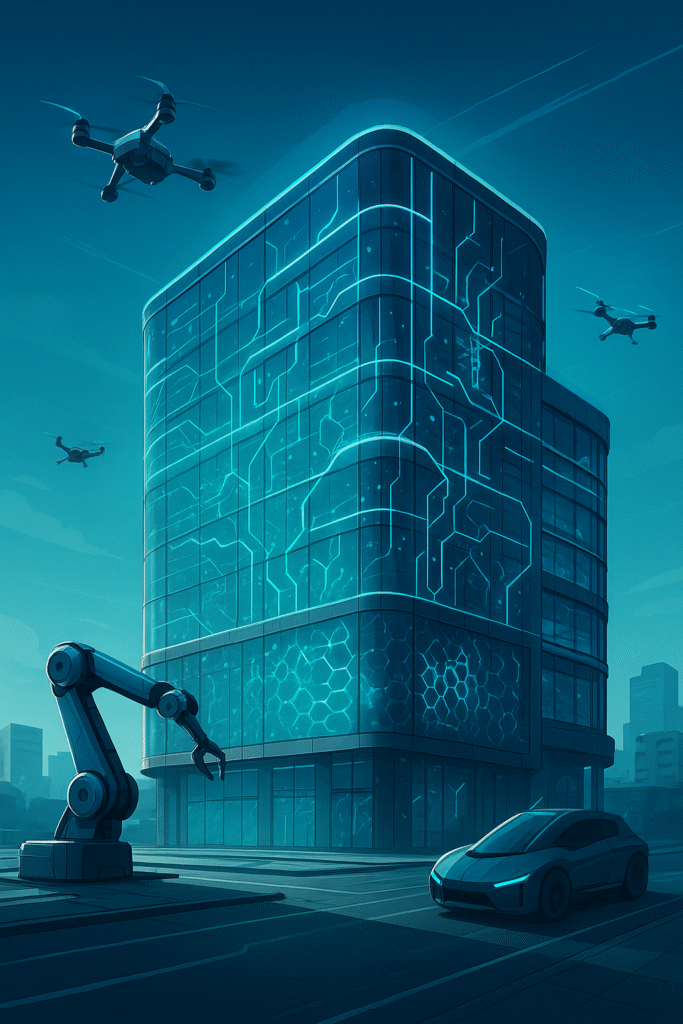
The construction world is undergoing a metamorphosis—one so profound that steel, concrete, and brick are no longer the only pillars of the built environment. Today, a new element has entered the architectural vocabulary: sentience. Not in the sci-fi sense of buildings thinking for themselves, but in the way structures are becoming aware, adaptive, and intelligently responsive to the people who inhabit them. Welcome to the era of AI-activated construction, where buildings are no longer static assets but dynamic partners in daily life.
The Shift From Static to Sentient
For decades, buildings have been engineered to be strong, safe, and functional. But they’ve always been passive. They stand, they shelter, they age. However, with the integration of artificial intelligence, real-time sensors, and adaptive engineering, structures are beginning to behave less like immovable objects and more like living systems.
Imagine a building that senses stress in its beams and automatically redistributes load before a crack forms. Picture walls that adjust their thermal resistance based on the body heat of the occupants. Think about facades that breathe in polluted air and exhale purified oxygen. This isn’t distant-future speculation—it’s the direction construction is evolving toward.
Smart Materials That Learn and Adapt
At the heart of this revolution are intelligent materials—substances that respond to environmental cues without human intervention.
- Self-healing concrete activates microcapsules filled with healing agents the moment it detects a fracture.
- Thermochromic coatings shift their reflectivity depending on sunlight, reducing the need for active cooling.
- Shape-memory alloys return to their original form after stress or deformation, increasing structural resilience.
But the next step forward is even more exciting: materials that learn.
Emerging AI-embedded composites have the ability to store data about their stress history. They can analyze patterns, predict weak points, and communicate this information to maintenance systems. Essentially, the building becomes a historian of its own life, capable of foreseeing what it needs long before damage occurs.
Construction Powered by Predictive Intelligence
In traditional construction, problems are solved after they appear. In sentient construction, problems are prevented before they happen.
AI-driven predictive models can simulate how a structure will behave over decades, factoring in climate change, seismic activity, and usage patterns. Every beam, joint, and slab can be digitally tested under thousands of scenarios. This allows engineers to refine their designs with unprecedented accuracy.
Even the construction process itself is benefiting:
- Robotic masonry systems can autonomously lay bricks with precision measured in millimeters.
- Drone-assisted surveying creates real-time topographical maps, allowing on-site adjustments instantly.
- AI-based project management systems monitor workflows, foresee delays, and reorganize schedules faster than any human team could.
These innovations do not replace human expertise—they amplify it. They eliminate guesswork and allow engineers, architects, and builders to focus on creativity, safety, and efficiency.
Buildings That Communicate With Occupants
One of the most revolutionary aspects of AI-activated construction is the way buildings interact with their users.
Modern structures equipped with sensor networks can monitor temperature, lighting, occupancy, energy consumption, air quality, and even noise levels. With machine learning, the building begins to understand the routines and preferences of its occupants.
Imagine walking into a room and the lights automatically shift to your preferred brightness. The ventilation aligns with your comfort profile. The noise-cancellation panels activate if the system senses you are focusing. The structure becomes your personal assistant.
In commercial settings, this means smarter workplaces—offices that know when teams collaborate, when they need privacy, and when energy usage should be optimized. In residential spaces, it leads to homes that feel less like physical shells and more like responsive companions.
Regenerative Buildings: Beyond Sustainability
Sustainable construction has long focused on reducing environmental harm. But sentient construction pushes this boundary into regeneration.
Buildings of the future will not just consume fewer resources—they will actively contribute to the environment.
- Bio-reactive facades can grow microalgae that capture carbon and produce biofuel.
- AI-managed water systems can recycle greywater with near-zero waste.
- Smart rooftops can optimize rainfall collection and adapt the vegetation cover based on climate conditions.
In this model, the building behaves like an ecosystem—absorbing, producing, and replenishing.
Challenges and the Path Forward
As promising as sentient construction is, it comes with challenges:
- Integrating AI into materials requires breakthroughs in microelectronics.
- Data-driven buildings raise privacy and cybersecurity concerns.
- Skilled labor must evolve to include digital fluency and AI literacy.
- Regulatory frameworks need to expand to address smart-material testing, building behavior standards, and long-term data storage.
Yet these challenges are catalysts, not barriers. Every major construction revolution—from steel frames to pre-cast concrete to automation—faced skepticism before becoming the norm.
Conclusion: The Rise of a Living Built Environment
The future of construction is not only about building stronger, taller, or faster. It’s about building smarter. AI-activated structures open the door to a world where buildings are caretakers of their own integrity, guardians of their occupants’ wellbeing, and contributors to the planet’s health.
In this new era, structures won’t just house life—they’ll participate in it.