The real estate industry is no longer shaped solely by location, luxury, or investment returns. A new and powerful force is transforming how properties are designed, built, and valued: climate resilience. As extreme weather events become more frequent and environmental risks continue to rise, climate-resilient real estate is emerging as a critical pillar of future development. This shift is not just about sustainability—it is about survival, long-term value, and responsible growth.
What Is Climate-Resilient Real Estate?
Climate-resilient real estate refers to properties that are planned and constructed to withstand climate-related challenges such as floods, heatwaves, hurricanes, wildfires, and rising sea levels. These properties are designed to minimize damage, ensure safety, and recover quickly from disruptive events. Unlike traditional buildings, climate-resilient developments incorporate adaptive design strategies, durable materials, and smart systems that respond to environmental stress.
This approach moves beyond green building practices. While sustainability focuses on reducing environmental impact, resilience focuses on enduring and adapting to environmental changes already in motion.
Why Climate Resilience Matters Now More Than Ever
The economic and social costs of climate change are escalating. Flood-prone urban zones, overheated cities, and storm-exposed coastal regions are increasingly risky for developers and investors. Insurance premiums are rising, regulatory requirements are tightening, and buyers are becoming more aware of climate risks.
For homeowners, resilience means safety, reduced repair costs, and uninterrupted living. For investors, it translates into stable asset value and reduced long-term risk. For cities, resilient real estate supports economic continuity and community well-being.
In a world of uncertainty, properties designed for resilience offer predictability.
Key Features of Climate-Resilient Properties
Climate-resilient real estate integrates innovation at every stage of development. Some of the most impactful features include:
- Elevated foundations and flood-resistant construction to protect against water damage
- Heat-reflective materials and passive cooling designs to reduce energy usage during extreme temperatures
- Reinforced structures and wind-resistant systems in storm-prone areas
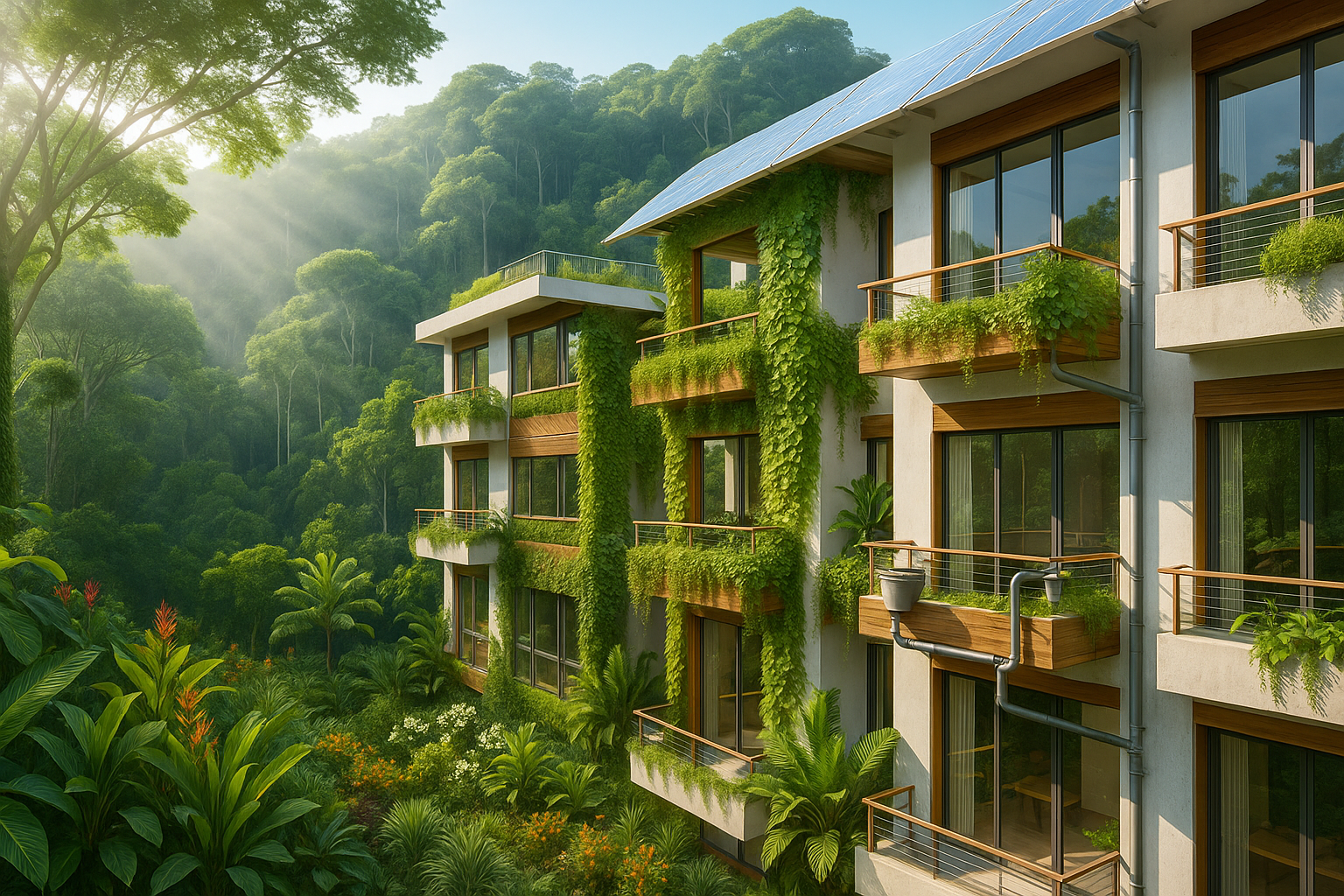
- Water-efficient landscaping and rainwater harvesting to manage water scarcity
- Smart building technology to monitor energy use, structural integrity, and environmental changes in real time
These elements work together to create buildings that are stronger, smarter, and more adaptable.
The Role of Urban Planning and Policy
Climate resilience in real estate is not just a developer’s responsibility—it requires collaboration with governments and urban planners. Zoning laws, building codes, and land-use policies are being updated worldwide to reflect environmental realities. Cities are encouraging resilient construction through incentives such as tax benefits, faster permits, and development bonuses.
Planned resilience also involves smarter site selection. Developers are now analyzing climate data, flood maps, and long-term environmental forecasts before purchasing land. Location is being redefined—not just by market demand, but by climate safety.
Climate Resilience as an Investment Strategy
From an investment perspective, climate-resilient real estate is rapidly gaining appeal. Properties built to withstand climate risks tend to retain value better during crises. They face fewer disruptions, lower maintenance costs, and reduced insurance burdens.
Institutional investors and real estate funds are increasingly factoring environmental risk into their portfolios. Assets that ignore climate considerations may face depreciation, while resilient developments are perceived as future-proof investments.
In short, resilience is becoming synonymous with profitability.
Technology Driving the Change
Advancements in technology are accelerating the shift toward climate-resilient real estate. Predictive analytics help developers assess climate risks years in advance. Building Information Modeling (BIM) allows architects to test how structures respond to stress before construction begins.
Materials science is also evolving rapidly. From high-performance concrete to self-healing materials and fire-resistant composites, new solutions are extending the lifespan of buildings while reducing environmental vulnerability.
Smart sensors and AI-driven systems are transforming properties from static structures into responsive environments capable of adapting to real-time conditions.
Challenges and Barriers
Despite its benefits, climate-resilient real estate faces several challenges. Higher upfront construction costs can deter developers focused on short-term gains. Lack of awareness and limited access to climate data can slow adoption, particularly in emerging markets.
However, as climate risks intensify, the cost of inaction is becoming far greater than the cost of preparedness. Education, incentives, and long-term thinking are key to overcoming these barriers.
The Future of Real Estate Is Resilient
Climate-resilient real estate is no longer a niche concept—it is the future standard. Buyers, investors, and policymakers are aligning around one message: buildings must be ready for the realities of a changing planet.
As cities grow and environmental challenges intensify, resilient real estate will play a crucial role in shaping safer communities, protecting investments, and redefining value in the property market. Those who adapt early will lead the next era of real estate—one built not just to stand, but to last.