The Rise of Eco-Conscious Construction
Sustainability is no longer a buzzword—it’s a necessity. As Guyana positions itself as a leader in environmental conservation while experiencing rapid economic growth, the construction and real estate sectors face a unique challenge: how to build for the future without compromising the environment that makes the country so special.
Green building practices represent the intersection of innovation, responsibility, and long-term economic value. For developers, property owners, and investors, sustainable construction isn’t just about environmental ethics—it’s smart business.
What Makes a Building Truly Sustainable?
Sustainable construction goes far beyond installing solar panels or using recycled materials. It encompasses the entire lifecycle of a building, from initial design through daily operations and eventual decommissioning.
Energy Efficiency
Modern sustainable buildings minimize energy consumption through intelligent design. This includes strategic building orientation to maximize natural light and ventilation, high-performance insulation systems, and energy-efficient HVAC systems that reduce cooling costs in tropical climates.
LED lighting, smart building management systems, and renewable energy integration all contribute to lower operational costs while reducing environmental impact. For property owners, this translates directly to reduced utility expenses and increased property values.
Water Conservation
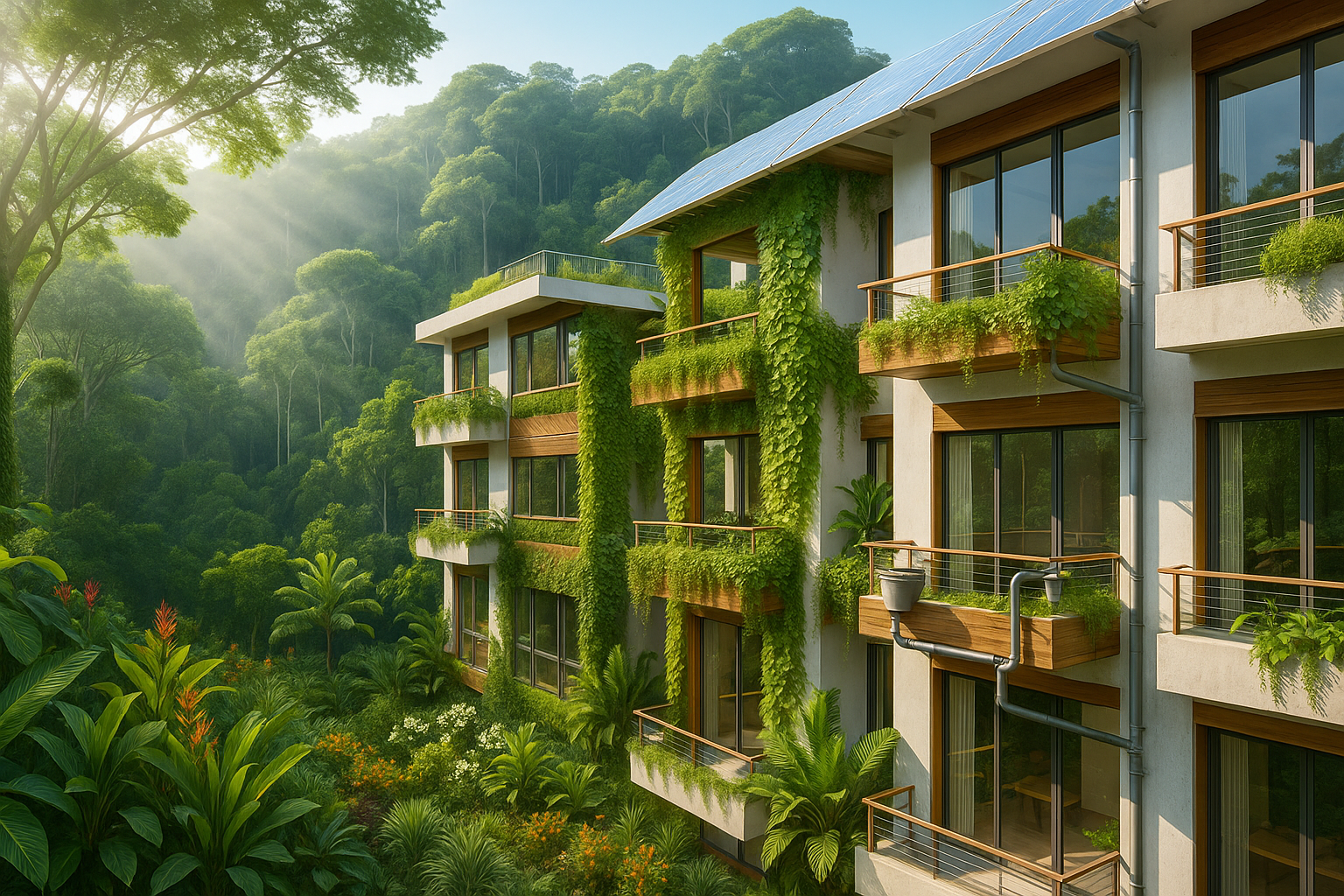
In an era of climate uncertainty, water management is critical. Sustainable developments incorporate rainwater harvesting systems, greywater recycling, and efficient irrigation systems that minimize water waste.
Low-flow fixtures, drought-resistant landscaping, and smart water monitoring systems can reduce water consumption by up to 40% compared to conventional buildings. This not only conserves precious resources but also significantly reduces operational costs.
Material Selection
The materials used in construction have profound environmental and economic implications. Sustainable developers prioritize locally-sourced materials to reduce transportation emissions and support local economies.
Durable, low-maintenance materials reduce the need for frequent replacements and repairs, lowering long-term costs. Recycled and recyclable materials minimize waste, while low-VOC (volatile organic compound) paints and finishes improve indoor air quality for occupants.
The Business Case for Green Building
Skeptics sometimes view sustainable construction as expensive luxury, but the numbers tell a different story. Green buildings consistently deliver measurable financial benefits:
Lower Operating Costs: Energy and water efficiency translate to 20-40% reductions in utility expenses over the building’s lifetime.
Higher Property Values: Studies show sustainable buildings command 7-15% higher sale prices and rental rates compared to conventional properties.
Faster Lease-Up Rates: Tenants increasingly prefer eco-friendly spaces, leading to lower vacancy rates and more stable income streams.
Reduced Maintenance: Quality materials and systems designed for longevity mean fewer repairs and replacements.
Regulatory Advantage: As environmental regulations tighten globally, green buildings are already compliant, avoiding costly retrofits.
Sustainable Development in Practice
Mixed-Use Communities
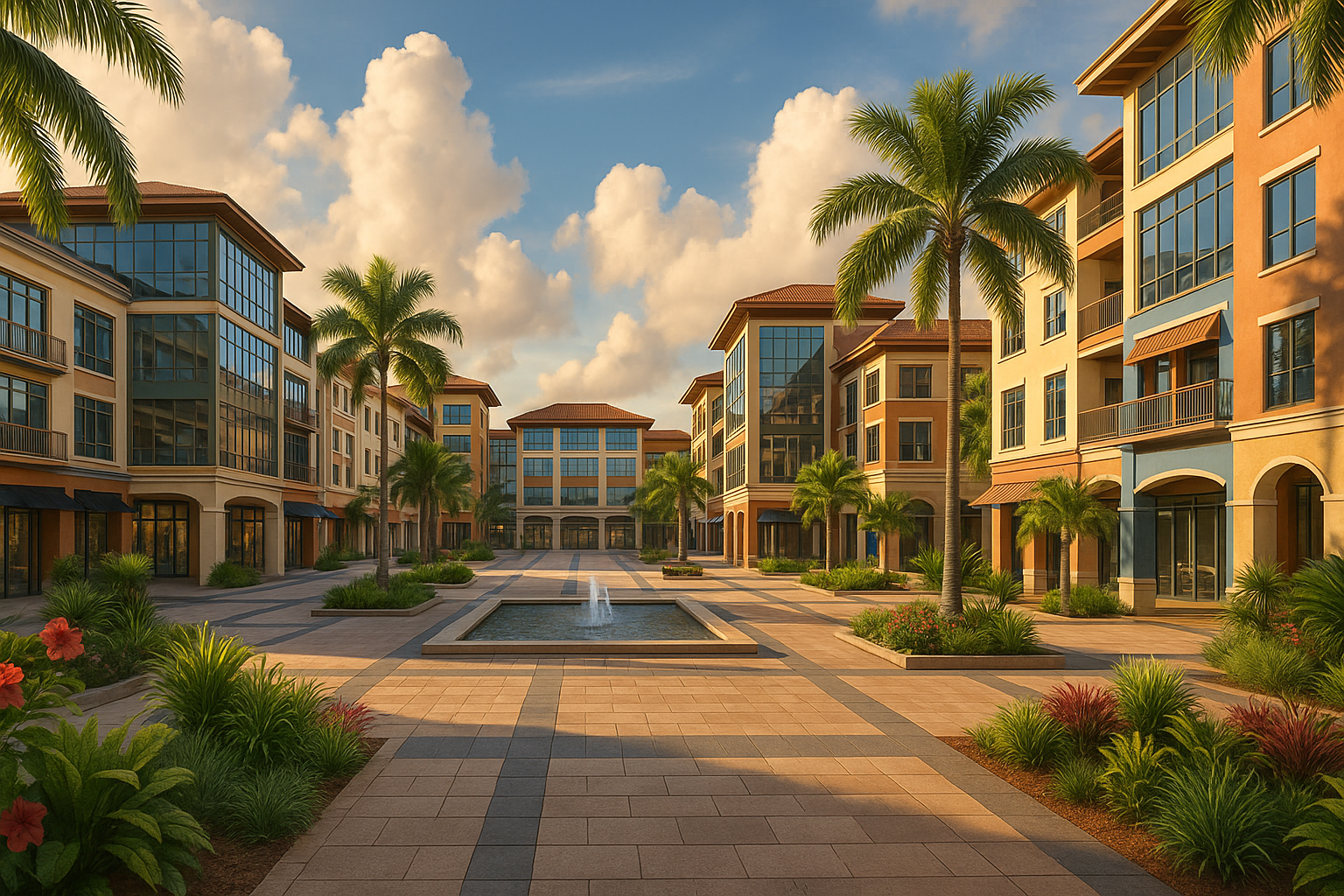
The most sustainable developments integrate multiple uses—residential, commercial, and recreational—within walkable communities. This reduces transportation needs, creates vibrant neighborhoods, and maximizes land efficiency.
Mixed-use development projects that incorporate green spaces, community facilities, and diverse housing options create more resilient, sustainable communities that stand the test of time.
Hospitality Sector Innovation
The hospitality industry faces unique sustainability challenges due to high water and energy consumption. Forward-thinking hotel developers are incorporating green technologies that reduce environmental impact while enhancing guest experiences.
Features like smart room controls, water-efficient fixtures, and locally-sourced amenities appeal to environmentally-conscious travelers while reducing operational costs. Eco-tourism, particularly relevant in Guyana’s pristine environment, demands authentic commitment to sustainability.
Commercial Buildings
Modern commercial spaces that prioritize sustainability attract premium tenants willing to pay for quality. Features like abundant natural light, superior air quality, and energy efficiency directly impact employee productivity and satisfaction.
Commercial real estate that incorporates green building principles provides tangible benefits to businesses while reducing environmental footprint.
Technology Enabling Sustainability
Innovation drives modern sustainable construction. Building Information Modeling (BIM) allows developers to optimize designs for energy efficiency before breaking ground. IoT sensors enable real-time monitoring and optimization of building systems.
Smart facilities management systems use data analytics to continuously improve building performance, identifying inefficiencies and predicting maintenance needs before problems arise.
Guyana’s Unique Position
Guyana’s commitment to maintaining its vast rainforests while developing economically creates special responsibility for the construction sector. Sustainable building practices align perfectly with the nation’s environmental values and international climate commitments.
Developers who embrace green building principles today position themselves as leaders in an increasingly environmentally-conscious market. As international investors and corporations prioritize sustainability in their operations, Guyana’s green buildings will attract premium tenants and buyers.
Certifications and Standards
International green building certifications like LEED, BREEAM, or EDGE provide frameworks for sustainable construction and independent verification of environmental performance. While not always necessary, these certifications can enhance marketability and attract international tenants.
More important than certifications, however, is genuine commitment to sustainable practices throughout the development process and building lifecycle.
The Path Forward
Sustainable construction represents the future of real estate development in Guyana and globally. The question is no longer whether to build green, but how to do it most effectively.
For investors, choosing development partners committed to sustainability means investing in properties that will remain competitive and valuable for decades. For communities, it means healthier living environments and preserved natural resources for future generations.
The developers who succeed in Guyana’s evolving market will be those who recognize that luxury, innovation, and sustainability are not competing priorities—they’re essential elements of creating true value.
Interested in learning how sustainable development practices can benefit your next project? Discover our commitment to building Guyana’s future responsibly, or reach out to discuss your sustainable development goals.